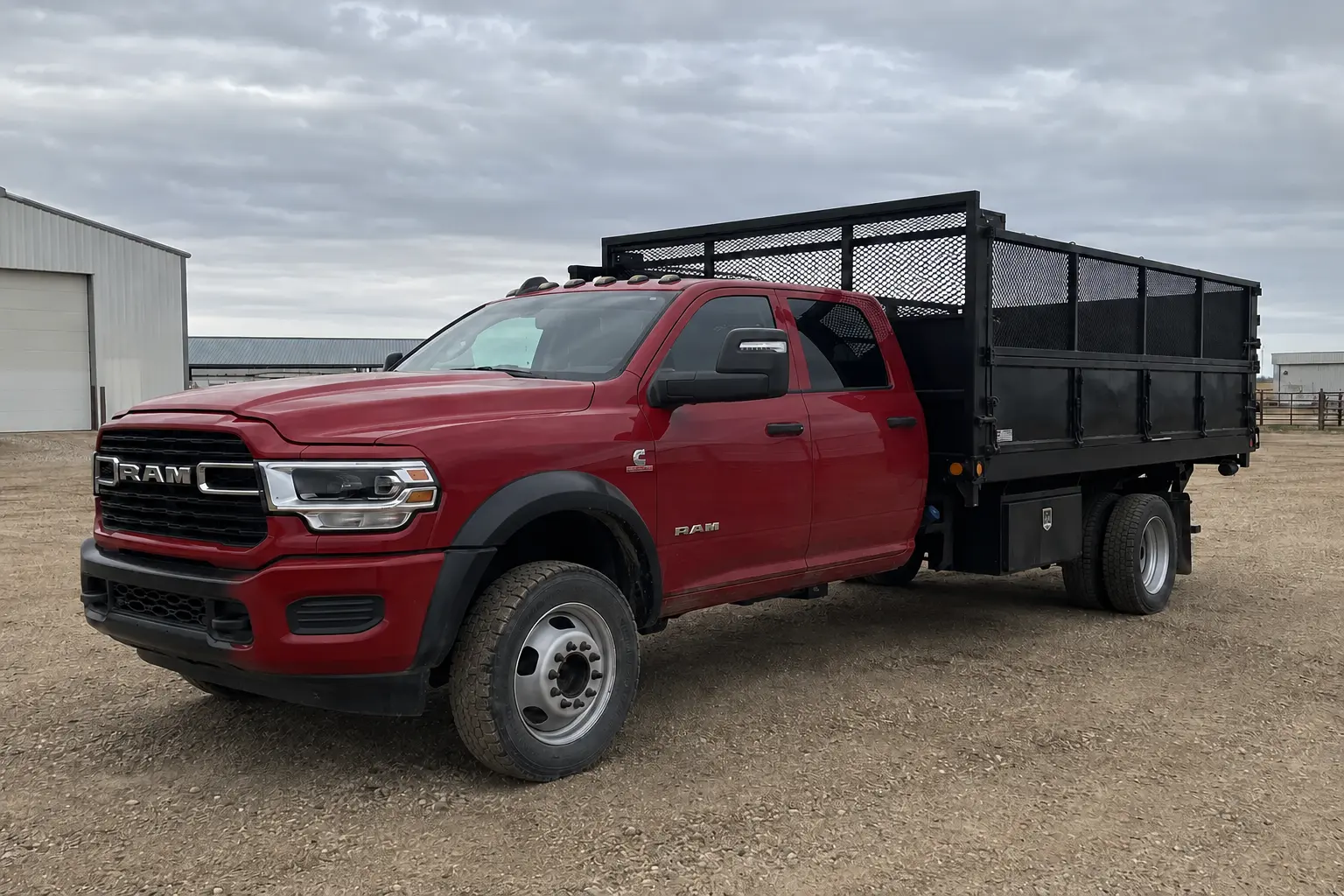
RAM 5500 reliability cannot be reduced to the Cummins engine or a model-year score. The truck works as a completed system: chassis, Aisin transmission, brakes, wheels, frame, body mounting, PTO equipment and support. Primary records identify defined concerns and repair paths, but they do not supply a model-wide failure rate, remaining-life formula or universal best year. Assess the actual body, work cycle, records, condition and consequence of downtime.
Define reliability for the completed vehicle
A recovery unit, dump, crane body, service truck and landscape body can each lose useful service in a different way. Write down the essential functions, representative load, route, idle or PTO duty, acceptable downtime and required recovery. A chassis that drives normally is not fully dependable when its body equipment cannot perform the assignment.
Match the chassis VIN, engine, transmission, final-stage label, body serial number and installed equipment. Ask whether the body was installed new or transferred later. Evidence from the wrong chassis, a removed attachment or a prior body configuration cannot establish the truck now offered for sale.
Keep the Canadian campaign populations separate
The rows are not a frequency table and their year windows must not be joined into one blacklist. Run a current official VIN inquiry and obtain the detailed work order. A campaign completion record answers a defined historical action; it does not replace current inspection of the same system.
| Reviewed record | Defined years or application | Reliability question |
|---|---|---|
| Hydraulic brake control | Certain 2017–2018 RAM 4500/5500 trucks | Current VIN result, warning history, remedy and present brake/control condition |
| Oil-level monitoring | Certain 2019–2020 diesel chassis cabs | Calibration record plus any prior oil warning, leak, noise or engine work |
| High-pressure fuel pump | Certain 2019–2020 Cummins chassis cabs | Preventive work versus failure repair and current fuel-system symptoms |
| Rear brake hoses | Certain 2019–2020 RAM 4500/5500 chassis cabs | Remedy record plus physical brake inspection |
| DRW wheel studs | Defined 2012–2021 flanged-lug-nut population | Wheel-service history, hardware inspection and corrected information |
| Intake-heater relay | Certain 2021–2023 Cummins trucks | Current status and official parking instruction if the remedy is outstanding |
Read oil and fuel records as sequences
The reviewed oil-level campaign describes a calibration action. It is not evidence that a mechanical engine concern never occurred. Ask about low-oil warnings, leakage, noise, pressure concerns and engine work before and after the update. For a replacement engine, identify the reason, installed assembly, mileage, installer and result.
Treat high-pressure fuel-pump evidence similarly. Separate a normally operating truck that received preventive pump/software work from one that needed wider repair after failure. For the latter, review the diagnostic basis, components replaced, contamination assessment and successful recheck. Continuing hard start, unusual fuel noise, warning or reduced power stays unresolved until diagnosed.
Do not count invoices as proof of either unreliability or renewal. A large repair can strengthen one part of the evidence file when its scope and outcome are clear, while leaving brakes, frame, axles, body and auxiliary equipment at their existing age and condition.
Apply Aisin evidence only to the exact unit
Stellantis TSB 21-039-26, dated 8 May 2026, defines particular RAM 5500 applications by transmission, build timing and complaint. For 2019–2021 vehicles, it also requires a complete new transmission installed during the stated February–December 2022 window. It does not direct clutch replacement on every Aisin transmission.
The separate 71A communication concerns a selected 2022 preventive population and snap-ring work. Keep an operating original transmission, completed preventive work and repair after loss of lower gears as three different evidence states. Ask for gearbox identity, invoices, codes, symptom conditions and the result of any repair.
A smooth short unloaded drive does not prove the transmission will meet the working cycle. Provide the history to a qualified inspector and evaluate engagement and shifts safely under conditions appropriate to the completed truck. Do not intentionally reproduce a hazardous failure.
Measure use with mileage, hours and assignment
Request service by date, odometer and available engine or equipment hours. Extended idle and PTO operation can be significant even when road distance is modest. Hours describe duty; they cannot be converted reliably into kilometres, remaining life or a universal wear score.
Ask about normal load, route length, towing, grades, dust, winter use, storage and how quickly warning conditions were addressed. Prior vocational work is context, not proof of abuse. Continuous fleet records can be stronger evidence than a low-distance claim with no documentation.
Review engine oil and filters, fuel service, cooling, transmission, steering, brakes, wheel hardware, suspension, batteries, hydraulics and body equipment. A recent general service cannot recreate missing history. Price defined catch-up work separately from open-ended diagnosis.
Verify axle load and body integration
Use completed-vehicle labels and representative front and rear scale weights with fuel, crew, tools, material, tanks, attachments and trailer-imposed load. Do not subtract an unidentified bare-chassis weight from a family maximum to publish payload. A legal or mechanical conclusion needs the actual configuration and applicable requirements.
Inspect body mounts, subframe, visible frame rails, hoist or crane load paths, exhaust clearance, hydraulics, wiring, grounds and interlocks. RAM body-builder guidance cautions that unsuitable concentrated-load attachment can contribute to frame damage even when an overall limit appears satisfied. Obtain qualified upfitter or engineering assessment for the actual installation.
Record inaccessible areas. A body can conceal frame, line or wiring conditions and can increase labour for chassis repair. Unknown is not passed, and a component-only estimate may omit unloading, removal, reassembly and functional testing.
Separate road and equipment checks
Arrange an appropriately cold start, scan, road evaluation and chassis inspection. Assess leaks, fuel symptoms, transmission operation, steering, brakes, stability warnings, suspension, tires, wheels, corrosion and driveline. Stop when a material safety concern makes further operation inappropriate.
Have essential body equipment demonstrated under controlled procedures by a suitable specialist. Stay clear of unsupported components and never bypass an interlock. An unloaded hoist or crane cycle can confirm basic function but does not establish rated performance under every condition.
Compare inspection findings with seller records. A cleared warning, cosmetic coating or unrelated invoice does not resolve the original concern. If work is completed, request a recheck directed at that same symptom or finding.
Plan service continuity before purchase
Confirm shops willing and able to support the Cummins/Aisin chassis and the installed body. Ask about parts path, appointment timing, transport of an inoperative completed truck and responsibility for body removal and restoration. A normal pickup rental may not perform recovery, crane, dump or heavy service-body work.
Reliability is partly consequence. The same repairable concern may be manageable on a local second unit and unacceptable on the only truck assigned to remote or time-critical work. State that as a continuity decision, not as proof that the model year fails more often.
Build a current plan rather than copying generic online costs or downtime. Separate routine maintenance, immediate safety work, diagnosed repair, unresolved investigation, access labour and business interruption.
Keep an evidence file that can be updated
Save the advertisement, VIN result, chassis/body labels, campaign work, maintenance, scan, inspection, scale tickets, estimates and limitations. Mark seller statements as reports unless independently verified. A consistent file prevents uncertainty from becoming remembered fact.
Classify systems as supported, repaired and rechecked, unresolved, or not assessed. Do not average them into a fake score. One unresolved high-consequence brake, frame or transmission question can matter more than several completed routine services.
Update the file after repair or a change in body equipment. Removing a crane, tank or tool load can alter axle distribution and job suitability. Reliability conclusions should continue to describe the actual completed vehicle.
RAM 5500 reliability questions
Is the 6.7L Cummins alone enough to call a RAM 5500 reliable? No. Transmission, brakes, wheels, chassis, body and support are part of the working system.
Do the reviewed campaigns prove a bad year? No. They identify separate defined populations and remedies, not comparable failure rates.
Does a replacement transmission reset the truck? No. Verify the unit and outcome while assessing every other system independently.
What is the strongest evidence? Matching identity, explainable records, working-load fit, satisfactory chassis/body inspection and a credible service plan.
Evidence note: manufacturer documents establish the specific facts and applications cited. Buying workflows and cost scenarios are DieselTrucks.ca editorial guidance. These pages do not publish measured failure rates or confirm the condition, recall status or capacity of a particular truck.
General educational content for Canadian diesel-pickup research. Verify the exact truck, model year, certification labels, owner manual and manufacturer documentation, and obtain qualified mechanical or towing advice where appropriate.
Sources & Further Verification
Use the exact model year, VIN, truck labels and current manufacturer documentation when moving from general research to a purchase or towing decision.
- RAM chassis-cab design and cautionary notes, 4 January 2021 — original upfitter guidance
- Transport Canada 2024727 — defined 2017–2018 RAM hydraulic brake-control unit recall
- Transport Canada 2021360 — defined 2019–2020 chassis-cab oil-monitoring software recall
- Transport Canada 2021691 — defined 2019–2020 6.7L RAM fuel-pump recall
- Transport Canada 2022613 — defined 2019–2020 RAM 4500/5500 rear brake hoses
- Transport Canada 2021336 — defined 2012–2021 dual-wheel trucks with flanged lug nuts
- Transport Canada 2023026 — defined 2021–2023 intake-heater relay recall and parking advice
- Mopar Canada — current VIN recall and customer-satisfaction notice lookup
- Stellantis TSB 21-039-26, 8 May 2026 — K1 clutch failure, defined Aisin scope and replacement-history condition
- FCA 71A, August 2023 — defined 2022 Aisin preventive campaign and BusinessLink restriction
- Cummins–RAM engine history