Do not create a RAM 5500 blacklist by combining unrelated campaign windows. Avoid an individual completed truck when a material brake, wheel, engine, transmission, frame, body, load or support problem cannot be brought within the buyer's requirements. A repaired truck can return to the shortlist when records and reinspection address the original concern. The sources reviewed here do not support universal worst-year rankings or failure-rate claims.
Do not join separate year windows into a blacklist
The reviewed evidence covers an HCU concern in certain 2017–2018 trucks; oil-monitoring, fuel-pump and rear-brake-hose concerns in certain 2019–2020 trucks; corrected wheel-stud information for a defined 2012–2021 DRW population; and an intake-heater relay concern in certain 2021–2023 diesels. These are separate populations, systems and remedies.
Use the official VIN path and obtain actual work orders. Being inside a defined population does not prove the candidate experienced the condition, and completed campaign work does not prove its current chassis and body condition. A truck outside these records still requires ordinary inspection and may have individual faults.
Do not treat a missing seller printout as proof of an outstanding campaign, or the seller's “all recalls done” statement as proof of completion. Preserve uncertainty until a current official result and matching vehicle record are available.
Pause for unexplained engine or fuel history
For an applicable 2019–2020 truck, confirm what the oil-monitoring campaign changed and whether earlier oil warnings, leakage, noise or engine work occurred. Programming is not mechanical repair. An engine invoice needs the complaint, diagnosis, installed unit, mileage and outcome.
Review fuel-pump work as preventive campaign action or broader repair after failure. Ask what related fuel-system components were inspected or replaced and whether the original symptom was rechecked. Pause a candidate with continuing hard start, unusual fuel noise, warning, reduced power or an incomplete contamination story.
A discount does not make an undiagnosed engine or fuel concern predictable. Price can address a defined repair; diagnosis must establish the scope before the buyer decides whether cost and downtime fit.
Apply the Aisin stop rule precisely
TSB 21-039-26 is not a warning against every 2019–2023 RAM 5500. It defines transmission, build and symptom conditions and, for 2019–2021, a particular complete-new-transmission replacement history. The selected 2022 71A preventive program is a separate record.
Ask for installed transmission identity and invoices. Pause unexplained loss of lower gears, the cited diagnostic history or a seller claim of replacement with no unit detail. Reconsider after qualified diagnosis, supported repair and a check directed at the original condition.
Decline when open-ended transmission risk or expected access and downtime cannot support the assignment. That is a decision about one candidate and one business requirement, not a model-wide failure claim.
Treat brakes and dual-wheel evidence as material
Do not dismiss ABS, stability, traction-control or brake warnings because the truck stops at low speed in a yard. Stop a test when a material safety concern makes further operation inappropriate. Have the hydraulic/control system, hoses and body-related access assessed.
Inspect all dual-wheel positions, studs, nuts, rims and service records. Do not republish or rely on an obsolete remembered torque figure. Recent tire work is not proof that damaged hardware, mating surfaces or earlier service information were evaluated.
The completed body's weight and access can change repair logistics. Obtain an estimate that includes unloading, transport, body access, reassembly and functional checks when those steps apply.
Decline a body or axle-load mismatch
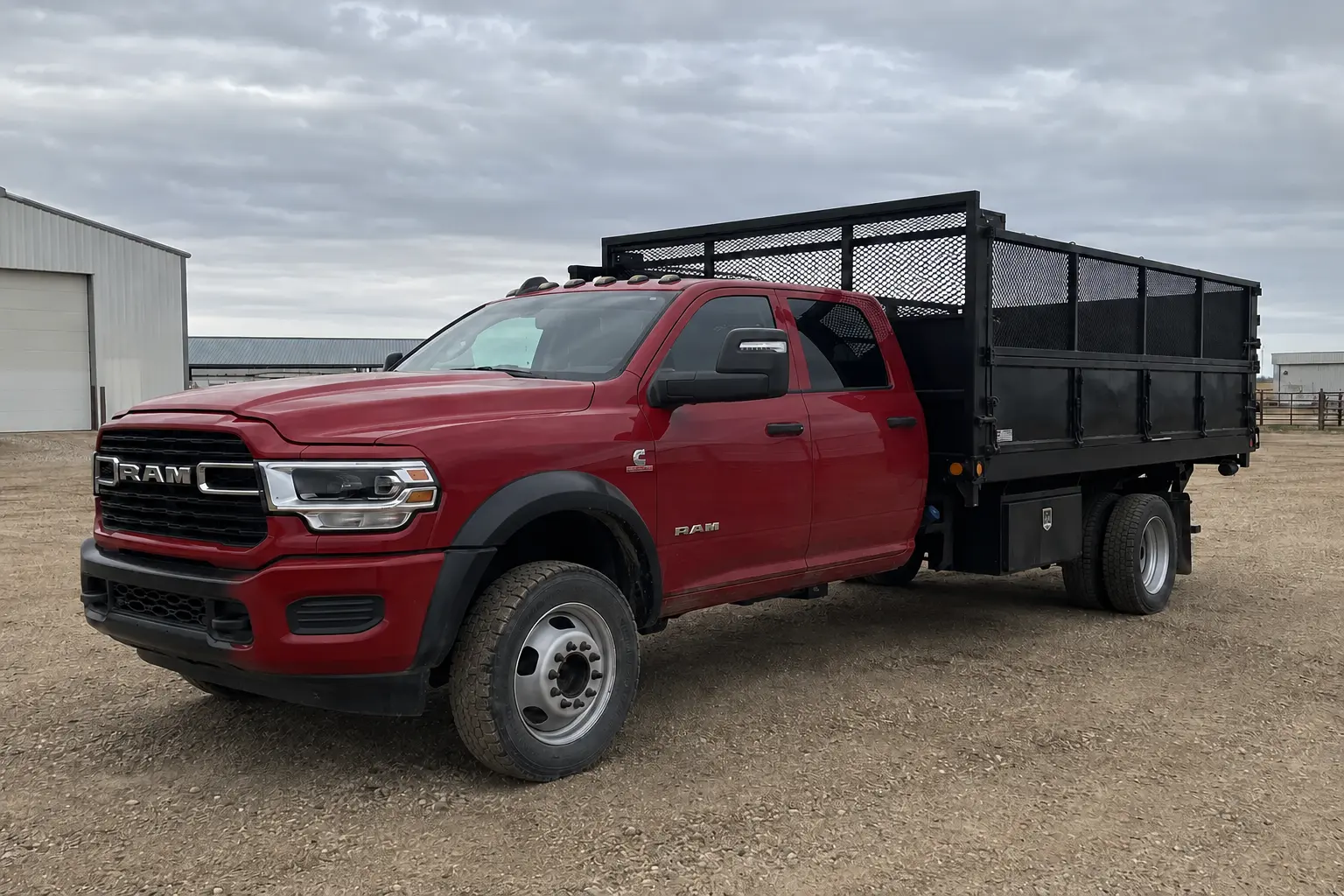
Confirm chassis and final-stage labels, body serial number, wheelbase, cab-to-axle and equipment included in the sale. Inspect mounts, subframe, visible rails, hoist or crane load paths, hydraulics, wiring, exhaust clearance and structural repair. Unknown installer or transfer history requires further evidence, not an automatic accusation of poor workmanship.
Use representative front and rear scale weights with the intended fuel, crew, tools, material, tanks, attachments and trailer load. A model-year reputation cannot create axle reserve. Decline a completed configuration that cannot support the job within the applicable limits and requirements.
If a body or attachment will be removed, transferred or changed, reassess the purchased configuration. The truck inspected and weighed may no longer be the truck delivered.
Use candidate-specific pause and decline rules
These thresholds preserve the distinction between uncertainty and a confirmed fault. They do not label every truck sharing a year with the finding.
| Finding | Initial decision | Evidence needed to reconsider |
|---|---|---|
| Active official heater-relay instruction | Pause storage and use plan | Current remedy status and completed work |
| Unexplained oil or fuel symptom | Pause | Diagnosis, defined repair and relevant recheck |
| Aisin lower-gear complaint in applicable history | Pause | Exact unit identification and supported repair outcome |
| Brake/control warning or damaged wheel hardware | Pause operation | Professional diagnosis and safe-condition confirmation |
| Undocumented body/frame alteration | Pause or decline | Installer, upfitter or engineering evidence and inspection |
| Working axle-load mismatch | Decline that configuration | Different completed truck or revised assignment |
| No capable service, transport or substitute path | Decline if continuity is essential | Credible chassis/body support plan |
Triage evidence before travelling
Request the VIN, odometer, available hours, chassis/body labels, campaign results, service file, scale tickets and disclosure of engine, transmission, frame or equipment changes. Resolve ownership, model or powertrain mismatches before arranging a costly specialist inspection.
Ask for an appropriately cold start and permission for scan, road evaluation, chassis inspection and equipment assessment. A warmed truck is not proof of concealment, but it cannot answer the same cold-condition questions. Refusal of reasonable independent assessment is a purchase-process concern.
Confirm warning lights operate during the normal startup check and ask whether codes were recently cleared. Do not bypass an interlock, overload equipment or intentionally reproduce a hazardous symptom.
Separate negotiation from diagnosis
List immediate safety work, routine maintenance catch-up, diagnosed repair, unresolved investigation, body access and business interruption separately. A single allowance hides which items are known and which remain open-ended.
Request current local estimates for the actual completed vehicle. Generic online averages, campaign labour allowances and prices for pickup configurations are not promises for a heavy vocational unit. Include responsibility for removal and restoration of body equipment.
Money spent inspecting a rejected truck is not wasted if it prevents an unsuitable purchase. Do not let travel, deposit pressure or sunk cost lower the evidence threshold.
Inspect modifications and previous work
Identify emissions or calibration changes, auxiliary fuel systems, suspension work, PTO programming, wiring additions, body transfers and structural repairs. Ask who performed the work and what documentation supports it. Unknown changes can affect diagnostics, service willingness, insurance and registration.
Surface coatings can protect or obscure. Have corrosion, frame and mounting findings interpreted by a qualified person instead of diagnosing from colour or appearance alone. Record areas that could not be viewed.
For repeated engine, transmission, brake or equipment visits, build a timeline. A later invoice may document a new cause, a failed earlier repair or continuation of the original complaint. Reconsider only when evidence directly resolves the finding that caused the pause.
Account for work consequence and support
Confirm shops for both the Cummins/Aisin chassis and the installed equipment, parts path, transport and a substitute capable of the same work. A normal rental may not replace a crane, recovery, dump or heavily equipped service truck.
A repairable candidate may still be unsuitable for remote or time-critical work. State the decision in operational terms: expected uncertainty and recovery exceed the buyer's tolerance. Do not convert that conclusion into a claim about every RAM 5500 from the same year.
Consider winter starts, batteries, charging, heating equipment, corrosion exposure and seasonal storage. One successful demonstration does not establish cold-weather continuity. Verify the actual service geography and planned work cycle.
Preserve a defensible decision file
Save the advertisement, VIN result, labels, campaign records, maintenance, scan, inspection, scale tickets, estimates and limitations. Mark seller claims as reports unless independently verified. This keeps unresolved conditions from becoming repeated as confirmed model defects.
Classify the truck as suitable, suitable after defined work, pending diagnosis or unsuitable. A repaired candidate can move categories after relevant evidence and reinspection. Cosmetic work or an unrelated service receipt should not close the original question.
Use the same checklist on the next truck. Consistent evidence makes year comparisons useful without fabricating rankings.
RAM 5500 years-to-avoid questions
Should every 2019–2020 RAM 5500 be avoided? No. Check each separate campaign, repair history, completed body and present condition.
Does the K1 bulletin condemn every Aisin transmission? No. Its application, build, symptom and replacement-history scope is specific.
Can a newer year fix an axle-load mismatch? No. The completed configuration and representative working weights decide.
What is the clearest reason to decline? A material unresolved safety, powertrain, body, load or support problem that cannot be brought within the buyer's requirements.
Evidence note: manufacturer documents establish the specific facts and applications cited. Buying workflows and cost scenarios are DieselTrucks.ca editorial guidance. These pages do not publish measured failure rates or confirm the condition, recall status or capacity of a particular truck.
General educational content for Canadian diesel-pickup research. Verify the exact truck, model year, certification labels, owner manual and manufacturer documentation, and obtain qualified mechanical or towing advice where appropriate.
Sources & Further Verification
Use the exact model year, VIN, truck labels and current manufacturer documentation when moving from general research to a purchase or towing decision.
- Transport Canada 2024727 — defined 2017–2018 RAM hydraulic brake-control unit recall
- Transport Canada 2021360 — defined 2019–2020 chassis-cab oil-monitoring software recall
- Transport Canada 2021691 — defined 2019–2020 6.7L RAM fuel-pump recall
- Transport Canada 2022613 — defined 2019–2020 RAM 4500/5500 rear brake hoses
- Transport Canada 2021336 — defined 2012–2021 dual-wheel trucks with flanged lug nuts
- Transport Canada 2023026 — defined 2021–2023 intake-heater relay recall and parking advice
- Mopar Canada — current VIN recall and customer-satisfaction notice lookup
- Stellantis TSB 21-039-26, 8 May 2026 — K1 clutch failure, defined Aisin scope and replacement-history condition
- FCA 71A, August 2023 — defined 2022 Aisin preventive campaign and BusinessLink restriction
- RAM chassis-cab design and cautionary notes, 4 January 2021 — original upfitter guidance
- Cummins–RAM engine history