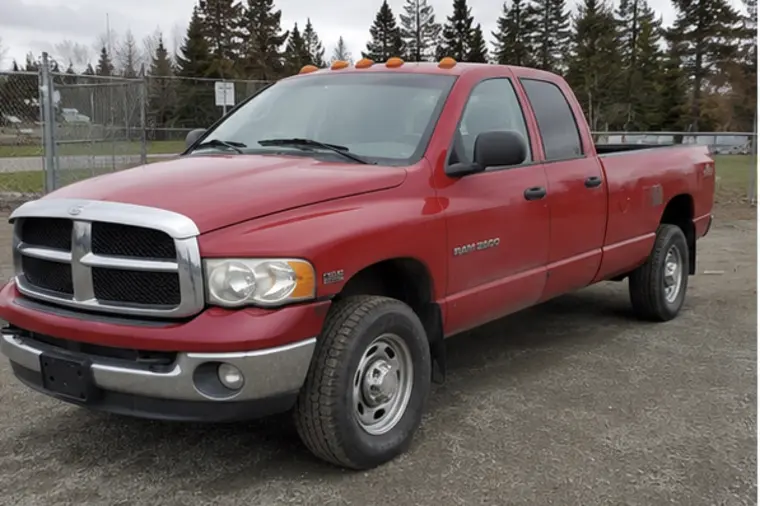
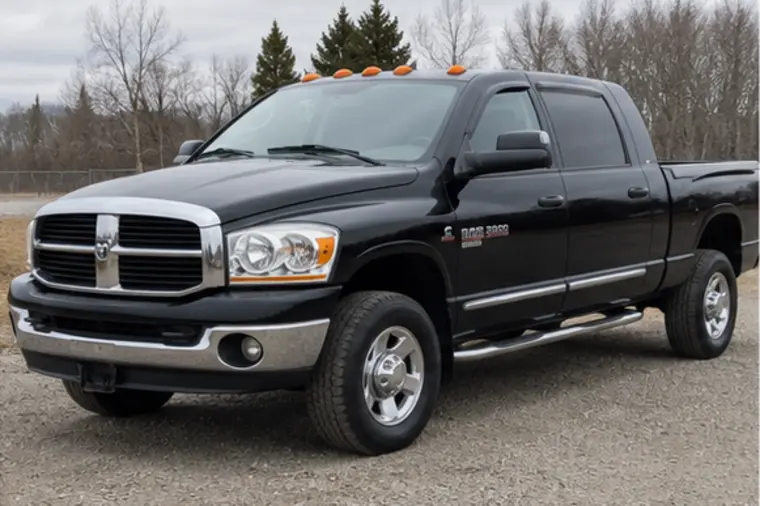
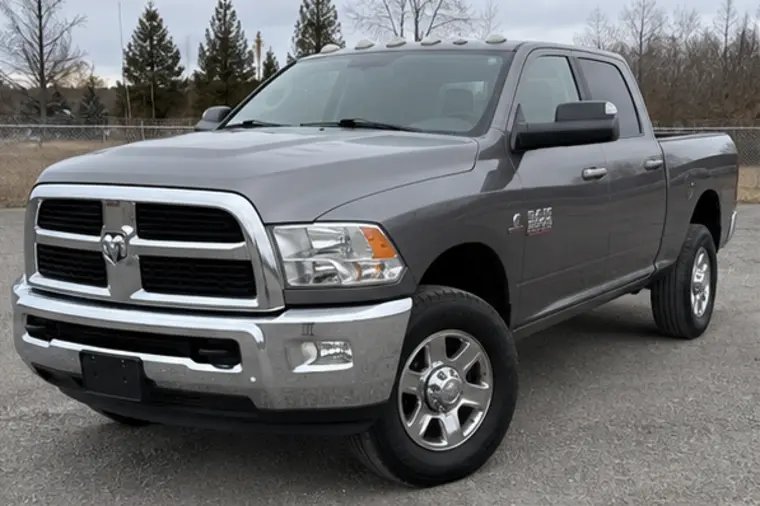
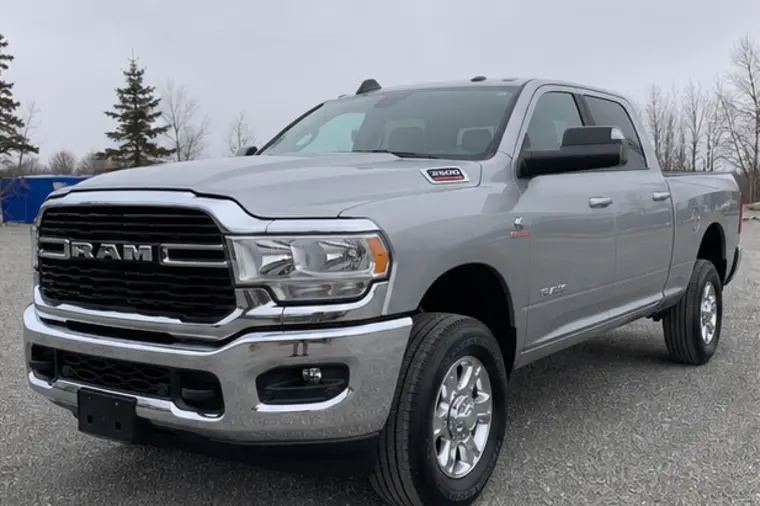
Cummins-powered pickup history begins in 1989, but 'Cummins' covers mechanically and electronically different engines installed in changing Dodge and RAM platforms.
Generation timeline
5.9L 12-valve era
Earlier mechanically governed applications span multiple truck generations and fuel-system details. Age, corrosion, wiring and complete-chassis condition are central buying questions.
5.9L 24-valve era
Electronic management and later common-rail changes make this period more than one uniform configuration; verify exact model year and fuel system.
6.7L Cummins era
The larger-displacement engine introduced modern emissions equipment and later output, transmission and aftertreatment changes across RAM 2500 and 3500 applications.
Transition dates can overlap within a model year. Confirm the VIN, build date, emissions label and official documentation for the exact truck.
Anchor the timeline to actual engine changes
Cummins dates its first Dodge/RAM pickup application to 1989 and the 6.7L launch to 2007. These are useful milestones, but they do not make every truck on either side of a date mechanically identical.
For an older candidate, identify the engine, fuel-system era and transmission from evidence on the truck and its records. Confirm that replacement components and any tuning are documented. A truck that has accumulated several owners and rebuilds deserves inspection as its present configuration, not merely as an attractive entry on a timeline.
Add the 2025 revision to the used-buying comparison
The 2025 announcement describes a revised engine with an eight-speed transmission, plus changes to fuel delivery, service access and cold-start hardware. This is a new reference point within the 6.7L history, not evidence that earlier service procedures apply unchanged.
The buyer’s question is what those differences mean for the exact truck’s maintenance plan and support. Ask the servicing shop to identify the applicable schedule and diagnostic resources. When comparing purchase prices across this transition, separate the cost of acquiring a newer powertrain from your evidence about the condition of each individual candidate.
A generation guide should narrow the search
Start with your intended workload, then select the generations that can be evaluated within your ownership budget. Keep engine reputation, present condition and completed-vehicle capability in separate columns. This prevents a familiar Cummins badge from overshadowing corrosion, transmission issues or inadequate payload.
| Comparison column | Evidence that improves the decision |
|---|---|
| Engine generation | Identification and matching literature |
| Present condition | Cold start, diagnostic report and inspection findings |
| Maintenance position | Dated invoices and work due next |
| Working suitability | Exact labels, body configuration and trailer calculations |
Do not oversimplify generation names
Terms such as 12-valve, 24-valve, common rail and high output describe different dimensions of the powertrain. Record the exact model year, engine, transmission and emissions configuration.
RAM platform context
A Cummins engine is installed in a complete pickup with its own front end, transmission, transfer case, axles, suspension, brakes and payload label. Inspect the truck as a system.
Used-buying research
Build a timeline from service invoices, kilometres and engine hours. Investigate tuning, towing history, idle-heavy use and emissions-system modifications rather than relying on reputation alone.
Connect Cummins history to the RAM platform
Cummins identifies the engine family; Dodge/RAM generation, transmission, suspension, rear axle and configuration determine the rest of the truck. Research both timelines before buying.
Use-buying pages answer a different question
The 5.9L and 6.7L used-buying guides focus on current condition, records, modifications and inspection. They do not duplicate this engine-family timeline.
Use Cummins milestones to identify the engine, not crown a winner
Cummins' history places its first RAM pickup application in 1989, the 6.7L launch in 2007, 1,000 lb-ft in 2019 and the next-generation 6.7L system in 2025. Those milestones identify useful research boundaries. They do not establish failure rates, make one generation universally best or describe the condition of a particular truck.
For a truck advertised under Dodge or RAM, retain the actual make, model year and configuration in the file. Decode the installed engine and transmission, then compare chassis condition and service records alongside the engine. A replacement long block, swapped injection equipment or modified emissions system needs its own documentation before a year label is meaningful.
| Pickup research era | Official milestone | Next evidence |
|---|---|---|
| 1989–1997 5.9L | 1989 launch; Cummins records 160 hp at the beginning | Exact injection-era application and age-related service file |
| 1998.5–2007 5.9L | Output and fuel-system revisions within the 5.9L era | Installed engine identity before applying year shorthand |
| 2007–2018 6.7L | 6.7L launch and later 2013.5 SCR/DEF revision | Exact output, transmission, emissions and duty-cycle context |
| 2019–2024 6.7L | 2019 reaches 1,000 lb-ft; 2021 spans distinct standard and high outputs | Pickup model, transmission and output branch |
| 2025-on 6.7L | 430 hp/1,075 lb-ft pickup system with new eight-speed pairing | Keep pickup and 360-hp/800-lb-ft chassis-cab ratings separate |
Separate displacement, fuel-system and emissions eras
The 5.9L name spans more than one injection system and vehicle generation, so '5.9 Cummins' is not a complete parts or maintenance identity. Establish model year, engine serial or build data, installed injection equipment and transmission before ordering parts or copying a service interval. Age-related wiring, cooling, mounts and chassis condition can matter as much as the long block.
The 6.7L family likewise changes across the 2007 launch, the 2013.5 SCR/DEF revision, the 2019 heavy-duty redesign and the 2025 engine-system and transmission change. Cummins says the 2013.5 system added SCR using DEF and increased cooling capacity, while its 2025 release describes a new fuel-delivery system, variable-geometry turbocharger and eight-speed integration. These are inspection and document boundaries, not reliability scores.
Read horsepower and torque with the application attached
A single model year can contain more than one Cummins rating. Cummins' 2021 page identifies 370 hp and 850 lb-ft for RAM 2500 and 3500 trucks with the 68RFE automatic, while the 420-hp/1,075-lb-ft high-output rating belongs to a RAM 3500 with the Aisin transmission. Applying the high-output number to every 2021 truck would erase the transmission and model boundary.
The 2025 system changes the pairing again: Cummins publishes 430 hp and 1,075 lb-ft for pickups and 360 hp and 800 lb-ft for chassis cabs. Record pickup or chassis cab, truck model, engine rating and transmission as a set. Output alone does not determine payload, tow rating, service needs or remaining life.
| Official example | Bounded application |
|---|---|
| 2018: up to 385 hp / 930 lb-ft | Named 2018 RAM pickup application; not a value for every 6.7L |
| 2021: 370 hp / 850 lb-ft | RAM 2500 and 3500 with 68RFE |
| 2021: 420 hp / 1,075 lb-ft | RAM 3500 high output with Aisin |
| 2025 pickup: 430 hp / 1,075 lb-ft | Next-generation pickup engine with eight-speed pairing |
| 2025 chassis cab: 360 hp / 800 lb-ft | Separate commercial application |
Replace best-engine shorthand with a duty-cycle decision
The best Cummins engine is the correctly identified version in a truck whose capacity, condition, service support and operating costs fit the job. An earlier 5.9L may attract a buyer seeking simpler period equipment, but age, corrosion, transmission condition and prior modifications can dominate. A later 6.7L offers more factory output and modern truck integration, while adding generation-specific aftertreatment and electronic systems that require appropriate diagnosis.
Start with the load: daily payload, trailer type and loaded weight, route, grade, altitude, cold-weather use, idle time and annual distance. Then decide whether the truck's cab, axle, transmission, payload label and exact tow row fit. The engine-family page cannot turn a power rating into a candidate-truck capacity.
Assess reliability with records and scoped evidence
A reliability claim needs a defined engine version, symptom, population and evidence source. Manufacturer service information or a campaign applies only to its named applications and conditions. Owner anecdotes can suggest inspection questions, but cannot supply a failure rate or a universal years-to-avoid list.
For a Canadian truck, use Transport Canada's database and the VIN-specific manufacturer process, then ask for completion records. A U.S. campaign population does not establish Canadian applicability. Scan results, warning history, blow-by observations, fluid condition and cold-start behaviour also need professional interpretation; none is a stand-alone remaining-life forecast.
Build maintenance around the exact manual and duty cycle
Obtain the owner manual and diesel supplement for the exact truck, then map oil, fuel-filter, cooling, transmission, axle and aftertreatment service. Cummins' 2021 page describes a duty-cycle-based oil-change indicator, which means a dashboard message is not proof of a universal fixed interval. Severe duty, idling and short-trip use belong in the service discussion.
A credible history shows dates, distance or hours, parts and fluids, not only a reset indicator. Verify filter housings and fuel-system cleanliness, coolant specification and age, intake and charge-air connections, leaks, battery and charging condition, transmission service and any emissions repairs. Where modifications exist, require parts, calibration and inspection records rather than assuming they improve durability.
Use a generation-aware buying file
Record the VIN, model year, pickup or chassis-cab application, engine serial or verified build identity, output branch, transmission and axle ratio. Add maintenance invoices, campaign status, cold-start observation, scan report, road test, fluid and leak inspection and documentation for replacements or tuning. Keep truck capacity and engine output as separate fields.
Finish by pricing the first year: overdue fluids and filters, tires and brakes, batteries, steering and suspension, cooling or fuel-system work, transmission needs and any unresolved warning. Compare that total and the service-support fit across actual candidates. This method answers the buying question without inventing a universal best generation or life-expectancy number.
Evidence note: manufacturer documents establish the specific facts and applications cited. Buying workflows and cost scenarios are DieselTrucks.ca editorial guidance. These pages do not publish measured failure rates or confirm the condition, recall status or capacity of a particular truck.
FIND TRUCKS USING THIS ENGINE
Connect the engine to a model year and exact truck.
Engine-family research is one part of the configuration. Use the explorer to connect model, year, transmission, cab, bed and rear-wheel context.
General educational content for Canadian diesel-pickup research. Verify the exact truck, model year, certification labels, owner manual and manufacturer documentation, and obtain qualified mechanical or towing advice where appropriate.
Sources & Further Verification
Use the exact model year, VIN, truck labels and current manufacturer documentation when moving from general research to a purchase or towing decision.