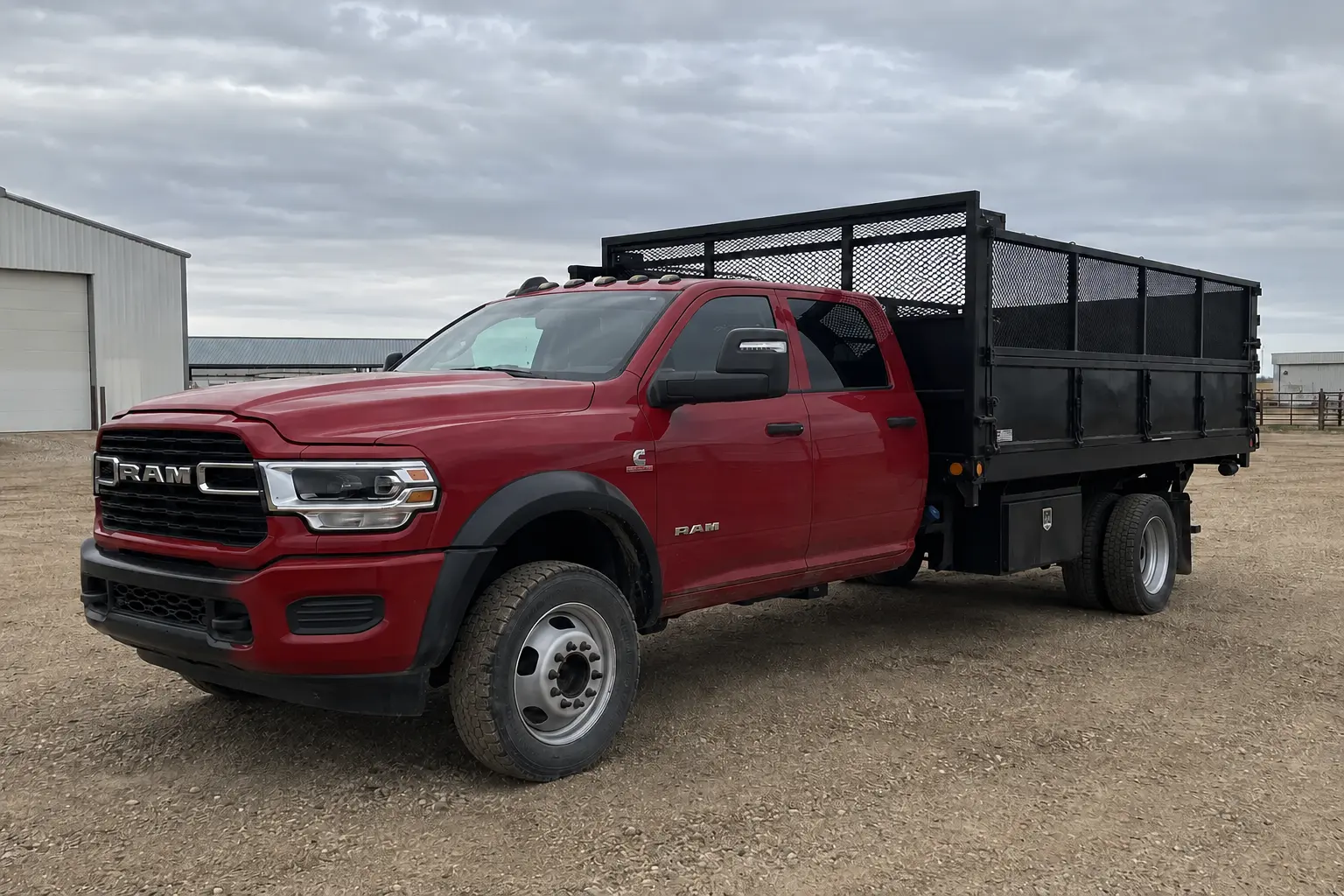
A landscaping truck changes roles across the week. A crew-and-mower day and a wet-soil delivery can impose very different constraints on the same vehicle.
Build the buying decision
Model the day
Crew route + material run + equipment move
Check each load
Cargo + hitch load + axle limits
Inspect seasonal use
Moisture + corrosion + winter work
Write three real loading scenarios
Describe a normal maintenance day, a material-delivery day and the heaviest equipment move you expect to accept. Count the crew, hand tools, fuel, trailer hitch load and material carried on the truck in each scenario.
Check truck and axle ratings for every scenario. A truck that handles an empty landscape body and mower trailer may not also carry a full material load. Treat the additional job as a new calculation rather than assuming unused body volume is available capacity.
Choose access before trim
Evaluate side-door and ramp access, storage security, cleanup, tool reach and the ability to unload without moving unrelated equipment. Consider how a change in body height or cab size affects the crew's workday.
Ask the installer to confirm the body, ramps, mounting and any hydraulic equipment suit the intended loads. Obtain the completed weight and final installation documents. RAM's upfit guide is a starting point for application planning; it is not approval of an unknown used landscape-body installation.
Inspect for seasonal work history
Look for evidence of soil and moisture trapped in the body, corrosive material exposure, damaged trailer wiring and repeated towing wear. Ask whether winter plowing or spreading was also part of the truck's previous life.
Compare the purchase with the business's seasonal cash flow and service opportunities. Schedule known repairs before the busy period and identify a replacement arrangement that can carry the crew and equipment. A lower-kilometre truck with extensive stationary work still needs an hours-aware maintenance review.
Evidence note: manufacturer documents establish the specific facts and applications cited. Buying workflows and cost scenarios are DieselTrucks.ca editorial guidance. These pages do not publish measured failure rates or confirm the condition, recall status or capacity of a particular truck.
General educational content for Canadian diesel-pickup research. Verify the exact truck, model year, certification labels, owner manual and manufacturer documentation, and obtain qualified mechanical or towing advice where appropriate.
Sources & Further Verification
Use the exact model year, VIN, truck labels and current manufacturer documentation when moving from general research to a purchase or towing decision.