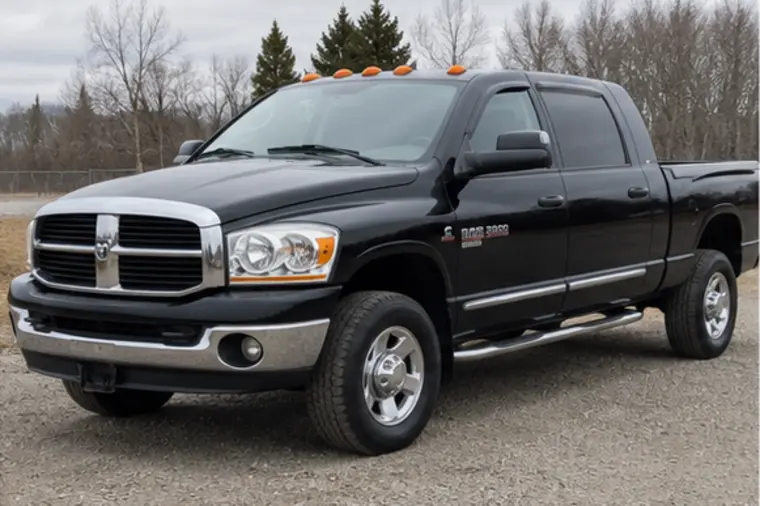
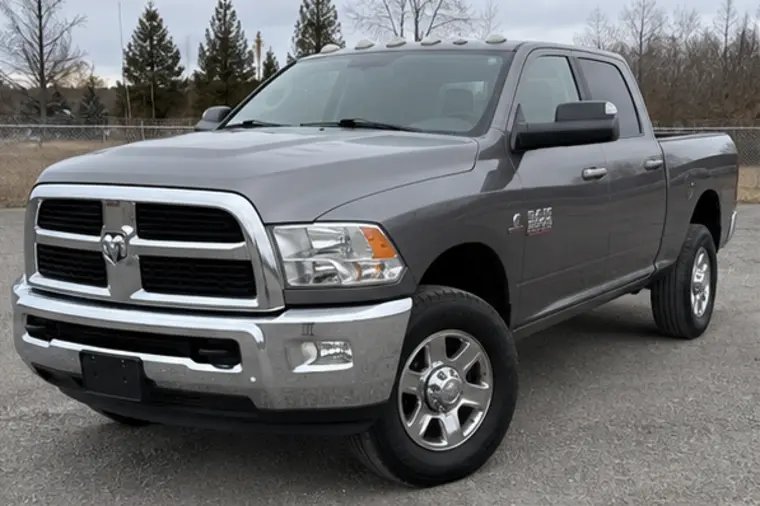
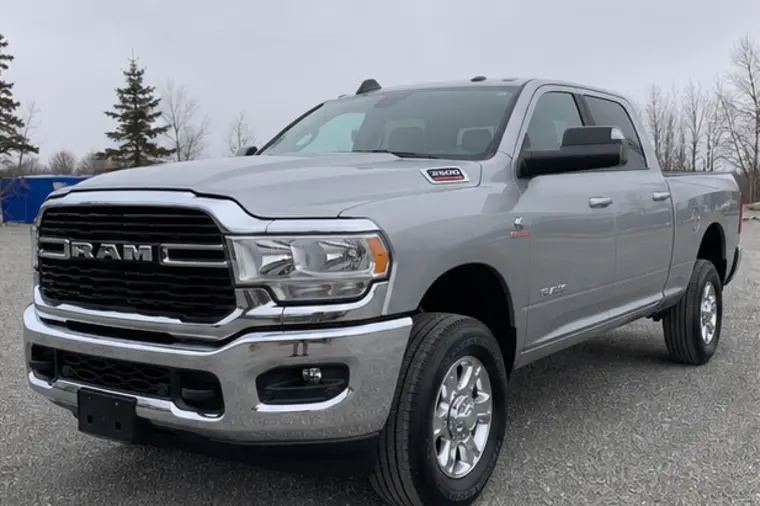
The 6.7L Cummins spans Dodge- and RAM-branded generations, pickup and chassis-cab applications, different transmissions and changing emissions equipment. Canadian recalls define particular 2019–2020 fuel-pump, 2019–2020 chassis-cab oil-monitoring and 2021–2023 heater-relay populations; separate U.S. filings clarify other scope. They are strong application questions, not a universal list of failures or a statistical ranking of every 6.7L.
Identify the truck, engine and transmission
Record VIN, model year, Dodge or RAM branding, 2500/3500 pickup or 3500/4500/5500 chassis cab, engine label, transmission, original market and present emissions configuration. Photograph labels and connect replacement assemblies to invoices.
Do not transfer a pickup campaign to a chassis cab or an Aisin document to a 68RFE truck. The 6.7L badge does not identify every control, rating or service procedure.
Use engine serial information and model-year vehicle literature to locate the correct technical documents before ordering parts or interpreting a seller's claim.
Record axle class and final-stage body as well. A pickup used for commuting, a dually towing near its verified limits and a 5500 service body may share an engine family while presenting different cooling, idle, PTO, access and downtime evidence. The engine guide should inform the complete-vehicle inspection, not erase it.
Capture the symptom before naming a component
Separate no-crank, long crank, no-start, stall, rough running, low power, smoke, oil warning, DPF/DEF message, heater-relay concern and transmission behaviour. Include temperature, load, fuel level, idle/PTO state and warning order.
Preserve codes and freeze-frame data. Ask what changed immediately beforehand and what was disconnected, replaced, cleaned or programmed afterward.
Build a chain from complaint to measurement, conclusion, work and comparable recheck. A list of popular parts is not a diagnosis.
Ask when the symptom began, whether it is repeatable and which operator reports it. Note fuel source, recent service, stored duration and weather. This timeline helps distinguish a continuing concern from an unrelated later event and gives the technician a testable condition instead of a vague “sometimes” description.
Resolve the defined 2019–2020 fuel-pump campaign
Transport Canada 2021691 covers defined 2019–2020 RAM 2500/3500 pickups and 3500/4500/5500 chassis cabs equipped with the 6.7L. It describes a high-pressure fuel pump that could fail gradually and introduce debris, potentially causing a stall and no restart.
Use the current VIN result and detailed repair order. A matching year and engine do not prove inclusion, open status, contamination or current condition.
If pump work is documented, identify whether inspection found debris, which fuel-system components were replaced and how the truck was validated. Diagnose any continuing pressure or drivability complaint separately.
The recall record and a present mechanical inspection answer different questions. A closed campaign entry supports completion of the defined administrative action; it does not establish today’s fuel quality, filter condition or pressure data. An open entry likewise should not be converted into a claim that failure or contamination has already occurred.
Treat heater-relay evidence as a safety scope
Transport Canada 2023026 defines certain 2021–2023 RAM 2500/3500 and 3500/4500/5500 vehicles with an intake-air heater relay that could short, overheat and create a fire risk. The notice includes parking guidance until repair.
Follow current official instructions for the actual VIN and present condition. The related U.S. 13A filing is useful for defined population and remedy context, not for transferring status to a Canadian truck.
Campaign completion addresses that specific action. It does not certify batteries, wiring, starting performance or every underhood heat concern.
Keep oil-monitoring software and engine condition separate
Transport Canada 2021360 covers defined 2019–2020 RAM 3500/4500/5500 chassis cabs and describes incorrect remaining-oil-life information. Its remedy is a control-module software update.
Verify chassis-cab application and completion. Do not apply the campaign to a pickup or treat software completion as proof that oil service was timely.
Reconstruct maintenance by date, kilometres and engine/PTO hours. A display value is one input; invoices, duty and the correct schedule establish the usable record.
Where records are incomplete, define a post-purchase baseline without pretending it recreates prior history. Oil analysis, inspection or fresh fluids may improve the current evidence file, but they cannot prove earlier intervals or reverse operation under an incorrect reminder.
Investigate fuel-system symptoms beyond campaign labels
For low pressure, rail-pressure codes, stall or no-start, capture supply and high-pressure data, filters, fuel quality, electrical tests and contamination evidence. Do not name the pump or injectors solely from the symptom.
If metal or contamination is alleged, preserve a suitable sample and identify every inspected, replaced and reused component. Ask how the system was cleaned and rechecked.
A candidate outside 2021691 still needs diagnosis when it has a fuel symptom, while an included and repaired truck still needs a present-condition inspection.
Diagnose DPF, DEF and reduced-power messages by year
Record exact messages, codes, soot/ash information, pressure and temperature sensor evidence, duty cycle and repair history. Short trips, idling and PTO use are context, not automatic causes.
Regeneration can address soot under correct conditions; it does not prove the underlying fuel, air, sensor or exhaust concern is resolved. A cleared light is not a diagnostic result.
Confirm legal original-equipment emissions hardware and calibration. Do not reproduce unsafe conditions or treat tampering as preventive maintenance.
For repeated visits, place codes, regeneration events and repairs on one timeline. A later warning may reflect the same unresolved cause, a new component or a changed duty cycle. Require evidence linking the latest diagnosis to the latest condition instead of counting visits as a failure-rate statistic.
Separate transmission actions from engine failure
FCA ZA3 covers defined RAM heavy-duty vehicles with the 68RFE transmission and a potential fluid expulsion/fire concern. It is not a Cummins internal-engine failure campaign.
Identify the installed transmission before applying the filing or repair communication. Verify VIN status and ask exactly what inspection, dipstick or transmission work occurred.
For harsh shifting, slipping or a warning, obtain transmission-specific codes and diagnosis. Do not count a transmission action as proof of engine unreliability even though it matters to the complete truck.
Investigate starting and cold-weather complaints
Inspect from a true cold soak when possible. Record ambient temperature, heater use, battery and charging state, wait-to-start behaviour, cranking time, smoke, codes and stabilization.
Separate an active heater-relay campaign from glow-grid operation, battery condition, fuel restriction, calibration and engine-mechanical diagnosis. Similar driver descriptions can represent different systems.
Do not use ether or extended unsafe cranking to force a demonstration. A warmed truck cannot answer the same cold-start question.
Assess turbo, air and exhaust concerns in sequence
Capture air restriction, charge-air leakage, exhaust restriction, boost-related data, codes, smoke and the load/temperature state. Inspect plumbing, clamps and previous repairs before naming the turbocharger.
For a replacement turbo, request original tests, complete scope and comparable post-repair data. A new assembly does not prove an upstream fuel, air, exhaust or control cause was corrected.
Ask whether tuning or emissions changes altered operation. Unknown calibration makes stock service information harder to interpret.
Handle head-gasket and engine-replacement claims honestly
Coolant pressure, loss, overheating, oil/coolant mixing and “head gasket” claims require tests for the actual truck. The reviewed campaign set does not provide a cross-generation head-gasket failure rate.
For an engine replacement or rebuild, identify serial and part numbers, reason, installed scope, reused components, machining, calibration, installer and outcome. “New engine” is not a complete description.
Verify cold/hot operation, fluids, scan results and a relevant load recheck. Major engine work does not reset the transmission, emissions, chassis or body.
Use a symptom-to-evidence matrix
The matrix routes evidence; it is not a frequency table or repair instruction.
| Reported concern | Evidence to capture | Avoid this shortcut |
|---|---|---|
| Stall or no-start | Exact application, VIN status, fuel/pressure/electrical and contamination findings | Assuming every case is the recalled pump |
| Underhood heat or odour | Present condition, VIN instructions, relay/wiring inspection | Treating every heat concern as the heater campaign |
| Oil-life mismatch | Chassis-cab scope, software status, actual service by date/km/hours | Treating a display update as completed maintenance |
| DPF/DEF or reduced power | Codes, soot/ash, sensors, duty and upstream causes | Calling regeneration a complete diagnosis |
| Shift or fluid concern | Transmission identity, campaign and transmission tests | Counting it as engine failure |
| Coolant loss or major engine claim | Pressure/temperature tests, disassembly and repair evidence | Predicting failure from reputation |
Inspect tuning, emissions and auxiliary equipment
Identify calibrations, emissions changes, intake/exhaust hardware, auxiliary fuel, idle/PTO programming and engine swaps. Ask who performed the work and retain the software and part record.
Confirm legality, insurability and service acceptance in the relevant province. “Deleted,” “stock tune” and “built” remain seller descriptions until verified.
For chassis cabs, inspect body wiring, PTO, hydraulics, grounds and service access. The completed vocational truck can create diagnostic and downtime needs beyond the engine.
Stage the used-truck inspection
Before travel, request identity, cold-start evidence, warning check, scan summary, maintenance by date/km/hours, recall result, modifications and major-repair invoices. Resolve mismatches first.
On site, inspect fluids, leaks, filtration, fuel system, cooling, intake/charge air, exhaust/emissions, wiring, batteries, transmission, frame and complete vehicle. Then perform safe cold/hot and road evaluation.
Afterward, obtain application-specific diagnosis for material findings. Separate overdue maintenance, known work, unresolved investigation and optional upgrades in the budget.
Plan support and downtime
Confirm that a shop accepts the exact RAM, engine, transmission, modifications and installed body. A Cummins locator supplies a support starting point, not a promise that a facility services every pickup or upfit.
Include transport, diagnostic time, parts, body access, reassembly, validation and substitute capacity. A component quote can substantially understate commercial interruption.
Use current written estimates for the candidate. Do not rely on generic repair prices or remaining-life promises.
Preserve the evidence chain
Save VIN and engine identity, symptom conditions, codes, measurements, technician conclusion, parts and labour, programming and post-repair outcome. Connect all records to the same truck.
If the symptom returns, compare conditions rather than assuming the same part failed. Continued, intermittent and new concerns need different interpretation.
Classify systems as supported, repaired and rechecked, unresolved or not assessed. Do not average these into a fabricated reliability score.
6.7L Cummins problem questions
Does every 2019–2020 6.7L need a fuel system? No. Verify the VIN, recorded remedy and present diagnosis.
Does the heater-relay recall prove starting trouble? No. It defines a fire-risk campaign, not every cold-start cause.
Can oil-life software prove missed maintenance? No. Reconstruct actual service and duty.
Is a 68RFE campaign an engine defect? No. It matters to the truck but remains a transmission action.
Does a costly build establish reliability? No. Verify the reason, scope, related systems and recheck.
Evidence note: manufacturer documents establish the specific facts and applications cited. Buying workflows and cost scenarios are DieselTrucks.ca editorial guidance. These pages do not publish measured failure rates or confirm the condition, recall status or capacity of a particular truck.
General educational content for Canadian diesel-pickup research. Verify the exact truck, model year, certification labels, owner manual and manufacturer documentation, and obtain qualified mechanical or towing advice where appropriate.
Sources & Further Verification
Use the exact model year, VIN, truck labels and current manufacturer documentation when moving from general research to a purchase or towing decision.
- Cummins manuals and technical information — engine-specific literature access
- Mopar owner-manual access — model-year vehicle literature
- Transport Canada 2021691 — defined 2019–2020 6.7L RAM fuel-pump recall
- Mopar Canada — current VIN recall and customer-satisfaction notice lookup
- Transport Canada 2023026 — defined 2021–2023 intake-heater relay recall and parking advice
- FCA 13A / U.S. 23V-060 — defined 2021–2023 intake heater relay population
- Transport Canada 2021360 — defined 2019–2020 chassis-cab oil-monitoring software recall
- FCA ZA3 / U.S. 22V-835 — specified 68RFE transmission and model years
- FCA ZA3 repair communication — transmission dipstick campaign scope
- Cummins sales and service locator — application-aware support search
- Cummins–RAM engine history