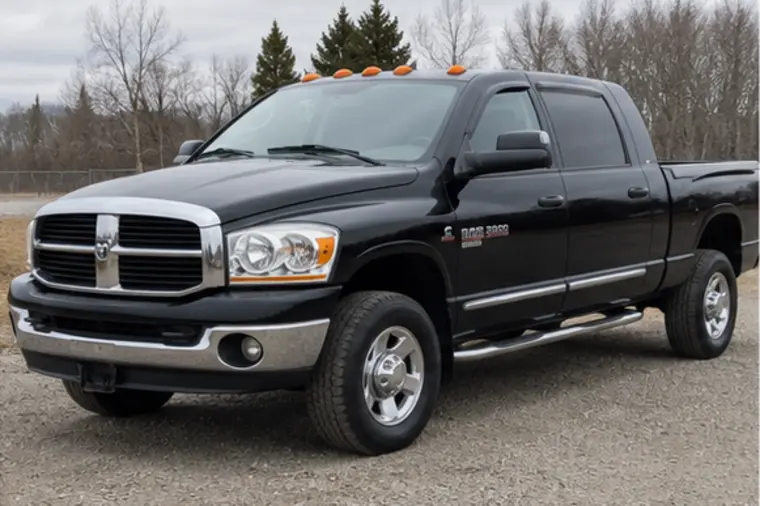
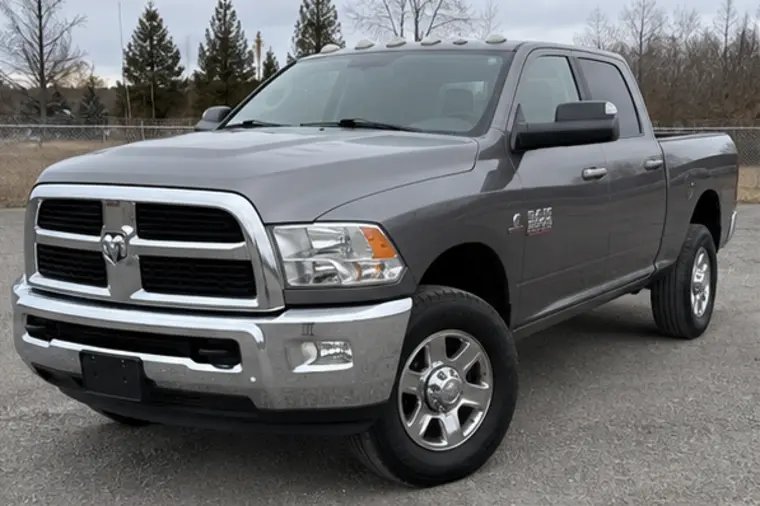
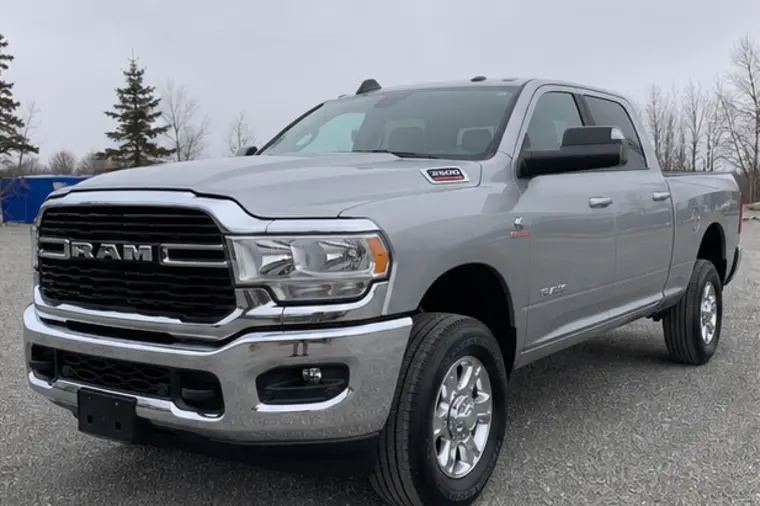
No reviewed primary source supplies one exposure-adjusted reliability percentage for every Dodge/RAM 6.7L Cummins. The family spans pickups and chassis cabs, different transmissions, emissions eras and a revised 2025 powertrain. Transport Canada records define particular 2019–2020 fuel-pump and chassis-cab oil-monitoring populations and a 2021–2023 heater-relay population. They support exact VIN and inspection questions, not a fleet-wide score. Reliability here means whether one verified truck can perform its assignment repeatedly, legally and safely with acceptable support and downtime.
Define the reliability assignment
Record intended payload, trailer, route, winter exposure, annual kilometres, idle/PTO use, downtime tolerance, recovery distance and substitute capacity. A personal tow vehicle and a remote commercial chassis cab have different consequences.
Set pass, pause and reject thresholds before inspecting candidates. A smooth unloaded demonstration cannot prove repeatable near-limit or cold-weather work, while a documented repair history may fit planned light use.
Evaluate the complete working unit, not the engine reputation in isolation.
Establish exact identity
Record VIN, model year, Dodge or RAM branding, 2500/3500 pickup or 3500/4500/5500 chassis cab, body, wheelbase, drivetrain, rear-wheel arrangement, axle, engine label, transmission, original market and emissions configuration.
Connect engine, transmission, module and body changes to invoices. Do not transfer pickup ratings or campaigns to chassis cabs or assume every 6.7L uses the same transmission and calibration.
Identity conflicts remain unresolved until labels, build information and installed equipment agree.
Use an evidence hierarchy
Keep official scope, candidate status, repair effectiveness and operational consequence in separate fields.
| Evidence | Supports | Does not prove alone |
|---|---|---|
| Candidate measurements | Present condition under recorded conditions | Future life in every duty |
| Complete repair chronology | Complaint, diagnosis, work and recheck | Renewal of unrelated systems |
| OEM bulletin or recall | Defined scope and required path | Population failure frequency |
| Exact-year manual | Operating and maintenance requirements | Prior-owner compliance |
| Seller report | A question to investigate | Cause, frequency or outcome |
Separate severity, frequency and consequence
A safety recall can describe a serious outcome without showing that every included vehicle experiences it. A service concern can be widely discussed without an exposure denominator. Neither bulletin count nor search volume measures failure probability.
Record severity from the official notice and actual symptom, frequency only from a suitable population dataset, and candidate condition from VIN, measurements and repair evidence. The reviewed primary set does not provide a comparable family-wide denominator.
Then add the buyer's consequence: trailer control, recovery distance, work interruption, substitute capacity and local support. A low-frequency event may exceed a remote commercial operator's tolerance, while a completed, verified repair may fit another buyer. State which dimension drives the decision instead of compressing all three into a reliability score.
Treat 2025 as a specification change, not proof
Cummins' 2025 announcement defines a revised engine, eight-speed transmission and separate outputs: 430 hp/1,075 lb-ft for pickups and 360 hp/800 lb-ft for chassis cabs.
Those values do not apply backward or across applications, and the announcement is not long-term reliability data. Use it to identify the exact 2025 powertrain and service questions.
A newer specification may better fit a workload but also has a shorter evidence horizon. Compare actual support, warranty, price and configuration rather than declaring it proven superior.
Audit maintenance by date, kilometres and hours
Use exact-year RAM literature and Cummins technical resources for oil, fuel filtration, coolant, transmission, axles and emissions service. Record product, date, kilometres, engine/PTO hours and duty.
Towing, idle, PTO, dust, short cycles, winter work and storage can make odometer-only history misleading. Fresh baseline service cannot recreate missing prior intervals.
Classify history as supported, partial or unknown instead of assuming no invoice means no problem.
Resolve the 2019–2020 fuel-pump campaign
Transport Canada 2021691 defines specified 2019–2020 RAM 2500/3500 pickups and 3500/4500/5500 chassis cabs with a high-pressure pump that could fail gradually, introduce debris and lead to stall/no restart.
Verify the Canadian VIN and retain the work order. A matching year and engine do not prove inclusion, failure, contamination or current condition.
If work occurred, identify findings, replaced/reused components, cleaning and validation. Campaign population is not a reliability numerator.
Diagnose fuel symptoms beyond campaign labels
For long crank, no-start, pressure codes, stall or low power, preserve codes and obtain supply/high-pressure, electrical, filter, fuel-quality and contamination evidence.
An out-of-scope truck still needs diagnosis when symptomatic. An included and repaired truck still needs present-condition inspection.
A pump or injector invoice supports reliability only when complaint, cause, complete system boundary and comparable outcome align.
Keep oil-monitoring software and maintenance separate
Transport Canada 2021360 covers specified 2019–2020 RAM 3500/4500/5500 chassis cabs with incorrect remaining-oil-life information and a software remedy.
Do not apply it to pickups or treat completion as proof oil service was timely. Reconstruct actual maintenance by date, distance, hours, product and duty.
An updated display closes a defined software action; it does not certify current oil condition or internal engine health.
Treat heater-relay evidence as safety scope
Transport Canada 2023026 defines specified 2021–2023 RAM pickups and chassis cabs whose intake-air heater relay could short, overheat and create fire risk. Follow current official instructions for the VIN.
Completion does not certify batteries, charging, grid-heater operation, wiring or every cold-start complaint. An open action is not proof damage occurred.
Keep campaign status and mechanical diagnosis separate while including safety and scheduling consequences.
Separate transmission reliability
Identify transmission, calibration, converter, cooler and service history. FCA ZA3 concerns defined 68RFE-equipped RAM HD vehicles and a potential fluid expulsion/fire condition; it is not an internal Cummins failure campaign.
Verify exact transmission and VIN status. For shift, slip, temperature or fluid concerns, obtain transmission-specific codes and diagnosis.
The transmission matters to complete-truck reliability but should not be miscounted as engine failure.
Evaluate cold and hot operation separately
From a true cold soak, record temperature, heater use, batteries, wait-to-start behaviour, cranking, smoke, warnings, codes and stabilization. A warmed truck cannot answer the same question.
After full warm operation, evaluate restart, cooling, fluids, warnings and drivability. One abnormal start cannot identify relay, grid heater, battery, fuel, compression or calibration cause without measurements.
If season prevents a relevant winter test, preserve the limitation rather than marking it passed.
Diagnose emissions evidence by code and duty
Record DPF/DEF messages, codes, soot/ash, pressure and temperature sensors, regeneration history and duty. Short trips and idle are context, not automatic causes.
Regeneration may address soot but does not remove ash or settle upstream fuel, air, sensor or engine causes. A cleared light is not a complete repair record.
Confirm legal original-equipment hardware and calibration. Deleted or unknown systems change legality, insurance, diagnostics and service support.
Investigate cooling, air and turbo in sequence
For coolant loss or overheating, record trends, leaks, pressure tests, temperature data, fan behaviour and load. Do not name a gasket, cooler, pump or radiator from reputation.
For low power, capture air restriction, charge-air leakage, fuel delivery, exhaust restriction, boost data, codes and smoke. Inspect plumbing and wiring before naming the turbo.
Previous repairs require original findings, complete scope and condition-matched recheck.
Read major engine work narrowly
For rebuild, head-gasket or replacement-engine claims, obtain complaint, measurements, disassembly findings, assembly/serial identity, machining/parts, reused systems, calibration, installer and outcome.
A new engine does not renew fuel, cooling, emissions, transmission, driveline, electrical, chassis or body by default. Determine whether the original cause was addressed.
Invoice value is not a reliability score; coherent diagnosis and recheck are what strengthen evidence.
Reconstruct repeated visits as one chronology
Place warning dates, codes, operating conditions, tests, parts, programming and outcomes on a single timeline. A repeated shop visit may be continuation of one unresolved complaint, staged work, an intermittent connection or a new concern.
Do not count visits as independent failures unless evidence supports that interpretation. Compare whether the same condition returned under the same load, temperature and duty and whether the previous repair addressed the measured cause.
When records stop at parts replacement, ask the inspecting shop what can be verified now. Classify the result as repaired and rechecked, unresolved or not assessed; do not assume either success or failure from the invoice total.
Retain photographs, scan files and dated work orders with the timeline so later evidence can be reconciled to the same vehicle and operating condition.
Audit tuning and vocational integration
List calibrations, injectors, turbo, fuel, intake/exhaust and transmission changes. On chassis cabs, include PTO programming, hydraulics, body wiring, grounds, mounting and cooling airflow.
Confirm provincial/federal legality, insurance and shop acceptance. “Deleted,” “stock” and “built” remain reports until hardware, software and records support them.
The completed vehicle can create access and downtime needs beyond the engine.
Verify load fit and complete-truck condition
Calculate occupants, cargo, body, accessories, hitch equipment and loaded tongue/pin weight using labels, axle/tire and hitch limits and exact RAM configuration literature.
Inspect transmission, axles, steering, brakes, tires, wheels, frame, mounts, electrical system, body and corrosion. Engine output cannot create payload or trailer capacity.
A sound engine cannot make an unsafe or overloaded truck reliable for the assignment.
Compare age, kilometres, hours and duty
Age reveals time-based service, storage, wiring and corrosion exposure; kilometres reflect road use; engine/PTO hours can reveal stationary work. Consider all three with service and wear.
Low kilometres do not prove light duty, while higher kilometres do not prove abuse. Compare the seller's description with hours, idle/PTO history, body evidence and maintenance.
Use inconsistencies as inspection questions rather than automatic conclusions.
Plan Canadian support and downtime
Use Cummins and RAM resources to locate possible support, then confirm the facility accepts the exact pickup/chassis cab, transmission, body, emissions configuration and modifications.
A locator entry does not certify expertise, parts or scheduling. Include recovery, diagnosis, body access, parts delay, validation and substitute capacity.
Use current candidate-specific scopes; generic repair prices and remaining-life promises are unsupported.
Apply explicit classifications
Reclassify only when evidence resolves the same reason for pause. A discount or unrelated service does not close it.
| Classification | Required evidence |
|---|---|
| Suitable | Identity aligns; records coherent; cold/hot operation satisfactory; legal configuration; safe load fit; support credible |
| Suitable after defined work | Written scope, responsibility, cost, timing and relevant recheck fit the plan |
| Pending diagnosis | Material symptom, identity conflict, campaign question or repair gap remains |
| Unsuitable | Unsafe, overloaded, illegally configured or unsupported beyond requirements |
Preserve a candidate reliability file
Save advertisement, VIN and labels, exact manuals, campaign results, maintenance, scans, inspection, repairs, modifications, load documents, estimates and limitations.
Mark seller statements as reports until verified and retain superseded results. Connect complaint, diagnosis, work and outcome to the same truck.
The result is a defensible candidate decision, not a percentage, fleet study, warranty or remaining-life forecast.
6.7L Cummins reliability questions
Is there one official reliability percentage? No reviewed primary source supplies exposure-adjusted family-wide data.
Does a recall mean every truck fails? No. It defines a population and action, not prevalence or candidate condition.
Is 2025 proven more reliable? No. It is a revised powertrain with a shorter evidence horizon.
Does a replacement engine settle reliability? No. Verify cause, scope, reused systems and outcome.
What supports a purchase? Exact identity, coherent service/repair evidence, satisfactory inspection, legal configuration, safe load fit, credible support and acceptable downtime.
Evidence note: manufacturer documents establish the specific facts and applications cited. Buying workflows and cost scenarios are DieselTrucks.ca editorial guidance. These pages do not publish measured failure rates or confirm the condition, recall status or capacity of a particular truck.
General educational content for Canadian diesel-pickup research. Verify the exact truck, model year, certification labels, owner manual and manufacturer documentation, and obtain qualified mechanical or towing advice where appropriate.
Sources & Further Verification
Use the exact model year, VIN, truck labels and current manufacturer documentation when moving from general research to a purchase or towing decision.
- Cummins January 2025 announcement — revised engine, eight-speed and separate pickup/chassis-cab outputs
- Cummins manuals and technical information — engine-specific literature access
- Mopar owner-manual access — model-year vehicle literature
- Transport Canada 2021691 — defined 2019–2020 6.7L RAM fuel-pump recall
- Mopar Canada — current VIN recall and customer-satisfaction notice lookup
- Transport Canada 2021360 — defined 2019–2020 chassis-cab oil-monitoring software recall
- Transport Canada 2023026 — defined 2021–2023 intake-heater relay recall and parking advice
- FCA ZA3 / U.S. 22V-835 — specified 68RFE transmission and model years
- FCA ZA3 repair communication — transmission dipstick campaign scope
- Cummins sales and service locator — application-aware support search
- Cummins–RAM engine history