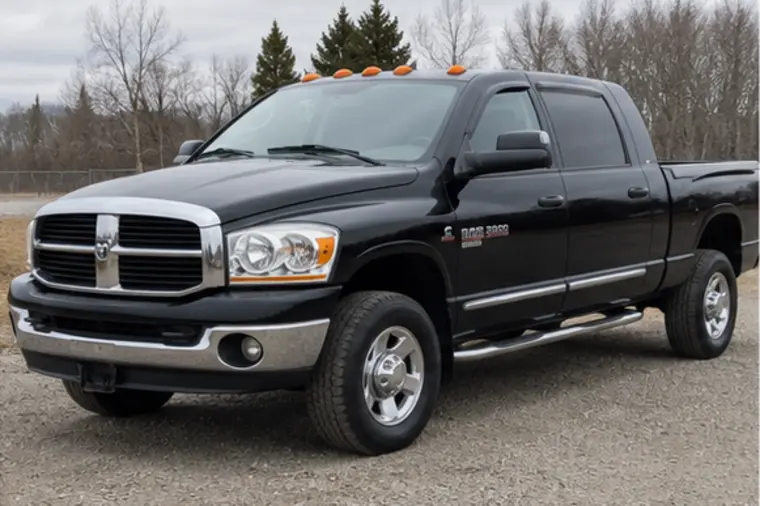
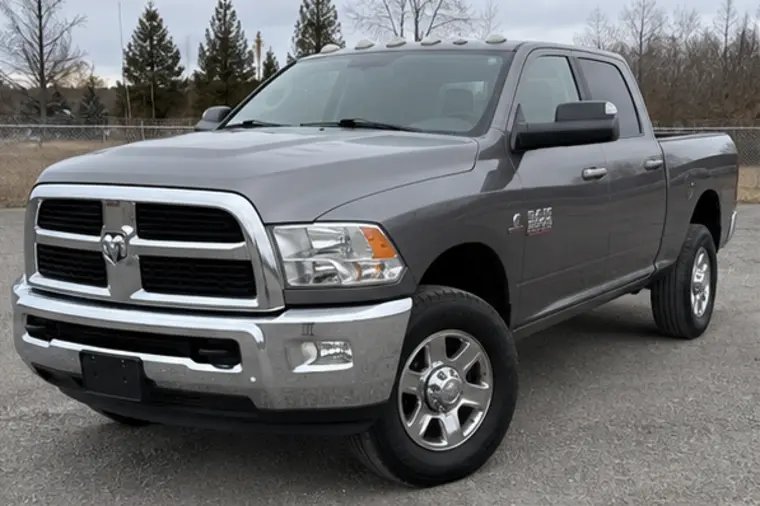
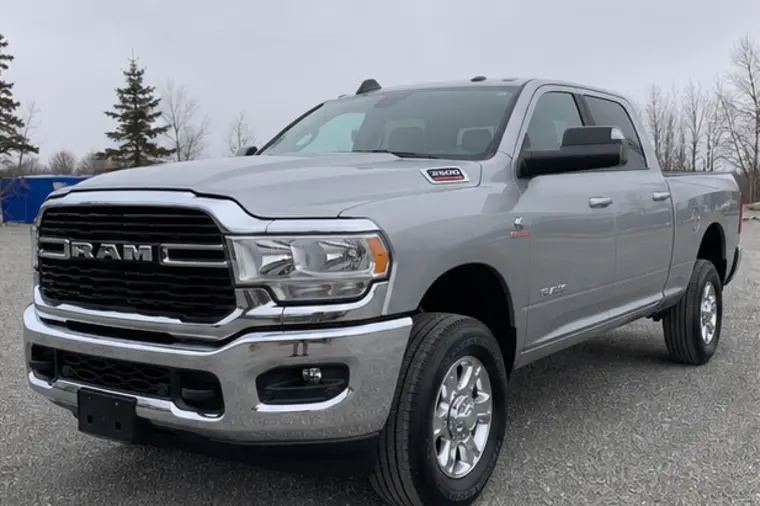
No reviewed primary source provides an exposure-adjusted ranking that names one universal best 6.7L Cummins year. The family spans Dodge- and RAM-branded trucks, pickups and chassis cabs, multiple transmissions, changing emissions equipment and a major 2025 powertrain revision. Cummins documents separate 2025 pickup and chassis-cab outputs, while Canadian recalls define narrow fuel-pump, oil-monitoring and heater-relay populations. Use those boundaries to compare actual trucks; do not turn them into unsupported year scores.
Start with the job, not a favourite year
Define occupants, payload, trailer and loaded pin or tongue weight, route, winter exposure, annual distance, idle/PTO duty, downtime tolerance, recovery distance and service geography. A personal tow vehicle and a remote commercial chassis cab need different margins.
Eliminate configurations that cannot safely or practically perform the assignment. Then compare remaining trucks using the same identity, maintenance, operating, repair and complete-vehicle evidence sheet.
A documented earlier truck can outrank a newer candidate with identity conflicts, unresolved warnings or inadequate support. The calendar year opens the file; it does not settle the purchase.
Compare age, kilometres and engine hours together
Model year, odometer distance and engine hours answer different questions. Age can expose seals, wiring, corrosion, storage and time-based service; kilometres describe road use; engine and PTO hours can reveal stationary or low-speed work the odometer misses.
Calculate average speed from credible kilometres and hours only as a screening clue, not proof of duty. Compare it with idle/PTO history, body wear, fuel use, service intervals and the seller's description. An unusually low or high result should produce questions, not an automatic verdict.
For a newer low-kilometre truck, verify storage, calendar maintenance, software/campaign history and warranty status. For a higher-use truck, focus on consistent intervals, completed repairs, hot/cold operation and planned component service. The best candidate is the one whose three timelines agree with its records and condition.
Verify the exact application and installed powertrain
Record VIN, model year, Dodge or RAM branding, 2500/3500 pickup or 3500/4500/5500 chassis cab, cab/body, wheelbase, drivetrain, rear-wheel arrangement, axle, engine label, transmission, original market and emissions configuration. Photograph labels and connect replacements to invoices.
Do not transfer a pickup output, campaign or maintenance statement to a chassis cab. Do not infer transmission from the engine badge or assume a replacement engine retained the original calibration and supporting hardware.
When build information, labels, seller description and repair records disagree, pause. Exact application governs manuals, campaigns, ratings, service procedures and the support path.
Use documented eras without creating a league table
The table structures research. It does not identify failure frequency or a universal winning year.
| Comparison point | Primary evidence available | Candidate proof still required |
|---|---|---|
| Early 6.7L introduction context | Dodge's 2007 announcement distinguishes the new 6.7L from the 5.9L it replaced | Exact build, engine, transmission, emissions equipment and records |
| 2019–2020 fuel-pump population | Transport Canada 2021691 defines included pickup and chassis-cab applications | VIN status, work order, contamination findings and present condition |
| 2019–2020 chassis-cab oil display | Transport Canada 2021360 defines a software population | Exact chassis-cab identity and actual service chronology |
| 2021–2023 heater-relay population | Transport Canada 2023026 defines vehicles and safety guidance | Current VIN result, remedy evidence and present wiring/starting condition |
| 2025 revised powertrain | Cummins defines new engine features, eight-speed and separate outputs | Exact pickup/chassis-cab specification, workload, price and support |
Treat 2007 as an introduction boundary, not a verdict
Dodge's 2007 heavy-duty announcement identifies the transition from 5.9L to 6.7L and supplies contemporary powertrain context. It establishes a historical boundary for document selection, not remaining life or superiority.
For an early candidate, retrieve the exact model-year Dodge/RAM manual, engine information and transmission documentation. Verify present emissions equipment, calibrations and all replacements after years of ownership.
Age affects seals, wiring, cooling, chassis, body and parts access even when the engine starts well. Compare the complete older truck and its evidence rather than buying a milestone.
Treat 2025 as a distinct new powertrain reference
Cummins' January 2025 announcement describes a revised 6.7L with an eight-speed transmission and separate outputs: 430 hp and 1,075 lb-ft for pickups, 360 hp and 800 lb-ft for chassis cabs.
Those figures apply only to the stated 2025 applications. They do not rewrite earlier engine specifications or make one output appropriate for both pickup and vocational trucks.
The new reference may matter for workload, service access, cold-start hardware and acquisition cost. It does not supply long-term comparative reliability. Evaluate a 2025 candidate as a new configuration with its own evidence horizon.
Compare transmissions as part of the powertrain
Identify the installed transmission, calibration, converter, cooler, service history and any rebuild or replacement. A Cummins badge does not answer which automatic or manual is present, and pickup/chassis-cab combinations can differ.
For “rebuilt” claims, obtain complaint, tests, disassembly or findings, parts, programming, installer, warranty and condition-matched recheck. A large invoice is not a diagnosis by itself.
Evaluate engagement, shifts, temperature, leaks and warnings with application-specific procedures. Keep transmission evidence separate from internal-engine reliability while including it in the complete-truck decision.
Resolve the defined 2019–2020 fuel-pump campaign
Transport Canada 2021691 covers defined 2019–2020 RAM 2500/3500 pickups and 3500/4500/5500 chassis cabs with the 6.7L. It describes a high-pressure pump that could fail gradually, introduce debris and cause a stall and no restart.
Verify the actual VIN through the current Canadian manufacturer path and retain the detailed repair order. Model year and engine alone do not prove inclusion, open status, contamination or present condition.
If work occurred, identify whether debris was found, which components were inspected or replaced, how the system was cleaned and how operation was validated. Do not turn campaign population into a failure rate.
Keep fuel-system diagnosis broader than recall status
For long crank, no-start, rail-pressure code, stall or low power, capture supply/high-pressure data, filters, fuel quality, electrical tests and contamination evidence. Do not name the pump or injectors solely from a symptom.
An out-of-scope truck still requires diagnosis when it has a fuel concern. An included and repaired truck still needs present-condition evidence.
For previous fuel work, require original complaint, complete system boundary, all reused components and comparable recheck. A pump replacement without contamination and downstream scope may leave important questions open.
Treat chassis-cab oil-monitoring software narrowly
Transport Canada 2021360 covers defined 2019–2020 RAM 3500/4500/5500 chassis cabs and incorrect remaining-oil-life information. The remedy is a control-module update.
Verify that the candidate is a covered chassis cab and retain completion evidence. Do not transfer the action to a pickup or treat software completion as proof that oil changes happened on time.
Reconstruct service by date, kilometres, engine/PTO hours, product and duty. A display value is one input; invoices and the correct schedule establish the usable record.
Treat the heater-relay campaign as safety evidence
Transport Canada 2023026 defines certain 2021–2023 RAM 2500/3500 and 3500/4500/5500 vehicles whose intake-air heater relay could short, overheat and create a fire risk. Follow current official instructions for the exact VIN.
Campaign completion addresses that defined action. It does not certify batteries, charging, wiring, grid-heater operation or every cold-start complaint.
Keep safety severity, campaign scope and candidate mechanical condition separate. A listed population is not a model-year failure percentage.
Compare maintenance by date, kilometres, hours and duty
Use the exact-year RAM owner literature and Cummins technical resources to build the schedule. Separate engine oil/filter, fuel filtration, coolant, transmission, transfer case, axles and emissions-related service.
Record date, kilometres, engine/PTO hours, product specification and duty. Towing, idling, PTO, dusty sites, short cycles, winter use and storage can make odometer-only comparisons misleading.
Fresh baseline service improves current position but cannot recreate missing history. Treat prior compliance as unknown unless records support it.
Compare DPF, DEF and regeneration history
Record exact warnings and codes, soot and ash information, pressure/temperature sensor evidence, regeneration history and duty. Short trips and idling provide context but are not automatic causes.
Regeneration can address soot under correct conditions; it does not remove ash or prove that upstream fuel, air, sensor or engine causes are resolved. A cleared message is not a diagnostic result.
Confirm legal original-equipment emissions hardware and calibration. A deleted or unknown configuration changes legality, insurance, diagnostics and service acceptance and is not a best-year advantage.
Test true cold and fully warm operation
Arrange a true cold soak when safe. Record ambient temperature, block-heater use, batteries and charging, wait-to-start behaviour, cranking, smoke, warnings, codes and stabilization.
Separate heater-relay campaign status from battery, fuel restriction, grid-heater, calibration and engine-mechanical diagnosis. Similar driver descriptions can represent different systems.
After full warm operation, evaluate restart, cooling, fluids and drivability. One warm demonstration cannot answer winter behaviour, and one abnormal start cannot name a cause without measurements.
Investigate cooling, air and turbo evidence in sequence
For coolant loss or temperature concerns, record level trend, visible leakage, pressure testing, temperature data, fan behaviour and load. Do not name a gasket, cooler, pump or radiator from reputation alone.
For low power, capture air restriction, charge-air leakage, fuel delivery, exhaust restriction, boost data, codes, smoke and operating state. Inspect plumbing and wiring before naming a turbocharger.
Previous work supports a candidate only when the original finding, full repair boundary and comparable result align. A new turbo or topped reservoir cannot certify related systems.
Read engine replacements as bounded work
For a rebuild, head-gasket claim or replacement engine, obtain complaint, tests, disassembly findings, assembly/serial identity, machining or parts scope, reused components, calibration, installer and outcome.
A replacement engine does not renew the transmission, fuel system, cooling, emissions, electrical, chassis or body by default. Ask whether the original cause and contributing systems were addressed.
Compare coherent repair chronologies rather than invoice totals. Expensive work is valuable evidence only when it closes the original condition.
Audit tuning, emissions and vocational equipment
List tuners, calibrations, injectors, turbo, fuel, intake/exhaust and transmission changes. For chassis cabs, include PTO programming, body wiring, hydraulics, grounds, mounting and cooling airflow.
Confirm federal/provincial legality, insurance and shop acceptance. “Deleted,” “returned to stock” and “built” are seller statements until hardware, software and records support them.
The completed vocational truck can create service-access and downtime needs beyond the engine. Treat its full configuration as the ownership unit.
Verify payload and towing independently
Calculate occupants, cargo, accessories, body, hitch equipment and loaded tongue or pin weight. Use door labels, axle/tire limits, hitch rating and exact original RAM configuration literature.
Do not infer capacity from engine output. Pickup versus chassis cab, cab, wheelbase, drivetrain, axle, tires, body and equipment can change usable payload and trailer ratings.
Use representative scale weights when the assignment approaches a limit. Reject a mismatched truck regardless of year reputation or engine condition.
Inspect the complete truck
Assess transmission, transfer case, axles, steering, brakes, tires, wheels, frame, mounts, hitch, electrical system, body and corrosion. Record plow, towing, service-body and off-road history.
A strong engine cannot make an unsafe or structurally compromised truck suitable. Conversely, an older truck with coherent full-vehicle evidence may remain worth evaluation.
Keep engine, transmission, chassis and body findings in separate columns so one good system does not hide another system's unresolved risk.
Plan Canadian support and downtime
Use Cummins and RAM/Mopar service resources to identify possible support, then confirm the facility accepts the exact pickup or chassis cab, transmission, body, emissions configuration and modifications.
A locator entry does not certify expertise, parts or appointment availability. Ask about diagnostic access, body removal/access, recovery and validation.
For commercial work, include transport, parts delay and substitute capacity. A repairable truck may still be unsuitable for time-critical or remote work.
Compare campaign completion with present condition
A closed campaign record establishes that the defined action was recorded for the VIN; it does not certify today's fuel quality, wiring, transmission, batteries, emissions equipment or complete engine. An open campaign identifies administrative and safety work, not proof the defect has already occurred.
Keep three dated columns: official VIN status, work actually documented and present inspection findings. If they conflict, resolve the record with the manufacturer or qualified service facility rather than choosing the most favourable interpretation.
Campaign work may affect delivery timing, parts availability and the acquisition budget. Include those practical consequences without adding affected population counts to a reliability ranking or treating completion as a blanket warranty.
Retain the lookup date and repair-order identifiers so a later review can distinguish new information from an earlier incomplete record.
Build a candidate-specific acquisition budget
Separate asking price, inspection, immediate safety work, scheduled maintenance, diagnosed repairs, unresolved investigation, configuration correction and optional upgrades. Obtain current local written scopes.
Include tires, batteries, fluids, emissions restoration, hitch/body work, recovery and downtime where relevant. Do not convert generic internet prices into a candidate estimate.
A newer truck's higher price and an older truck's catch-up budget belong in the same ownership-period comparison. Unknowns remain separate instead of being averaged away.
Use a two-stage selection worksheet
First compare identity, legal configuration, verified load fit, exact-year literature, campaign research and support. Remove trucks that cannot be verified or cannot safely do the work.
Second compare maintenance, cold/hot operation, scan and inspection evidence, repairs, modifications, complete-truck condition, price and downtime. Mark every area supported, repaired and rechecked, unresolved or not assessed.
Choose the candidate with the strongest coherent evidence and acceptable consequence. Do not turn missing data into a zero or a fabricated score.
Preserve the decision file
Save the advertisement, VIN and labels, exact manuals, campaign results, maintenance, scan/inspection evidence, repair chronology, modifications, load documents, estimates and limitations.
Mark seller statements as reports until verified. Date records and retain superseded results so later work changes the ranking transparently.
The file supports a decision about one truck at one time. It is not a fleet study, warranty or remaining-life promise.
6.7L Cummins best-years questions
What is the single best 6.7L Cummins year? The reviewed primary evidence does not support one universal winner.
Is 2025 automatically best? No. Cummins documents a revised powertrain and exact outputs, not long-term comparative reliability.
Should every 2019–2020 truck be avoided? No. Verify exact application, VIN campaign status, work performed and present condition.
Does a recall count prove failure frequency? No. It defines an affected population and required action, not an exposure-adjusted failure rate.
What should decide the purchase? Exact application, job fit, coherent maintenance and repair evidence, satisfactory inspection, legal configuration, safe capacity, credible support and acceptable downtime.
Evidence note: manufacturer documents establish the specific facts and applications cited. Buying workflows and cost scenarios are DieselTrucks.ca editorial guidance. These pages do not publish measured failure rates or confirm the condition, recall status or capacity of a particular truck.
General educational content for Canadian diesel-pickup research. Verify the exact truck, model year, certification labels, owner manual and manufacturer documentation, and obtain qualified mechanical or towing advice where appropriate.
Sources & Further Verification
Use the exact model year, VIN, truck labels and current manufacturer documentation when moving from general research to a purchase or towing decision.
- Dodge 2007 RAM Heavy Duty announcement — 5.9L through December 2006 and 610 lb-ft
- Cummins manuals and technical information — engine-specific literature access
- Mopar owner-manual access — model-year vehicle literature
- Cummins January 2025 announcement — revised engine, eight-speed and separate pickup/chassis-cab outputs
- Transport Canada 2021691 — defined 2019–2020 6.7L RAM fuel-pump recall
- Mopar Canada — current VIN recall and customer-satisfaction notice lookup
- Transport Canada 2021360 — defined 2019–2020 chassis-cab oil-monitoring software recall
- Transport Canada 2023026 — defined 2021–2023 intake-heater relay recall and parking advice
- Cummins sales and service locator — application-aware support search
- Cummins–RAM engine history