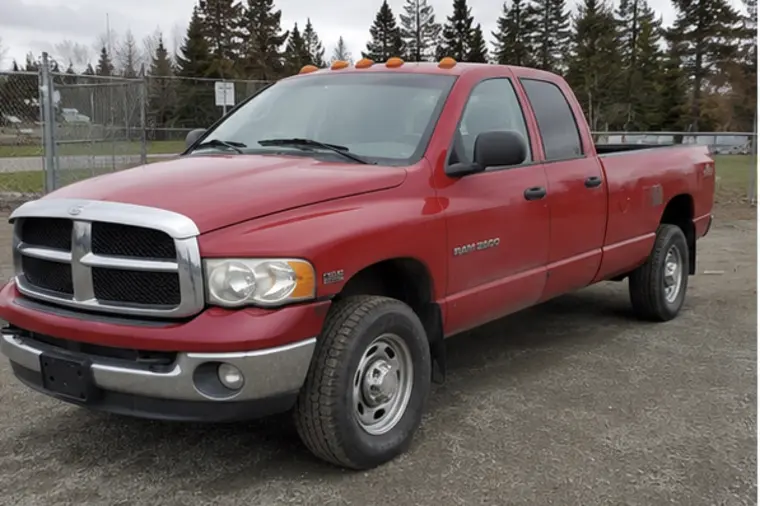
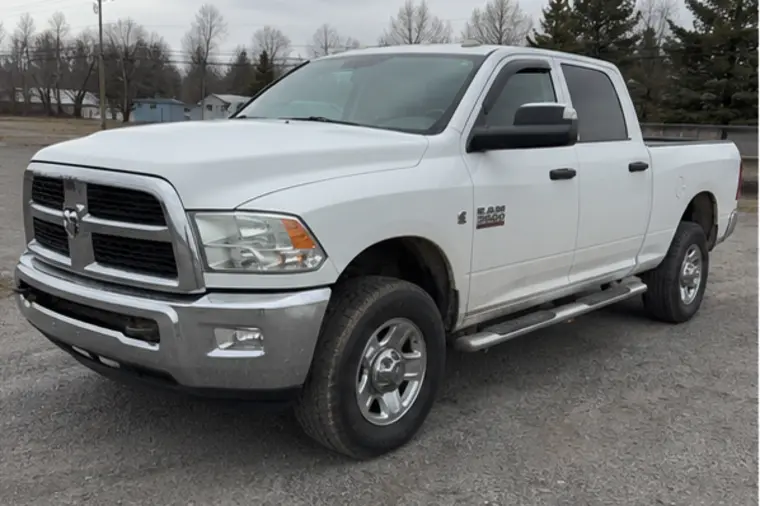
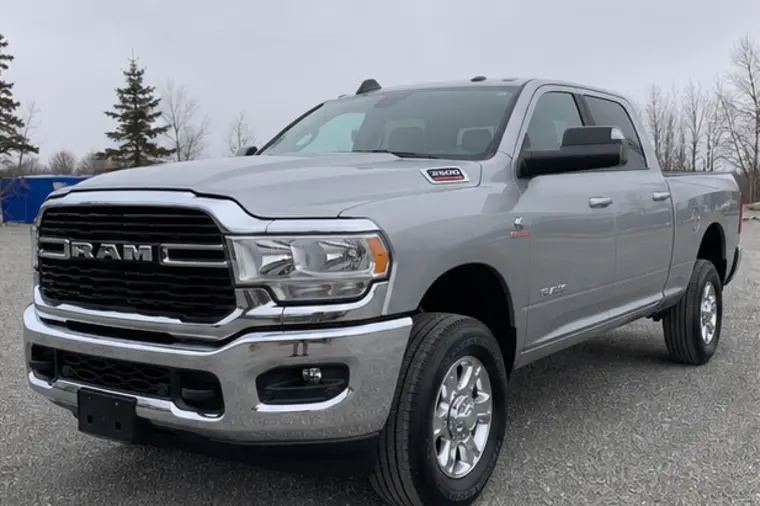
RAM HD diesel pickups span manual and automatic eras and different engine-output or application contexts. The 6.7L Cummins badge does not identify the transmission by itself.
Separate documented applications
| Source scope | Documented distinction | What to verify on a candidate |
|---|---|---|
| 2018 RAM diesel supplement | Six-speed 68RFE and AS69RC automatics are discussed separately; manual-transmission instructions are also included | Exact installed transmission and the applicable section |
| 2018 6.7L automatic identification | The supplement distinguishes the AS69RC's PTO access cover from the 68RFE | Have a qualified inspector confirm identity and any replacement |
| 2022 RAM HD fluid table | 68RFE and AS69RC have different specified fluid requirements | Match the invoice's fluid specification to the identified unit |
| Other years and applications | These references do not establish their equipment | Obtain the correct manual and build/installation records |
Read maintenance as component-specific evidence
An invoice saying “transmission serviced” should identify which fluid and filter work was performed, the kilometres and the unit concerned. The 2022 manual's separate fluid entries make the consequence of guessing clear. Do not apply a procedure or fluid simply because another Cummins truck used it.
For a manual-transmission candidate, include clutch-operation and related repair history in the file. For an automatic, distinguish maintenance from internal repair or replacement. Ask whether the repair included the torque converter, cooling-system checks, calibration work and follow-up for the original complaint, as relevant to that job.
Put cold behaviour in context
RAM's supplement describes temperature-dependent operating differences for its automatic applications. Record ambient conditions, transmission temperature if displayed, selected mode and whether a concern remains after ordinary warm-up. Do not label a cold shift as a failure without comparing it with the correct manual and diagnosis.
Conversely, a symptom disappearing when warm does not prove that everything is healthy. Give the shop the actual observation and repair chronology. Do not perform aggressive or overloaded tests to provoke a problem.
Ask about work and modifications
| Question | Why the answer changes the inspection |
|---|---|
| What trailer or body did the truck work with? | Establishes its load and stationary-duty history |
| Was the engine or transmission calibrated differently? | Factory assumptions may not describe current operation |
| Was a gearbox or clutch replaced? | Installed identity and remaining unresolved work must be established |
| Were warnings cleared or adaptations reset recently? | A short road test may not represent ordinary operation |
Make a purchase file the shop can use
Bring the year, VIN, pickup/chassis-cab identity, stated engine output, transmission evidence and dated records. Separate a request for routine maintenance from a request to diagnose a recurring shift complaint. For a working truck, confirm local support and account for downtime before comparing asking prices. This guide does not assign a universal reliability winner to a transmission name.
Evidence note: manufacturer documents establish the specific facts and applications cited. Buying workflows and cost scenarios are DieselTrucks.ca editorial guidance. These pages do not publish measured failure rates or confirm the condition, recall status or capacity of a particular truck.
General educational content for Canadian diesel-pickup research. Verify the exact truck, model year, certification labels, owner manual and manufacturer documentation, and obtain qualified mechanical or towing advice where appropriate.
Sources & Further Verification
Use the exact model year, VIN, truck labels and current manufacturer documentation when moving from general research to a purchase or towing decision.