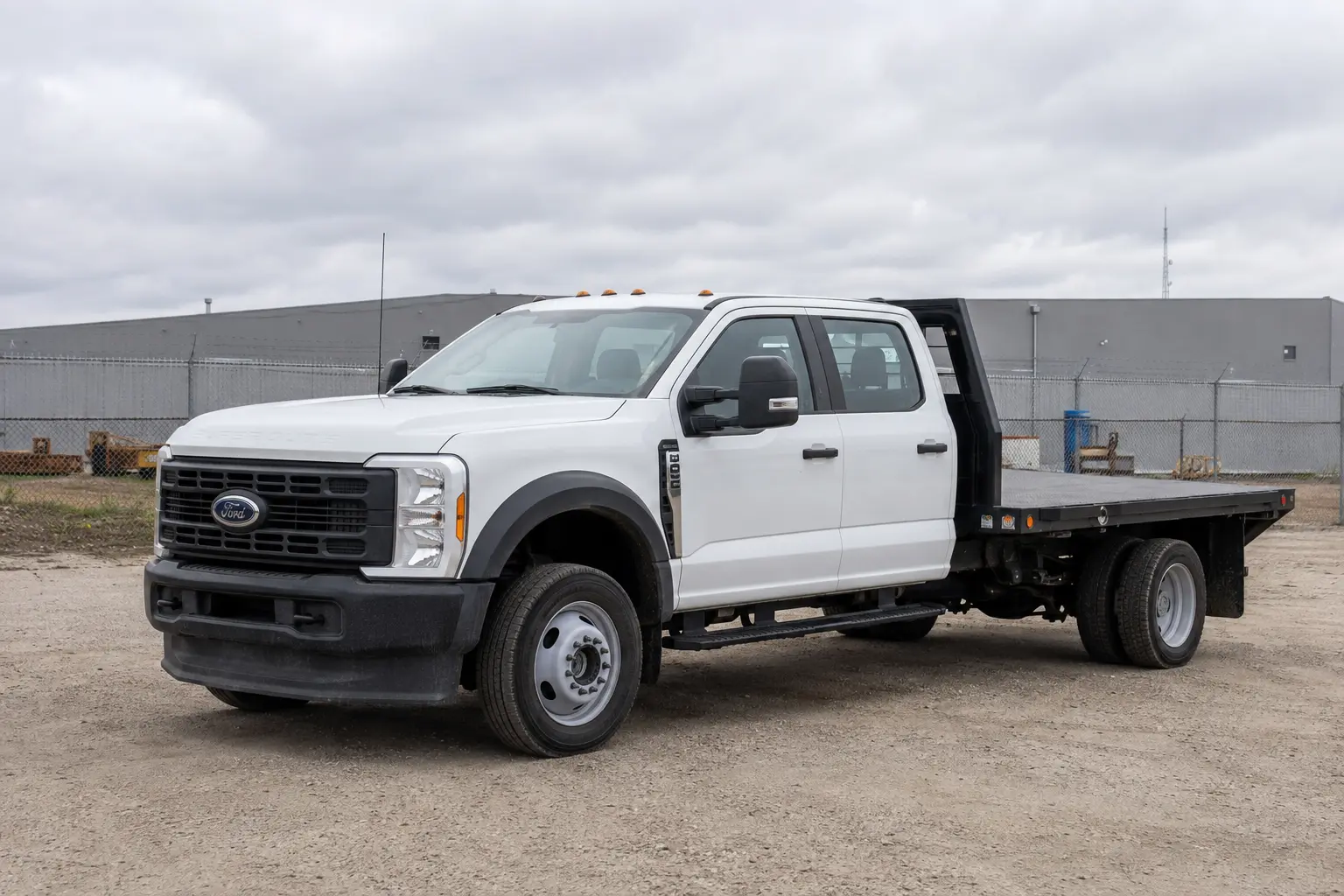
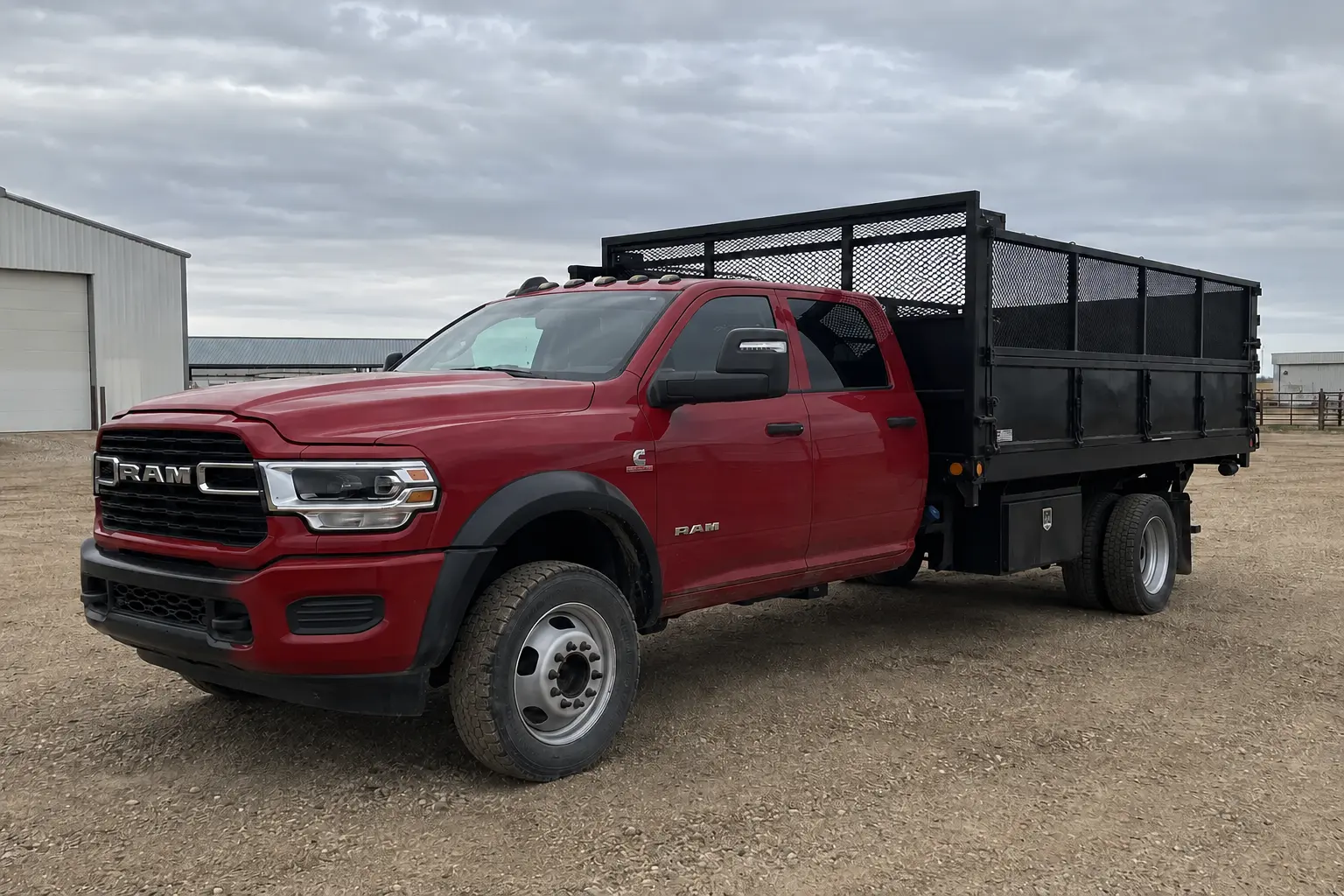
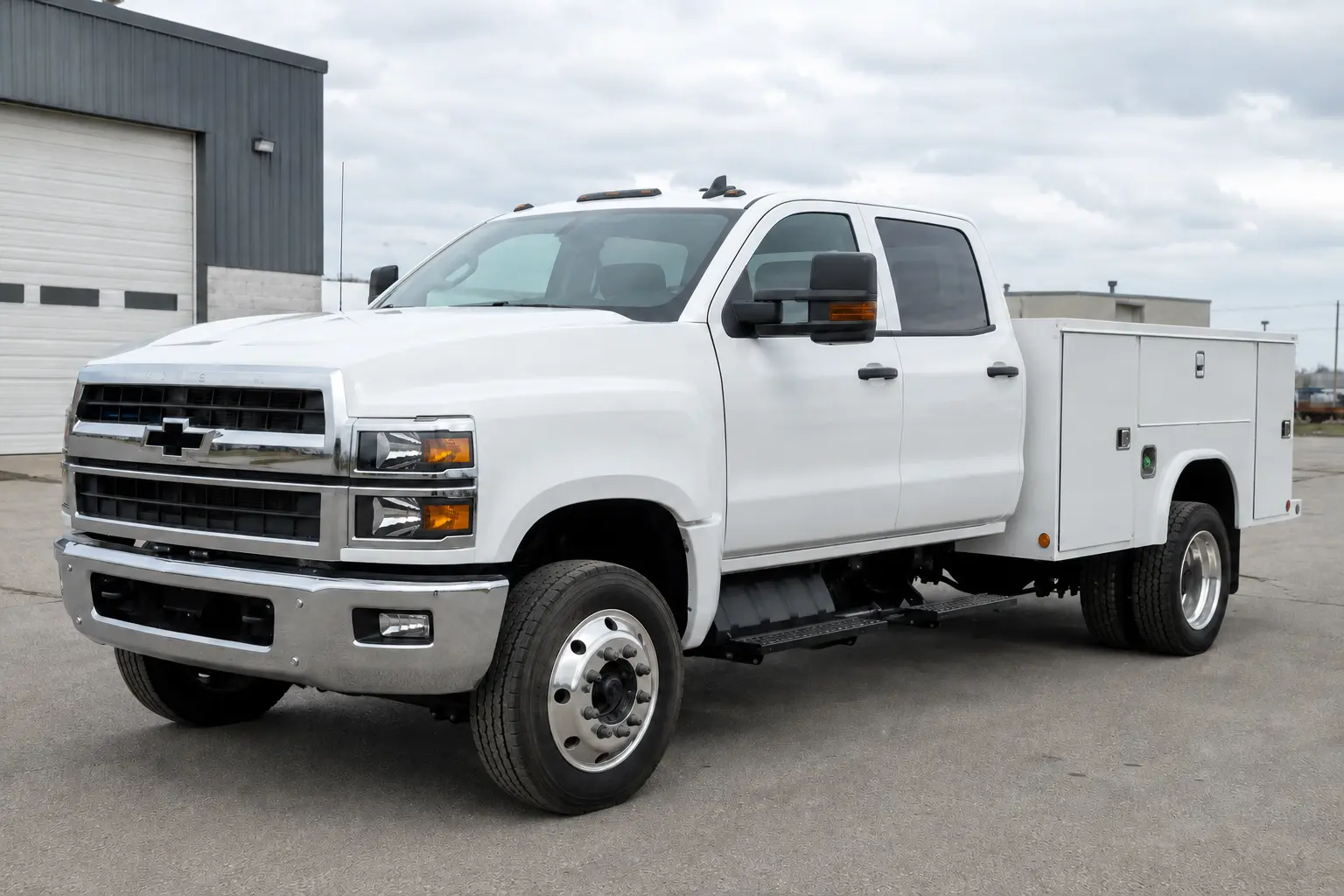
The same chassis badge can become very different completed vehicles depending on the body, mounting, equipment and load distribution.
Identify the upfit
Record the body type, manufacturer, model or serial information, installation date and any supporting manuals.
- Flat deck or stake body
- Service or utility body
- Dump body and hydraulic system
- Landscape body or other vocational body
Inspect the integration
Check mounting points, frame condition, clearances, wiring, hydraulics, PTO equipment, lighting, rear overhang and evidence of repair or modification.
Rebuild the payload calculation
The upfit, tools, tanks, accessories, occupants and cargo all consume capacity. Use the completed truck's labels and manufacturer documentation rather than subtracting from a generic chassis claim.
Build a completed-truck weight sheet
A bare chassis specification leaves out the body, hydraulic equipment, crane, stored material and crew. Ask the body installer for the completed empty weight and its front/rear distribution, then weigh the truck with its normal equipment. An apparently generous total payload can disappear first at one axle.
| Record | Why it changes the purchase |
|---|---|
| Body model, serial and installation invoice | Establishes what was fitted and who can support it |
| Empty front and rear axle weights | Provides a starting point for the load calculation |
| Body capacity and load position | Tests whether usable space exceeds carrying capacity |
| PTO, electrical and hydraulic requirements | Exposes compatibility and repair dependencies |
Inspect the interface between body and chassis
Request an inspection of mounts, clearances, frame alterations, wiring protection and exhaust access. A tidy body can conceal an installation problem. Keep the chassis service history and body service history as separate records; neither proves the other has been maintained. Obtain an installed repair quote when a defect affects both systems.
Evidence note: manufacturer documents establish the specific facts and applications cited. Buying workflows and cost scenarios are DieselTrucks.ca editorial guidance. These pages do not publish measured failure rates or confirm the condition, recall status or capacity of a particular truck.
General educational content for Canadian diesel-pickup research. Verify the exact truck, model year, certification labels, owner manual and manufacturer documentation, and obtain qualified mechanical or towing advice where appropriate.
Sources & Further Verification
Use the exact model year, VIN, truck labels and current manufacturer documentation when moving from general research to a purchase or towing decision.