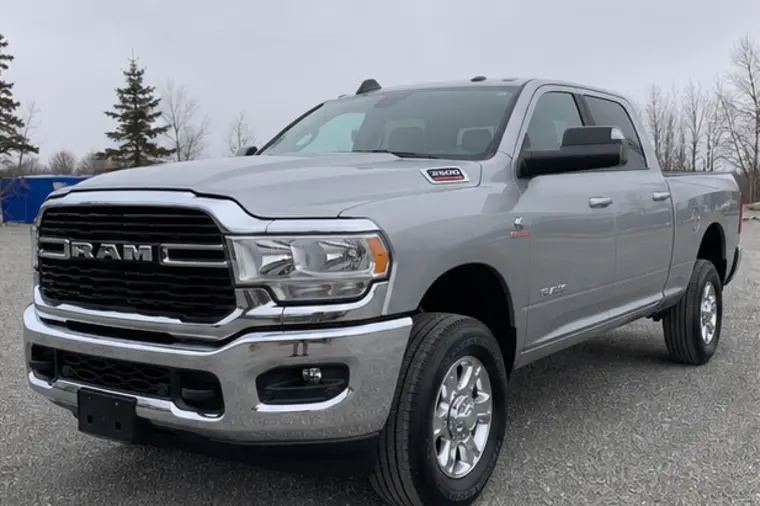
RAM 2500 diesel reliability depends on the actual Cummins/transmission combination, its service history and the work ahead. Separate engine reputation from the condition of the complete pickup, and distinguish a documented concern from a measured failure rate. A useful assessment produces a supportable purchase decision, not a score built from recall counts.
Reliability verdict for a working pickup
Favour a candidate with verifiable maintenance, explainable repairs, a satisfactory independent inspection and a configuration suited to the assignment. This is an editorial buying recommendation. The reviewed primary sources do not establish a universal annual repair bill, individual lifespan or comparable Canadian year-by-year failure probability.
Ask three separate questions: is the truck suitable for the load, what is its observed condition, and how would the owner manage an interruption? A strong answer to one does not settle the others. A running engine does not create capacity, and a suitable rating does not certify present mechanical health.
Keep the entire pickup in the assessment. Trailer connections, hitch hardware, steering, tires and fitted work systems can determine whether it is available for the next job. A reliability discussion limited to the Cummins engine can overlook the actual reason a particular truck cannot perform its intended work.
Identify the combination before interpreting reports
RAM's 2024 chart pairs the 2500 diesel with the 68RFE six-speed and separates the 3500 high-output/Aisin application. Cummins' 2025 announcement describes the newer HD pickup system with an eight-speed. Reports about one combination should not automatically become evidence against another.
Record the actual engine, transmission and relevant modifications before commissioning the inspection. If hardware has been replaced, establish the installed configuration and the reason for the work. A changed component can be well documented, but its name alone does not explain the original fault or the result.
Do not assume that a later truck must have fewer problems or that an older combination must be simpler to own. Those claims require evidence matched to the specific comparison. The equipment boundary instead tells you which service information, support and candidate history to investigate.
What counts as useful reliability evidence?
Severity, frequency and exposure are different. A fire-related concern requires attention without needing a population-wide probability to justify the check. Routine maintenance and an unresolved safety symptom should not be treated as equivalent entries in a numerical score.
Our assessment therefore focuses on what is known, what is unresolved and what the owner can realistically support. Complaint volume without comparable kilometres, hours, service and application does not establish which year is most dependable. Do not use selected documents to manufacture that missing denominator.
| Evidence | Useful purpose | What it cannot establish alone |
|---|---|---|
| Equipment and build records | Identify the actual vehicle and powertrain | Present condition or all later changes |
| Maintenance file | Show recorded service relative to use | That an absent receipt proves neglect |
| Recall or service document | Direct an applicable concern check | A universal failure percentage or year ranking |
| Repair diagnosis and verification | Explain a specific fault and result | A guarantee that all other systems are healthy |
| Independent inspection | Describe findings within the agreed scope | That every intermittent issue will occur during the visit |
Selected campaign windows and why they remain separate
Y78 concerns a defined 2019–2020 diesel fuel-pump population. ZA3 concerns specified 2020–2023 RAM 2500 trucks with 68RFE equipment. 13A concerns a defined 2021–2023 heater-relay population. These are separate screening questions with different remedies and equipment boundaries.
Have RAM confirm current Canadian VIN status. For an affected unrepaired 13A vehicle, follow the manufacturer's instructions to park outdoors away from structures and other vehicles. Do not replace current vehicle-specific instructions with an assumption drawn from a broad model-year description.
Retain the recorded action and date, then assess present condition. A campaign completion entry is not a transmission rebuild, a complete fuel-system replacement or a general health certificate unless the actual work record supports that separate claim. Present warning or drivability symptoms still require appropriate diagnosis.
Duty cycle helps explain the maintenance questions
The HD portion of RAM's 2018 diesel supplement discusses excessive idling and regeneration limitations. Use that application-specific operating context when reviewing an older Cummins truck; do not substitute the document's separate RAM 1500 material or transfer an interval to another year without verification.
Ask about towing, short movements, idle-heavy work and storage. Record hours where available without inventing a conversion to kilometres. A low-distance work truck may still require questions that a simple odometer comparison cannot answer. The seller's account should guide inspection, not become an unsupported diagnosis.
After purchase, establish the applicable maintenance baseline with a qualified shop. Separate completed tasks from recommended catch-up work and keep the relevant specifications with the record. A dashboard reminder reset is not evidence that oil, filters or another service item was actually addressed.
Symptoms are leads, not component diagnoses
Preserve the original description of difficult starting, unusual shifting, a warning or reduced power. Note whether the event was cold or warm, unloaded or towing, and before or after recent work. These details help a technician decide what to investigate without pretending the buyer can diagnose from a brief demonstration.
Ask what the shop confirmed and what remained intermittent. A report that a symptom did not occur during the appointment is different from a verified explanation and repair. Keep that limitation visible when deciding whether the truck can be relied on for immediate work.
Do not clear warnings or encourage a hazardous operational test merely to improve a sales demonstration. Resolve material safety or drivability questions through appropriate professional assessment. A price reduction does not make an unexplained condition fit a time-critical assignment.
Assess repair quality through a complete sequence
Read the complaint, diagnosis, repair scope and result together. A truck with major documented work is not automatically worse than one with a blank history. The documented repair may reduce uncertainty, while an empty file cannot establish that the other truck never needed attention.
For fuel-system or transmission work, ask whether the records explain the cause and any follow-up. Do not assume every concern requires the same group of replacement parts. The inspecting specialist should determine what the actual findings and equipment warrant.
If a warranty is claimed, obtain current written terms and confirm transfer conditions. Coverage may affect financial exposure, but it does not guarantee immediate availability while diagnosis or authorization is pending. Include the practical support process in the ownership decision.
Configuration suitability must be assessed independently
Bring the actual trailer, occupants, tools and installed equipment into the buying assessment. Obtain the vehicle labels and matching towing information. Do not use a gasoline or 3500 maximum to justify the diesel 2500 candidate, and do not treat a favourable engine inspection as proof of load suitability.
Ask the shop to include the hitch installation and systems the assignment needs. Trailer electrical connections, brake controls and accessories should be named in the brief if essential. Record functions that could not be verified or require the actual trailer or another specialist.
If the planned load does not fit, compare a correctly configured 3500 rather than trying to solve the problem through a different reliability reputation. An unsuitable truck remains unsuitable even when its maintenance record is excellent.
Build a decision around known work and unresolved exposure
Request a report separating immediate concerns, diagnosed repairs, maintenance catch-up and further investigation. Obtain actual local estimates for work that can be scoped. Keep an unresolved symptom separate from an owner-selected contingency so the budget does not imply more certainty than the inspection provides.
For commercial use, identify how work would be covered if the truck becomes unavailable. A substitute must fit the actual hitch and load requirement. For a seasonal tow vehicle, consider appointment and repair timing before a booked trip rather than assuming a preliminary estimate guarantees readiness.
Compare candidates using equivalent evidence. A lower purchase price can be outweighed by known required work or an interruption you cannot support. Conversely, a documented repair should not be penalized merely because the file is more candid than another seller's description.
Stronger and weaker choices without a fabricated ranking
The reviewed material supports equipment boundaries and selected concern windows, not a universal best or worst period. The stronger purchase is the candidate whose condition and configuration are explainable and whose support needs fit the owner. The weaker purchase requires material uncertainty to be ignored to make the deal work.
Use the best-year guide for a conditional equipment shortlist and the years-to-avoid guide for rejection criteria. Keep the reliability conclusion attached to the actual truck. A successful purchase does not prove the whole year is superior, and one failure does not establish a model-wide rate.
RAM 2500 reliability questions
Does the Cummins name guarantee a long-lived truck? No. Engine identity is one part of a complete vehicle assessment, not a lifespan promise.
Does a recalled truck automatically belong off the shortlist? No. Establish applicability, completion and present condition; follow current instructions for any outstanding action.
Can the 3500's Aisin reputation be used to judge a 2500? Identify the actual pairing. Do not transfer evidence between different transmissions and applications.
What should the inspection deliver? A written description of condition, required work, limits and unanswered questions relevant to your intended use.
Evidence note: manufacturer documents establish the specific facts and applications cited. Buying workflows and cost scenarios are DieselTrucks.ca editorial guidance. These pages do not publish measured failure rates or confirm the condition, recall status or capacity of a particular truck.
General educational content for Canadian diesel-pickup research. Verify the exact truck, model year, certification labels, owner manual and manufacturer documentation, and obtain qualified mechanical or towing advice where appropriate.
Sources & Further Verification
Use the exact model year, VIN, truck labels and current manufacturer documentation when moving from general research to a purchase or towing decision.
- RAM 2024 Heavy Duty towing and powertrain chart — original manufacturer configuration matrix
- Cummins January 2025 announcement — revised engine, eight-speed and separate pickup/chassis-cab outputs
- FCA Y78 / U.S. 21V-880 filing — specified 2019–2020 diesel population
- FCA ZA3 / U.S. 22V-835 — specified 68RFE transmission and model years
- FCA 13A / U.S. 23V-060 — defined 2021–2023 intake heater relay population
- RAM 2018 diesel supplement — separate 1500 and HD applications
- Cummins–RAM engine history