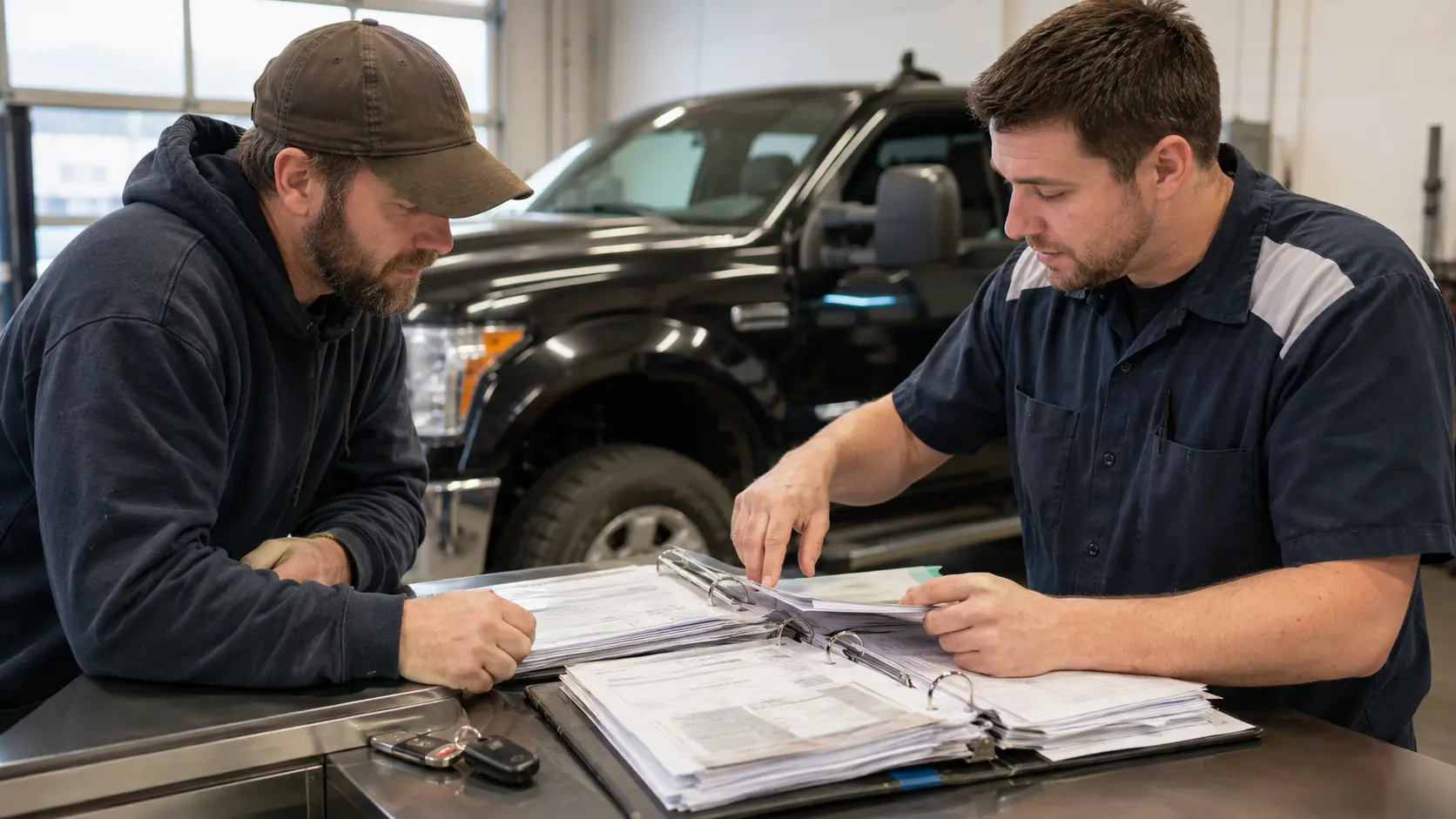
For a working truck, a repair bill and the cost of being unavailable are separate. Estimate them separately so a low purchase price does not hide a poor fit for the business.
Build the buying decision
Obtain repair quote
Diagnosis + parts + labour + assumptions
Price interruption
Recovery + suitable substitute + duration
Test business effect
Rescheduled work + lost contribution + alternatives
Separate the cost categories
Create lines for immediate repairs identified during inspection, scheduled maintenance, unplanned repair contingency, recovery and substitute transport. Use dated local quotes where possible. Keep taxes, towing distance, parts availability and estimate assumptions visible.
Do not treat an online average engine-repair number as a quote for your truck. The required work may involve diagnosis, supporting systems, modifications or an upfit that the average does not include. This guide provides a planning method, not a forecast of how often an engine will fail.
Use an explicit worked scenario
Illustrative example only: suppose a quoted repair is CAD 2,400, a suitable substitute costs CAD 180 per day for four days, and recovery is quoted at CAD 300. The direct scenario totals CAD 3,420 before tax: 2,400 + (180 × 4) + 300. These invented inputs are not market rates or a recommended reserve.
Then assess the work effect separately. Lost sales are not automatically lost profit; some work may be rescheduled, and some costs may be avoided. Use your own contribution and scheduling information with your accountant instead of adding gross daily revenue indiscriminately.
Ask whether the substitute replaces the job
Confirm the replacement's body, payload, hitch, insurance arrangement and equipment compatibility. A standard rental pickup may replace transport while leaving a welding, dump or service job uncovered. Include time to transfer tools and return equipment.
Update the plan with actual repair events and days unavailable. Compare candidates using the same assumptions, then test a longer parts delay or unavailable substitute. This is an editorial scenario exercise; manufacturer technical documents support truck identification, not business cost estimates.
Evidence note: manufacturer documents establish the specific facts and applications cited. Buying workflows and cost scenarios are DieselTrucks.ca editorial guidance. These pages do not publish measured failure rates or confirm the condition, recall status or capacity of a particular truck.
General educational content for Canadian diesel-pickup research. Verify the exact truck, model year, certification labels, owner manual and manufacturer documentation, and obtain qualified mechanical or towing advice where appropriate.
Sources & Further Verification
Use the exact model year, VIN, truck labels and current manufacturer documentation when moving from general research to a purchase or towing decision.