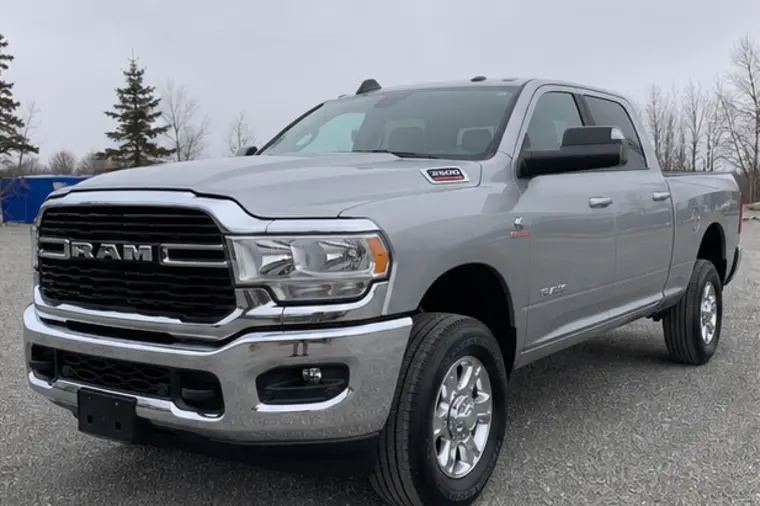
Do not reject every RAM 2500 from one year. For an immediate-use diesel purchase, pause or decline when applicable safety work, a material symptom or the truck's load suitability remains unresolved. The documented year windows below help direct those checks; they are not a failure-rate blacklist.
The direct answer for a buyer who needs a working truck
Avoid a candidate that must be treated as a ready-to-work vehicle while a material safety or drivability question remains unexplained. Pause when the missing evidence can still be obtained through an appropriate assessment. Reconsider when that evidence answers the original concern rather than merely adding unrelated paperwork to the file.
This is a purchase rule for the intended use, not a universal judgment against every older Cummins or a particular calendar year. A diagnosed project can suit a buyer with specialist support, spare transport and an adequate contingency. The same truck can be a poor choice for an owner with a committed job and no backup.
There is no comparable Canadian failure dataset in the reviewed evidence that justifies declaring one complete RAM 2500 diesel year the worst. Use the campaign windows to ask precise questions, then judge current condition, repair quality and suitability. A year with a popular reputation does not deserve an exception to those checks.
The three campaign windows are different
Ask RAM for current Canadian VIN information. A U.S. filing identifies a technical issue and population; it cannot clear the Canadian candidate. Retain the matching result and completion records rather than relying on an undated statement that everything has been done.
For an affected unrepaired 13A vehicle, follow the manufacturer's instructions to keep it outdoors away from structures and other vehicles. Do not treat an ignition-off vehicle as exempt from the required precautions or improvise a workaround in place of the final repair.
| Documented window | Concern to screen | What must be established |
|---|---|---|
| Defined 2019–2020 diesel population | Y78 high-pressure fuel pump | Current applicability, completed work and any separate breakdown history |
| Specified 2020–2023 68RFE population | ZA3 transmission concern | Correct transmission and current campaign position |
| Defined 2021–2023 diesel population | 13A intake-heater relay | Current applicability, final repair and required precautions |
| Any year with a present material symptom | Candidate-specific condition | Qualified diagnosis and a clear purchasing decision |
When fuel-system history should pause the purchase
A prior repair is not automatically a reason to reject a truck. The question is whether the records explain the complaint, diagnosed cause, work performed and result. A pump or injector invoice without that context may leave a different level of uncertainty from a documented repair with satisfactory follow-up.
For a current starting, warning or loss-of-power concern, obtain an appropriate diagnosis. Do not assume the campaign explains every possible symptom, and do not assume completion rules out every other cause. The actual condition should determine the next assessment step.
Avoid setting a purchase allowance from an unconfirmed repair description. Ask for a written scope and identify what might change after further investigation. If the uncertainty cannot fit your budget or required start date, another candidate may be the better decision even at a higher advertised price.
Transmission identity prevents the wrong reassurance
Confirm the actual transmission before accepting a seller's reliability claim. RAM's 2024 chart distinguishes the 2500's diesel/68RFE pairing from the 3500 high-output/Aisin application. A favourable story about the latter does not diagnose the former or establish that the candidate has the equipment being described.
A campaign action and an internal transmission repair are also different. Read the work order rather than turning a brief completion entry into a claim that the unit was rebuilt. Ask a qualified shop to assess any present shifting symptom and explain what could not be verified during the appointment.
Do not clear codes or reset systems to make a short demonstration appear more convincing. Preserve the complaint and inspection evidence. If a material condition remains unresolved, treat that as an open purchasing question rather than accepting the absence of a warning during one drive as proof of a successful repair.
Do not replace diagnosis with a broad heater-upgrade claim
Ask which component a seller means when discussing heater work, which concern prompted it and what documentation supports the result. Similar terminology can refer to different parts or modifications. A generic statement that the heater issue was fixed is not sufficient to establish the applicable campaign action or present configuration.
For any claimed modification, retain installed-part and workmanship information and have the actual vehicle assessed. Do not infer that changing one part prevents every possible engine problem. The purchase decision should reflect what is known about that installation and what remains uncertain.
If the seller cannot explain material work, decide whether further professional assessment can resolve the uncertainty. A daily work-truck buyer can decline an undocumented project without claiming that the entire model year is defective or that every modified truck has the same risk.
The 2025 change is not an automatic avoid signal
Cummins describes a revised HD pickup engine system with an eight-speed for 2025. That is an equipment boundary for research and service support, not proof of a first-year failure penalty. Do not judge the newer combination solely from reports about a different transmission or earlier engine arrangement.
Likewise, a later design should not be described as a permanent cure for all earlier concerns without issue-specific evidence. Ask which feature matters to your intended use and whether the candidate's condition and support justify the choice. Newer equipment can be useful without being statistically proven more reliable.
The best-year guide uses 2024 as a conditional pre-2025 six-speed benchmark. That preference does not waive any rejection criterion on this page. A benchmark-year truck with unresolved material faults can be a worse purchase than an earlier well-documented candidate.
Avoid the wrong load configuration in any year
Bring the intended trailer, occupants, tools and fitted equipment into the assessment. Obtain the actual labels and matching towing information. Do not use the brochure's largest gasoline or 3500 figure to represent a diesel 2500 configuration.
If the assignment cannot be supported, compare another configuration or a suitable 3500. A different year is not automatically the answer to a capacity mismatch. Nor does an added suspension accessory provide the missing evidence for a rating or hitch installation.
Inspect the working systems explicitly. Hitch hardware, trailer electrical connections and brake controls can matter as much to immediate availability as the engine. Record any function that was not tested or needs a separate specialist rather than assuming a general inspection covers it.
Prior use and missing maintenance records
Ask how the vehicle was used and which service records remain. Towing or commercial work is context for inspection, not proof of abuse. A privately owned truck with little documentation is not automatically the safer purchase. Keep the uncertainty attached to the missing evidence rather than assigning an invented penalty.
The 2018 supplement has a dedicated HD section and discusses excessive idling's effect on regeneration. Use the actual Cummins application and year when reviewing service needs. Do not import RAM 1500 EcoDiesel instructions because both appear in one document or share the word diesel.
For an older truck, commission an engine-appropriate assessment and establish a maintenance baseline from the findings. A dashboard reminder reset or a recent oil receipt does not by itself describe the condition of every system. The report should identify required work and remaining questions.
Reconsideration requires evidence that answers the concern
An unrelated invoice, a cleared warning or a new advertisement description does not necessarily resolve the original question. Ask what changed in the evidence and what remains unknown. Reconsidering a candidate means it can be compared fairly again; it does not oblige you to buy it.
Keep diagnosis, confirmed repairs and interruption separate in the budget. A commercial owner should confirm that any substitute fits the actual work. A recreational owner should avoid treating a booked trip as a reason to bypass unresolved findings.
- Campaign uncertainty: obtain a current manufacturer determination and relevant final-repair record.
- Reported fault: obtain a qualified diagnosis, necessary corrective work and a documented result.
- Misidentified powertrain: reconcile the actual engine/transmission and current configuration.
- Load mismatch: select a configuration whose evidence supports the real assignment.
- Unclear repair commitment: establish a credible scope, timing and contingency that the owner can accept.
RAM 2500 years-to-avoid questions
Should every 2019–2020 diesel be rejected? No. Establish the particular campaign position, repair history and present condition rather than judging the whole population from the year.
Does ZA3 establish a problem with every RAM transmission? No. Match the actual equipment and defined population; do not transfer the concern to an unrelated transmission.
Can a completed recall vehicle return to the shortlist? Yes, when the relevant evidence and current inspection support it. Completion does not certify every other system.
What is the strongest reason to walk away? A material safety, identity or suitability uncertainty that cannot be resolved within the support, budget and time available for your intended use.
Evidence note: manufacturer documents establish the specific facts and applications cited. Buying workflows and cost scenarios are DieselTrucks.ca editorial guidance. These pages do not publish measured failure rates or confirm the condition, recall status or capacity of a particular truck.
General educational content for Canadian diesel-pickup research. Verify the exact truck, model year, certification labels, owner manual and manufacturer documentation, and obtain qualified mechanical or towing advice where appropriate.
Sources & Further Verification
Use the exact model year, VIN, truck labels and current manufacturer documentation when moving from general research to a purchase or towing decision.
- FCA Y78 / U.S. 21V-880 filing — specified 2019–2020 diesel population
- FCA ZA3 / U.S. 22V-835 — specified 68RFE transmission and model years
- FCA 13A / U.S. 23V-060 — defined 2021–2023 intake heater relay population
- RAM 2024 Heavy Duty towing and powertrain chart — original manufacturer configuration matrix
- Cummins January 2025 announcement — revised engine, eight-speed and separate pickup/chassis-cab outputs
- RAM 2018 diesel supplement — separate 1500 and HD applications
- Cummins–RAM engine history