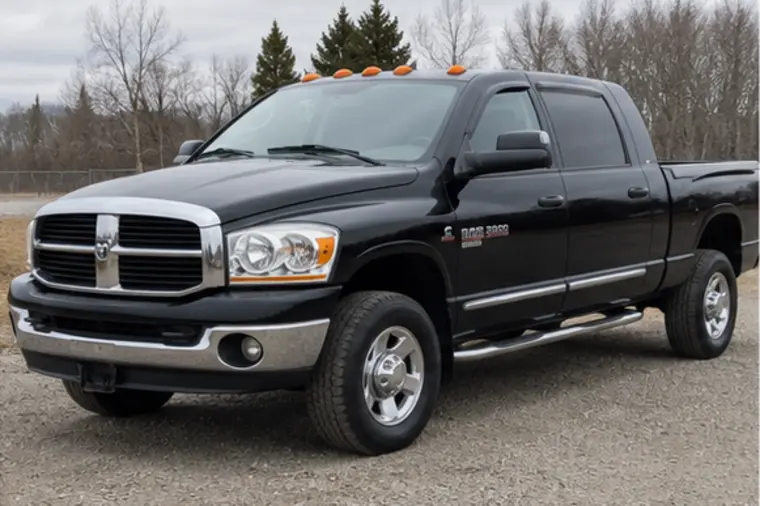
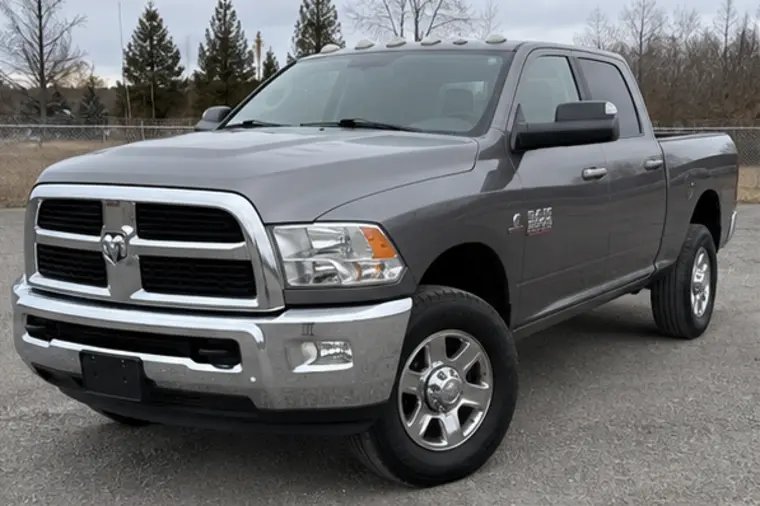
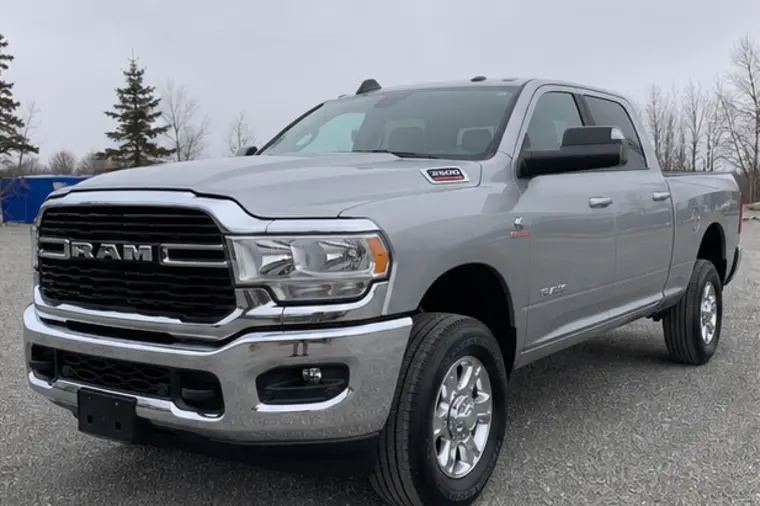
A 6.7L Cummins badge does not identify one horsepower rating. For 2025, Cummins publishes 430 hp for RAM 2500/3500 pickups and 360 hp for 3500/4500/5500 chassis cabs. Earlier specifications depend on year and powertrain. This reference separates directly verified application rows from historical milestones and explains how to check a used-truck claim. Sources were reviewed on 12 September 2026; the table is a selected evidence set, not a complete all-years specification chart.
Horsepower by verified year and application
Use the application column before the horsepower column. A milestone proves that an output level was reached; it does not identify every transmission or truck offered that year. The 2021 and 2025 rows below have more specific application evidence.
| Year / evidence type | Application | Horsepower | Associated peak torque | Transmission / limit |
|---|---|---|---|---|
| 2007 historical milestone | 6.7L pickup-engine introduction | 350 hp | Not assigned from this source | Transmission and peak rpm unresolved |
| 2013 historical milestone | Highest output cited in Cummins history | 385 hp | 850 lb-ft | Not every 2013 truck; transmission unresolved here |
| 2021 application table | RAM 2500 pickup | 370 hp | 850 lb-ft | 68RFE automatic |
| 2021 application table | RAM 3500 pickup, standard output | 370 hp | 850 lb-ft | 68RFE automatic |
| 2021 application table | RAM 3500 pickup, high output | 420 hp | 1,075 lb-ft | Aisin automatic |
| 2025 application table | RAM 2500 and 3500 pickups | 430 hp | 1,075 lb-ft | New eight-speed powertrain in launch release |
| 2025 launch release | RAM 3500, 4500 and 5500 chassis cabs | 360 hp | 800 lb-ft | Separate chassis-cab application |
Why the same model badge can lead to different answers
A RAM 3500 can be a pickup or a chassis cab, and an earlier pickup can have different engine/transmission pairings. For the reviewed 2021 pickup table, Aisin and 68RFE are not interchangeable identifiers. Record the actual transmission before choosing an output row.
For a candidate truck, create a short identity record: model year, pickup versus chassis cab, model, original powertrain, installed engine and any controller or transmission changes. Keep the factory configuration and present configuration separate if parts were replaced. A seller's use of “high output” is a claim to verify, not a substitute for that record.
This matters particularly when comparing a completed work body with a pickup. Similar exterior branding is not proof of the same engine calibration or vehicle limits. Ask for the original build documentation and match it to the actual vehicle.
The 2025 change is an application change, not just a bigger number
Cummins's pickup-specific page lists both RAM 2500 and RAM 3500 at the same headline output. Its January 2025 announcement separately identifies the chassis-cab rating and the new eight-speed powertrain. Do not collapse these into a generic 360–430 hp range that appears selectable on every truck.
An editorial comparison of the reviewed pickup rows gives a 60-hp increase from the 2021 standard-output figure and a 10-hp increase from the 2021 high-output figure. These are endpoint differences, not gains assigned to each intervening year, retrofit promises or measured changes in a particular used vehicle.
| Comparison of published pickup endpoints | Arithmetic | Meaning |
|---|---|---|
| 2021 standard output to 2025 pickup | 430 − 370 = 60 hp; about 16.2% | Specified output difference only |
| 2021 high output to 2025 pickup | 430 − 420 = 10 hp; about 2.4% | Specified output difference only |
Historical milestones are not a complete year-by-year table
Cummins's history page identifies the 2007 introduction and a 2013 output milestone. It does not supply all corresponding transmission, model and rpm details. Those entries are useful historical anchors, but copying them across every truck of the same year would overstate the source.
The history page also retains older present-tense language about a 400-hp engine. Use its dated milestones as historical evidence rather than treating that sentence as today's model specification. An important retrieval trap appeared in this review: the older Cummins URL ending in “2019” redirected to a page headed “2021.” The destination's ratings belong to the 2021 source, not a recovered 2019 document.
Unlisted years remain open numerical research. This guide does not interpolate a smooth horsepower progression or fill a missing row from a secondary summary. To add a year, obtain its original model/application document and preserve any output-tier and transmission qualifications.
Peak-power rpm remains unresolved in these references
The reviewed Cummins horsepower tables do not publish the engine speed associated with each power peak. This page therefore leaves peak-power rpm unresolved. It does not borrow a number from a neighbouring model year, a tachometer illustration or a transmission description.
Power and torque are related at a particular rotational speed, but their separate maxima need not occur together. Dividing headline horsepower by headline torque cannot recover the missing peak-power speed unless those values describe the same operating point. Do not turn that calculation into an OEM specification.
For engineering work requiring a curve, request the exact application and calibration's power/torque data, units and test basis. A headline rating supports comparison of that headline; it does not describe output at every road speed or under every operating condition.
Factory engine output and a wheel-dyno result are different evidence
Keep a manufacturer engine rating separate from a measured wheel-output result. A dynamometer sheet needs its measurement basis, vehicle identity, test date and conditions. Do not compare an engine figure for one truck with wheel horsepower for another as if the difference were a controlled test.
A tuning claim needs its own supporting evidence. This guide does not add an advertised gain to the factory number, estimate driveline losses, or certify a modified calibration. Ask what was changed and whether the supplied measurement actually belongs to the candidate.
If two reports use different methods, label the difference before drawing a conclusion. An absent dyno sheet does not prove a stock truck is weak, while a strong dyno result does not establish service history or remaining life.
Buying for towing or work requires a second comparison
Horsepower is one part of a powertrain comparison, not permission to carry or tow a stated weight. For a work-truck purchase, separately record the exact vehicle and combination ratings, axle and tire limits, hitch arrangement and measured loading. More advertised power does not override a lower controlling limit.
Compare the complete configurations you can actually buy: pickup versus completed chassis cab, cab and body arrangement, transmission, axle configuration, installed equipment and intended duty. Do not assume the truck with the largest number is automatically the most suitable.
A practical decision sheet has two separate results: “factory output identified” and “vehicle suitable for intended loading.” A truck can pass the first check while the second remains unresolved. Keep inspection and loading evidence attached to the individual candidate.
Output does not rank reliability or replace maintenance evidence
Do not use the size of a horsepower increase as a reliability ranking. A new rating can prompt questions about a different powertrain, but it is not a comparative failure-rate study. Investigate the exact year, equipment, repairs and current condition independently.
Likewise, identifying the original output does not establish that maintenance was completed or that a replacement engine matches the original build. Review dated invoices and inspection findings alongside the configuration record. When records conflict, retain the conflict rather than selecting whichever number makes the listing look stronger.
A reproducible horsepower-check worksheet
Use this editorial checklist when comparing listings or correcting a specification claim. Record unknowns explicitly; completing the worksheet is not manufacturer certification.
| Field | What to retain |
|---|---|
| Vehicle identity | Year, RAM model, pickup/chassis cab and original market |
| Powertrain identity | Original engine/transmission and documented replacements |
| Claim | Horsepower, units, source title and exact application row |
| Speed | Published peak-power rpm, or explicitly unresolved |
| Measurement basis | Factory engine rating, wheel test or unsupported advertising |
| Decision boundary | Loading, condition, service history and cost checked separately |
Frequently asked questions
Does every 6.7L Cummins have 430 hp? No. That figure belongs to the reviewed 2025 pickup application. Does every 2021 RAM 3500 have the high-output engine? No; the reviewed table separates Aisin-equipped high-output pickups from 68RFE-equipped standard-output pickups.
Can I use a 2019-looking web address as proof of 2019 ratings? Not when it redirects to a 2021 page. Does the table verify my Canadian VIN? No. Match original-market documents and the installed configuration to the individual truck.
This focused horsepower reference does not certify Canadian VIN applicability, current engine health, a tune, towing capacity, failure frequency, lifespan, inventory, sellers, pricing or offers. Full all-generation output and rpm coverage remain incomplete; the established engine and sibling guides retain their separate purposes.
Evidence note: manufacturer documents establish the specific facts and applications cited. Buying workflows and cost scenarios are DieselTrucks.ca editorial guidance. These pages do not publish measured failure rates or confirm the condition, recall status or capacity of a particular truck.
General educational content for Canadian diesel-pickup research. Verify the exact truck, model year, certification labels, owner manual and manufacturer documentation, and obtain qualified mechanical or towing advice where appropriate.
Sources & Further Verification
Use the exact model year, VIN, truck labels and current manufacturer documentation when moving from general research to a purchase or towing decision.