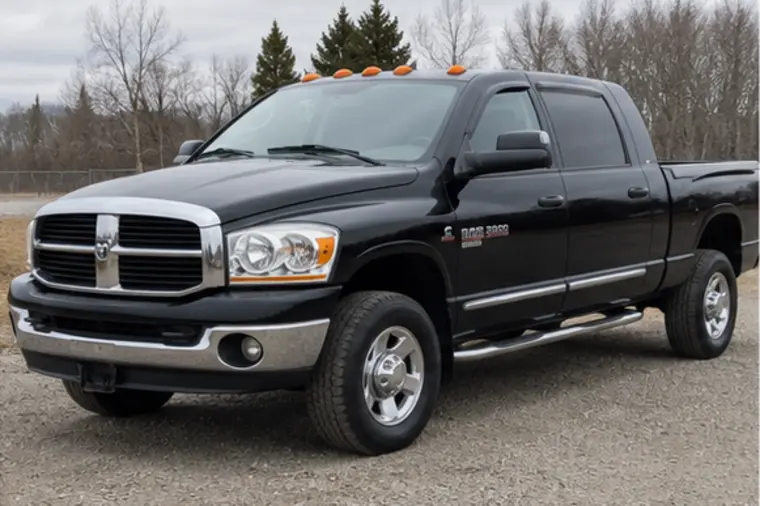
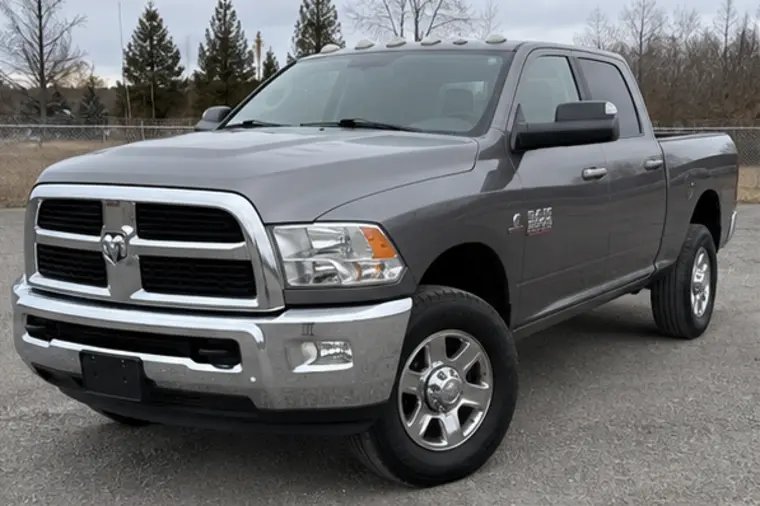
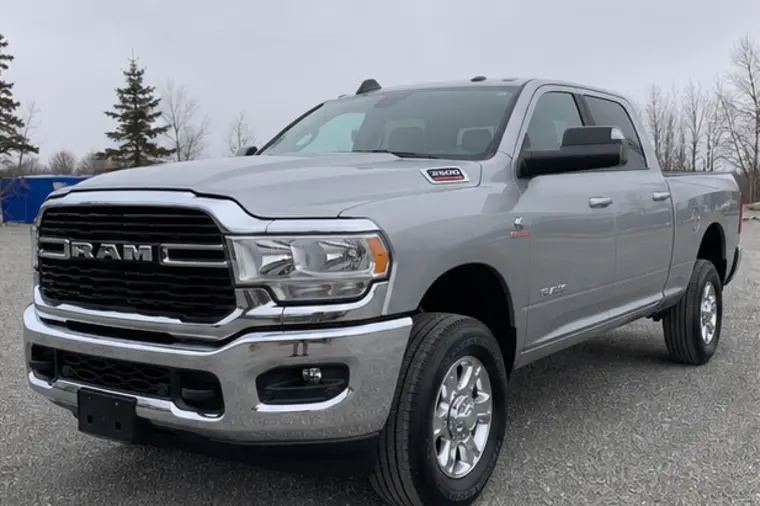
The 6.7L Cummins has powered RAM HD trucks across several platform and emissions eras. Identify the exact year, output and transmission before comparing two used trucks.
Identify the 6.7L Cummins correctly
Distinguish RAM 2500, RAM 3500 pickup and chassis-cab contexts, then verify the model year, transmission and factory configuration.
Read the history before the reputation
Review engine, aftertreatment, cooling, transmission and axle service together. Pay particular attention to records that explain warning lamps, software campaigns, emissions repairs and heavy towing use.
Inspection priorities
Arrange a genuinely cold start and a qualified inspection that evaluates the whole truck. One symptom is a reason to investigate further, not a remote diagnosis.
- Observe a true cold start and retain a full-system scan report.
- Check transmission behaviour and identify the exact transmission rather than guessing from the engine badge.
- Inspect front suspension, steering, brakes, tires, bed, hitch and rear axle area.
- Document tuning, emissions status and any drivetrain or suspension modifications.
Ownership and use-case fit
Choose between 2500/3500 and SRW/DRW from verified payload and use requirements. The Cummins badge does not make an unsuitable truck configuration suitable.
Include expected catch-up work, tires, brakes, corrosion, insurance and downtime in the purchase decision. A lower asking price does not automatically offset missing history or a configuration that does not fit the job.
Build a RAM-specific evidence sheet
Record 2500/3500 or chassis-cab application, model year, transmission, output evidence and rear-wheel arrangement. Use those entries to select the inspection and service documents. The engine badge should not populate the rest of the worksheet automatically.
Investigate repeated warning or fuel-system events as a chronology rather than unrelated receipts. For towing, keep the loaded pin or tongue calculation and individual axle checks with the mechanical report. A truck can have a satisfactory engine inspection and still be unsuitable for the intended body or trailer.
| Evidence | Follow-up |
|---|---|
| Applicable fuel campaign | Current VIN status and completion invoice |
| Transmission repair | Exact unit, work scope and operating result |
| Work-body or idle use | Hours and auxiliary-equipment service history |
Evidence note: manufacturer documents establish the specific facts and applications cited. Buying workflows and cost scenarios are DieselTrucks.ca editorial guidance. These pages do not publish measured failure rates or confirm the condition, recall status or capacity of a particular truck.
General educational content for Canadian diesel-pickup research. Verify the exact truck, model year, certification labels, owner manual and manufacturer documentation, and obtain qualified mechanical or towing advice where appropriate.
Sources & Further Verification
Use the exact model year, VIN, truck labels and current manufacturer documentation when moving from general research to a purchase or towing decision.