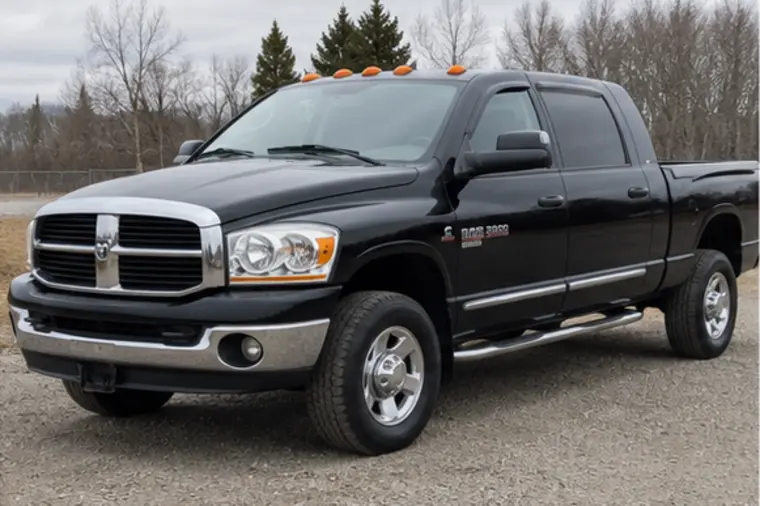
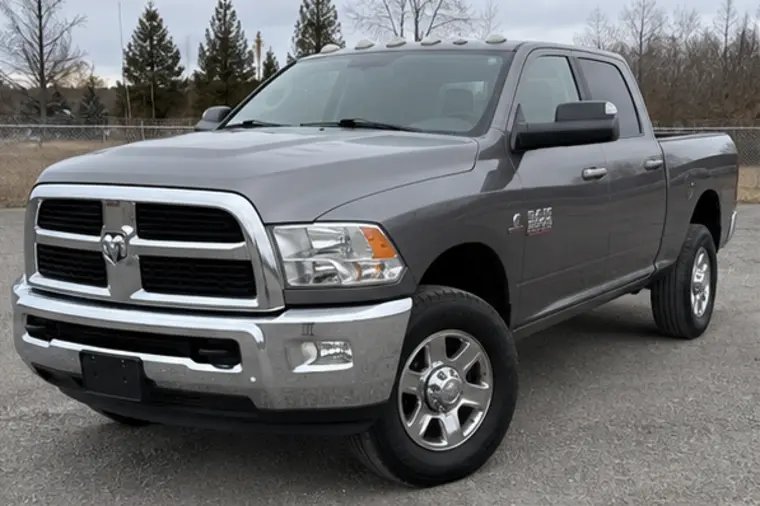
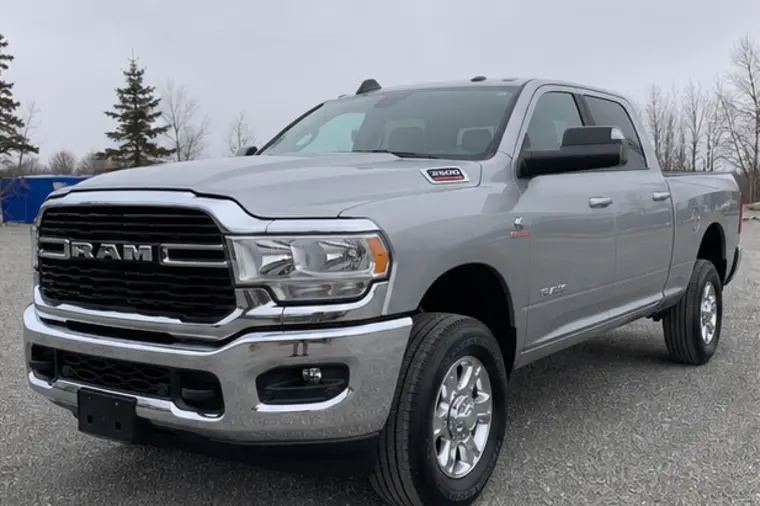
The reviewed primary evidence does not support blacklisting one 6.7L Cummins model year across every Dodge/RAM pickup and chassis cab. It does support sharper candidate rules. Defined 2019–2020 trucks require fuel-pump campaign research; specified 2019–2020 chassis cabs require oil-monitoring software research; and defined 2021–2023 trucks require heater-relay campaign research. Those populations are not failure rates. Avoid an individual truck when its identity, safety work, symptoms, repair boundary, legal configuration, load fit or support cannot be resolved to the standard your job requires.
Direct verdict: avoid unresolved candidates, not a calendar label
Pause a purchase when the VIN, application, transmission, emissions configuration or campaign history is uncertain. Decline it when a material safety action is unresolved without an acceptable completion plan, an active symptom lacks diagnosis, repair records do not close the original condition, the truck is illegally configured, or its rated configuration cannot safely do the work.
A documented truck from a campaign year may be a stronger candidate than an out-of-scope year with warning lights, missing maintenance and unsupported modifications. “Avoid” should describe an evidence-backed candidate decision, not an internet reputation.
Use the year only to select the right manuals, campaign records and inspection questions. Reconsider a paused truck only when new evidence resolves the same reason it was paused.
Verify identity before applying any year advice
Record VIN, model year, Dodge or RAM branding, 2500/3500 pickup or 3500/4500/5500 chassis cab, cab/body, wheelbase, drivetrain, rear-wheel arrangement, axle, engine label, transmission, original market and emissions hardware. Photograph labels and connect replacements to invoices.
Do not transfer a pickup campaign, output or maintenance statement to a chassis cab. Do not infer the transmission from the Cummins badge. If build information, labels, seller claims and repair records conflict, stop the evaluation until the exact application is resolved.
Identity controls which recall, manual, rating and service path applies. A year-level conclusion made before that step can be wrong even when the year itself is correct.
Use a year-and-application evidence map
The map defines questions and scope. It does not rank failure frequency or condemn every truck in a listed period.
| Period or population | Documented primary evidence | Buyer action |
|---|---|---|
| 2007 introduction boundary | Dodge identifies the 6.7L transition from the 5.9L | Verify exact early build, emissions hardware, transmission and accumulated repairs; age is not a defect |
| Defined 2019–2020 pickups and chassis cabs | Transport Canada 2021691 identifies a high-pressure fuel-pump campaign population | Check current VIN status and detailed repair scope; do not assume inclusion or failure from year alone |
| Defined 2019–2020 chassis cabs | Transport Canada 2021360 identifies incorrect remaining-oil-life information | Confirm chassis-cab identity, software completion and the actual oil-service chronology |
| Defined 2021–2023 pickups and chassis cabs | Transport Canada 2023026 identifies an intake-air heater-relay fire-risk population | Follow current official instructions and verify remedy evidence for the VIN |
| 2025 revised powertrain | Cummins identifies a revised engine, eight-speed and separate pickup/chassis-cab outputs | Treat it as a new configuration with a shorter long-term evidence horizon, not a proven winner or loser |
Scrutinize defined 2019–2020 fuel-pump candidates
Transport Canada recall 2021691 covers specified 2019–2020 RAM 2500/3500 pickups and 3500/4500/5500 chassis cabs with the 6.7L. It describes a high-pressure fuel pump that could fail gradually, introduce debris and cause an engine stall and no restart.
For an individual candidate, retain a dated Canadian VIN result and the detailed work order. If repair occurred, identify contamination findings, every inspected or replaced component, cleaning scope and the post-repair validation. A campaign marked complete without a usable repair narrative may still leave acquisition questions.
Pause for long crank, stall, low power, rail-pressure codes, fuel contamination or incomplete pump work. Require measurements and a complete fuel-system boundary; do not diagnose the pump solely from symptoms or the model year.
Keep the chassis-cab oil-monitoring action in scope
Transport Canada recall 2021360 applies to specified 2019–2020 RAM 3500/4500/5500 chassis cabs whose remaining-oil-life information could be incorrect. The remedy is a control-module software update.
Do not apply this action to a pickup. For an included chassis cab, verify completion but reconstruct oil service independently by date, kilometres, engine/PTO hours, product and duty. Software completion does not prove prior service was timely.
Pause a candidate when a seller relies on the display but cannot provide a credible service chronology, especially with high idle or PTO use. The concern becomes a purchase reason only when the missing record and your consequence tolerance cannot be reconciled.
Treat the 2021–2023 heater-relay population as safety-critical
Transport Canada recall 2023026 defines certain 2021–2023 RAM 2500/3500 and 3500/4500/5500 vehicles whose intake-air heater relay could short, overheat and create a fire risk. Use the current official VIN path and follow current parking or operating instructions while an action remains open.
An open safety action is not proof that damage has occurred, and a completed action is not a blanket certificate for batteries, charging, grid-heater operation, wiring or cold-start condition. Inspect those systems separately.
Pause delivery until the official path, remedy timing and responsibility are clear. Decline the candidate if the unresolved risk or completion delay falls outside the buyer's safety and downtime requirements.
Do not mislabel transmission evidence as engine failure
Identify the installed transmission, calibration, converter, cooler and service history. FCA campaign ZA3 concerns defined 68RFE-equipped RAM heavy-duty vehicles and a possible transmission-fluid expulsion/fire condition; it is not an internal 6.7L Cummins failure campaign.
Check exact transmission and VIN scope. For delayed engagement, slipping, harsh shifts, temperature warnings, leaks or fluid evidence, obtain transmission-specific codes, measurements and diagnosis.
The complete truck may still be unsuitable, but keep the reason accurate. A transmission-related decline should not be presented as proof that a Cummins model year is unreliable.
Reject active symptoms without a measured cause
Use a true cold soak when safe and record ambient temperature, heater use, batteries, wait-to-start behaviour, cranking, smoke, warnings, codes and stabilization. Then evaluate fully warm restart, cooling, fluid trends and drivability.
For low power, record air restriction, charge-air leakage, fuel delivery, exhaust restriction, boost data, codes and operating state. For overheating or coolant loss, require trend data, visible-leak inspection, pressure tests, temperatures, fan operation and load context.
A warm demonstration cannot answer cold behaviour, and a cleared code cannot prove repair. Pause when a material symptom exists without condition-matched testing; decline when the seller will not allow a suitable inspection or the unresolved consequence exceeds the plan.
Separate emissions condition from year reputation
Record DPF/DEF messages, diagnostic codes, soot and ash information, pressure/temperature sensor evidence, regeneration history and duty. Short trips and idling are context, not automatic causes.
Regeneration may address soot under the correct conditions; it does not remove ash or prove upstream fuel, air, sensor or engine causes are resolved. Confirm legal original-equipment emissions hardware and calibration.
Decline deleted or unknown configurations when legality, insurance, diagnostics or service acceptance cannot be established. Do not treat removed equipment as a reliability improvement or a reason to prefer that model year.
Read major repairs as bounded evidence
For a replacement engine, rebuild, head-gasket claim, turbo or fuel-system repair, obtain the original complaint, tests, findings, assembly identity, parts and machining scope, reused systems, calibration, installer, warranty and condition-matched result.
A replacement engine does not renew the fuel, cooling, emissions, transmission, driveline, electrical, chassis or body. A new pump without contamination scope, or a new turbo without air/exhaust diagnosis, may leave the initiating condition unresolved.
Pause when the repair record stops at a parts list. Reconsider only when complaint, measured cause, complete repair boundary and comparable outcome align.
Reconstruct maintenance with duty and hours
Use the exact-year RAM owner literature and Cummins technical resources. Track oil/filter, fuel filtration, coolant and the supporting transmission, transfer-case, axle and emissions-related service by date, kilometres, engine/PTO hours, product and duty.
Towing, idling, PTO, dusty sites, short cycles, winter use and storage can make odometer-only records misleading. Fresh baseline service improves today's position but cannot recreate missing history.
Classify unsupported past maintenance as unknown rather than failed or passed. Decline only when that uncertainty and its possible consequence exceed your budget and downtime tolerance.
Audit modifications and chassis-cab integration
List tuners, calibrations, injectors, turbo, fuel, intake/exhaust and transmission changes. On a chassis cab, also inspect PTO programming, hydraulics, body wiring, grounds, mounting, driveline angles, weight distribution and cooling airflow.
“Stock,” “returned to stock” and “built” are seller reports until hardware, software and records support them. Confirm federal/provincial legality, insurer acceptance and the service network's willingness to work on the configuration.
Decline when undocumented changes prevent reliable diagnosis, create an illegal operating condition or make support impractical for the assignment. Keep body-builder faults separate from internal-engine conclusions.
Verify payload and towing before accepting any engine year
Calculate occupants, cargo, body, accessories, hitch equipment and loaded tongue or pin weight. Use certification/door labels, axle/tire limits, hitch rating and exact original RAM configuration literature.
Engine output does not create payload or trailer capacity. Pickup versus chassis cab, wheelbase, drivetrain, axle, tires, body and equipment can materially change usable ratings.
Reject a truck that cannot legally and safely carry the planned load even when its engine evidence is excellent. Near a limit, use representative scale weights rather than brochure maxima or seller estimates.
Inspect the whole truck and the operating consequence
Assess transmission, transfer case, axles, steering, brakes, tires, wheels, frame, mounts, hitch, electrical system, body and corrosion. Record plow, towing, service-body and off-road history.
Keep engine, transmission, chassis and body findings in separate columns. One strong system should not hide an unsafe frame, inadequate brakes, corrosion or an unresolved electrical/body integration issue.
Translate each finding into operating consequence: safety, stall/no-start, reduced power, legality, load capability, recovery, parts, diagnosis and substitute capacity. That makes an avoid decision specific and defensible.
Confirm Canadian support before purchase
Use Cummins and RAM/Mopar resources to identify possible support, then call to confirm the facility accepts the exact pickup or chassis cab, transmission, body, emissions configuration and modifications.
A locator entry does not prove expertise, parts or appointment timing. Include recovery distance, body-removal access, diagnosis, parts delay, validation and substitute capacity in the plan.
For remote or commercial work, an otherwise repairable candidate may still deserve rejection if the support and downtime consequence is unacceptable.
Apply pause, decline and reconsider rules
A lower price does not resolve a safety, identity or diagnostic problem. Unrelated maintenance does not close an active symptom. Save the evidence that changed the classification.
| Decision | Evidence standard |
|---|---|
| Continue evaluating | Exact identity; campaign path checked; no material unresolved symptom; legal configuration; plausible load and support fit |
| Pause | VIN/application conflict, open campaign question, warning/symptom, incomplete repair boundary, missing load evidence or uncertain support |
| Decline | Unsafe, overloaded, illegally configured, material diagnosis refused, or unresolved consequence outside the buyer's requirements |
| Reconsider | New evidence directly resolves the same pause reason and a relevant recheck passes |
Build a candidate-specific acquisition file
Save the advertisement, VIN and labels, exact manuals, dated campaign results, maintenance, scans, inspection, repairs, modifications, load documents, written estimates and limitations. Mark seller statements as reports until verified.
Separate immediate safety work, scheduled maintenance, diagnosed repair, unresolved investigation, legal/configuration correction and optional upgrades. Use current local written scopes rather than generic internet prices.
The result supports a decision about one truck at one time. It is not a year blacklist, failure-rate study, warranty or remaining-life promise.
6.7L Cummins years-to-avoid questions
Which 6.7L Cummins year should everyone avoid? No reviewed primary source supports one universal blacklist across all pickups and chassis cabs.
Should every 2019–2020 truck be rejected? No. Verify exact application, current VIN campaign status, repair scope and present condition.
Are all 2021–2023 trucks unsafe? No. Transport Canada defines a specific heater-relay population; follow the current official path for the candidate VIN.
Does a completed recall make a truck reliable? No. It closes a defined action, not every mechanical, electrical or maintenance question.
What is the clearest reason to walk away? A material unresolved identity, safety, symptom, legality, load or support condition outside the buyer's requirements.
Evidence note: manufacturer documents establish the specific facts and applications cited. Buying workflows and cost scenarios are DieselTrucks.ca editorial guidance. These pages do not publish measured failure rates or confirm the condition, recall status or capacity of a particular truck.
General educational content for Canadian diesel-pickup research. Verify the exact truck, model year, certification labels, owner manual and manufacturer documentation, and obtain qualified mechanical or towing advice where appropriate.
Sources & Further Verification
Use the exact model year, VIN, truck labels and current manufacturer documentation when moving from general research to a purchase or towing decision.
- Dodge 2007 RAM Heavy Duty announcement — 5.9L through December 2006 and 610 lb-ft
- Cummins January 2025 announcement — revised engine, eight-speed and separate pickup/chassis-cab outputs
- Transport Canada 2021691 — defined 2019–2020 6.7L RAM fuel-pump recall
- Mopar Canada — current VIN recall and customer-satisfaction notice lookup
- Transport Canada 2021360 — defined 2019–2020 chassis-cab oil-monitoring software recall
- Mopar owner-manual access — model-year vehicle literature
- Transport Canada 2023026 — defined 2021–2023 intake-heater relay recall and parking advice
- FCA ZA3 / U.S. 22V-835 — specified 68RFE transmission and model years
- FCA ZA3 repair communication — transmission dipstick campaign scope
- Cummins manuals and technical information — engine-specific literature access
- Cummins sales and service locator — application-aware support search
- Cummins–RAM engine history