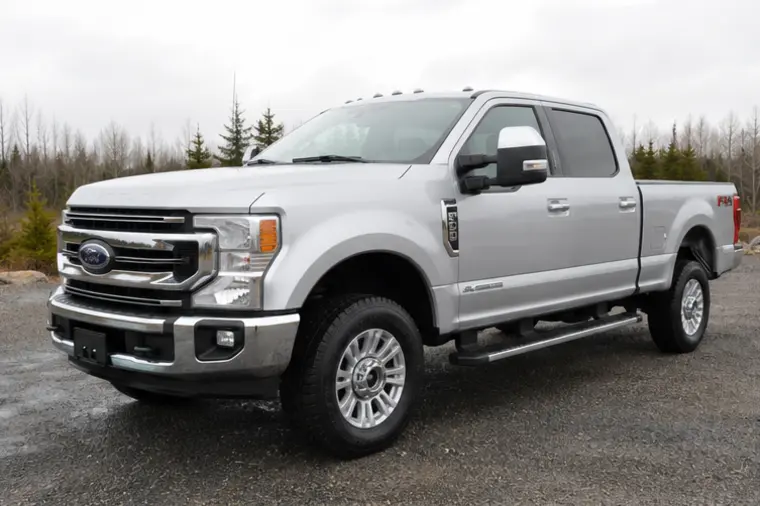
Avoid an F-350 candidate when unresolved condition, configuration or repair questions conflict with your intended use. Selected year and equipment groups need targeted checks, but no evidence reviewed here supports condemning every truck from one model year or treating a popular year as automatically safe.
The direct buying recommendation
For an owner who needs a ready-to-work F-350, reject a purchase that requires unresolved safety symptoms or an unsuitable load configuration to be overlooked. Pause when a material concern can still be investigated. Reconsider only when the new evidence answers the reason for the pause. These are editorial purchase rules, not claims about the percentage of trucks that fail.
The most useful year-based approach is to identify a screening window, confirm its actual applicability and review the candidate's current condition. That process can distinguish a documented repair from an open issue. A blanket year blacklist cannot make that distinction and may eliminate a supportable truck while admitting a poorly documented neighbour.
Do not use the F-350 badge to bypass configuration questions. SRW and DRW candidates may have the same engine family yet differ substantially for the next assignment. A year with a strong reputation is still the wrong choice when the particular truck cannot support the required load or when its current installation is unclear.
Documented windows that warrant specific questions
The cited documents have different scopes. Do not combine them into a statement that every F-350 in these years has all the listed concerns. Ask Ford for a current Canadian VIN determination and retain the result. A U.S. filing supplies technical context; it does not determine that vehicle's present Canadian status.
| Window | Screening question | What should stop an immediate purchase |
|---|---|---|
| Specified 2017–2019 F-350 4WD | Has the steering-oscillation concern been assessed where relevant? | Reported instability without adequate diagnosis and verification |
| Certain electric-tailgate applications | Is 19S48 relevant to the fitted equipment and VIN? | Unresolved unintended opening or unclear applicable campaign work |
| Defined 2020–2021 population | What is the current 25S94 steering-shaft status? | An unresolved applicable safety action or present steering concern |
| Defined 2020–2022 diesel population | What is the current 24S78 status and separate fault history? | Continuing symptoms or major work that cannot be explained |
| Any year, SRW or DRW | Does the actual configuration support the planned assignment? | Missing or contradictory load, identity or installation evidence |
Steering: distinguish an unresolved symptom from a repaired concern
If a seller reports steering instability, do not deliberately recreate it on a rough road or while towing. Ask a qualified professional to determine the appropriate assessment. The fact that the truck completed one smooth test drive does not explain a credible history of an intermittent problem.
The older oscillation bulletin and the later shaft campaign concern different conditions. Ask which issue an invoice actually addresses. A general statement that the front end was serviced is not sufficient to connect a repair to a particular campaign or to establish the current condition of the full steering system.
For an immediate-use purchase, an unresolved steering question is a reason to pause. Reconsider when the diagnosis, relevant work and verification are clear. If the shop could not confirm the reported concern, preserve that limitation rather than translating it into a guarantee that the truck is fine.
Separate campaign paperwork from breakdown repairs
A campaign completion record and a major repair invoice answer different questions. One may document programming or a specified inspection, while the other explains why a failed component was replaced. Do not let a seller combine the two into a claim that the whole powertrain has been rebuilt or certified.
For a truck with prior loss of power, difficult starting or substantial fuel-system work, request the actual diagnosis and scope. A component list without the cause may leave important uncertainty. Let the inspecting specialist explain what the records support and what further investigation is appropriate to the current symptoms and equipment.
If the repair remains open-ended, obtain a diagnostic plan before negotiating a repair allowance. The final scope may change. A business with no backup truck can reasonably decline that uncertainty even when a project buyer with specialist support would consider it acceptable.
An unsuitable SRW is not rescued by a good year
Before rejecting or accepting a year, establish the candidate's load suitability. Bring the real trailer information, expected occupants, carried tools and installed equipment into the assessment. Do not rely on a seller's recollection of a previous load or use another F-350's rating as a substitute for this truck's information.
If an SRW candidate does not fit, compare an appropriately configured DRW or another suitable model. Do not make the favourite year a constraint that forces the wrong vehicle into the job. Added suspension assistance or a substantial-looking hitch does not resolve missing rating and installation evidence.
Ford's pickup guide separates SRW/DRW and hitch applications. Its configuration-specific approach is the reason to identify the actual truck before applying a towing row. That is a suitability check, not a reliability ranking and not proof of how the vehicle was previously operated.
A dually also needs a complete condition assessment
For a DRW candidate, inspect all road tires and the relevant wheels, including the inner pair. Request an explanation of abnormal wear, damage or contact marks rather than assuming they are normal for a working truck. Ask what can be diagnosed during the appointment and what requires further work.
Inspect the installed hitch and surrounding structure with its documentation. A bed that has been altered, equipment that has been removed, or a replacement body may require additional questions. Those observations do not prove misuse. They identify the history and installation evidence needed to understand the current vehicle.
Pause if a material structural or installation concern cannot be resolved before the purchase decision. A buyer should not accept an unsupported statement that the truck has always worked this way as a substitute for assessment of the equipment now being relied upon.
Older diesel projects: be clear about the buyer's role
An older F-350 can be a viable candidate when its condition, service needs and support are understood. It becomes a weak immediate-use purchase when major repairs, modifications or recurring symptoms are unexplained and the buyer lacks a realistic contingency. This distinction is about the candidate and owner, not a universal verdict against an engine generation.
Ask an engine-appropriate specialist to review the records. Do not treat a seller's informal upgrade label as a standard certification. Identify the installed parts, original concern, workmanship evidence and follow-up. A changed engine or turbo does not tell you the condition of the transmission, chassis or hitch.
Make the project decision before negotiating. If you need the truck for committed work next week, an uncertain repair schedule may be disqualifying. If you are deliberately buying a diagnosed project with alternative transport, the same facts can lead to a different decision without either buyer inventing a reliability statistic.
The 2020 change is a comparison boundary, not a blacklist
Ford's 2020 guide identifies the updated diesel and ten-speed pairing. That equipment change does not prove a first-year failure penalty. Review the actual transmission, service history and operational findings rather than importing every Super Duty transmission anecdote into the purchase.
Likewise, do not accept a claim that a later year fixed everything without identifying the particular concern and supporting evidence. An improvement to one system cannot certify all the others. The best-year guide provides conditional starting points, while this page supplies reasons to pause or reject a candidate regardless of those preferences.
When comparing adjacent years, hold the rear-wheel arrangement, cab and intended use reasonably consistent. Otherwise, a difference in configuration or history can be mistaken for a difference caused by the calendar. Choose using the evidence that actually changes the ownership decision.
Reconsideration: what must change before the answer becomes yes?
Ask whether the new evidence answers the original concern directly. An unrelated invoice, a cleared warning or a fresh inspection of a different system does not close the question. Record any remaining limitation and decide whether it is acceptable for the planned use.
Do not feel obliged to buy because time has been spent investigating. The purpose of the inspection is to support a decision, including a well-founded no. Compare the revised candidate with alternatives using equivalent evidence and total known commitment.
- Inconsistent identity: obtain matching VIN, build, engine and current configuration information.
- Unresolved symptom: obtain an appropriate diagnosis, documented work where required and a clear verification result.
- Unclear campaign position: retain a current manufacturer determination and applicable completion evidence.
- Unsuitable assignment: select a configuration whose labels, ratings and equipment support the real load.
- Unknown repair commitment: obtain a credible scope and confirm that cost, timing and contingency fit the owner.
F-350 years-to-avoid questions
Should I avoid every truck in a recall year? No. Establish applicability, completion and current condition. The year alone does not resolve those questions.
Is a low-kilometre dually automatically safer to buy? No. Inspect its condition and review its use; the odometer is only part of the history.
Does an F-350 share every F-250 concern? No. Some documents list both models, but equipment scope and the actual candidate still matter.
What is the strongest walk-away signal? A material safety, identity or suitability question that remains unresolved while the truck is presented as ready for the work you need it to perform.
Evidence note: manufacturer documents establish the specific facts and applications cited. Buying workflows and cost scenarios are DieselTrucks.ca editorial guidance. These pages do not publish measured failure rates or confirm the condition, recall status or capacity of a particular truck.
General educational content for Canadian diesel-pickup research. Verify the exact truck, model year, certification labels, owner manual and manufacturer documentation, and obtain qualified mechanical or towing advice where appropriate.
Sources & Further Verification
Use the exact model year, VIN, truck labels and current manufacturer documentation when moving from general research to a purchase or towing decision.
- Ford TSB 19-2274 — 2017–2019 F-250/F-350 4WD steering oscillation
- Ford 19S48 announcement — specified 2017–2019 electric tailgate latches, including Canada
- Ford 25S94 / U.S. 25V626 filing — defined 2020–2021 steering shaft population
- Ford 24S78 / U.S. 24V-957 filing — defined 2020–2022 Super Duty population
- Ford 2024 Super Duty pickup towing guide — original configuration tables and footnotes
- Ford 2020 Super Duty Packaging Guide — original Ford publication, dealer-hosted copy
- Ford owner manuals