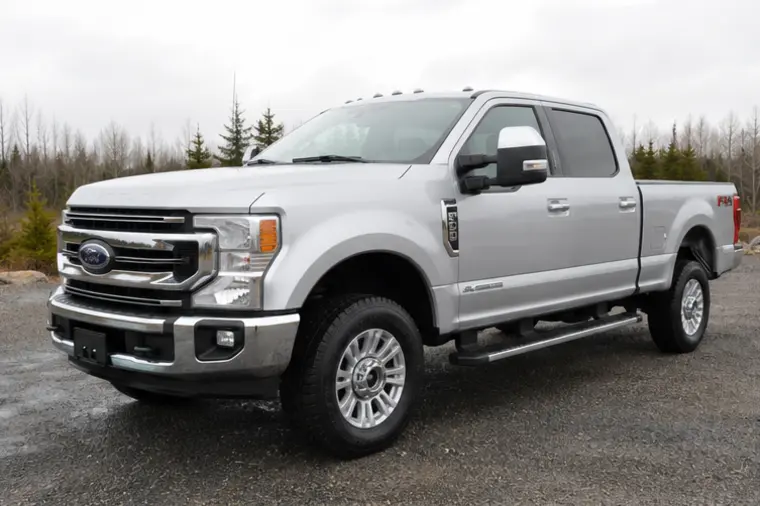
An F-350 reliability assessment must cover both the diesel powertrain and the configuration doing the work. SRW and DRW pickups share some documented concerns, but their load, tire, hitch and operating histories still need individual assessment. No model-wide score can replace that evidence.
Verdict: judge the vehicle and its next job together
For a buyer who depends on the truck, favour an F-350 with verifiable maintenance, explainable repair history, a satisfactory independent inspection and a support arrangement suited to the assignment. This is our editorial buying recommendation. The reviewed evidence does not provide an adjusted Canadian failure rate, predictable annual repair bill or guaranteed kilometre lifespan for every F-350 diesel.
Reliability has a practical meaning beyond whether the engine starts. A pickup may run normally but remain unavailable for its intended work because a hitch, tire, trailer connection or other required system needs attention. Include those systems in the purchase assessment rather than treating them as unrelated accessories to be dealt with later.
Configuration suitability is a separate pass/fail question. Good mechanical condition does not create additional capacity. Establish the actual truck's labels, equipment and load position, then assess whether its condition and history support dependable use within those requirements.
What evidence should carry the most weight?
Use this evidence to reduce uncertainty in a specific purchase. Do not add recall, complaint and service-bulletin counts together to produce a reliability score. Those records have different purposes and do not supply comparable exposure across mileage, hours, maintenance and application.
Frequency and severity must also remain separate. A potentially serious steering concern deserves attention even without a population-wide probability. A modest known repair and an unexplained intermittent safety symptom should not receive the same purchasing treatment simply because each occupies one line on an inspection report.
| Evidence type | What it contributes | Important limit |
|---|---|---|
| VIN and equipment information | Identifies the vehicle, powertrain and configuration being assessed | Does not describe present condition or later alterations |
| Maintenance records | Shows recorded service relative to date, use and kilometres | Missing records create uncertainty rather than proving neglect |
| Diagnosed repair history | Explains a fault, work performed and follow-up | A part receipt without diagnosis may not explain recurrence |
| Campaign and service documents | Directs applicable checks for a defined population | Does not rank years by failure frequency |
| Independent inspection | Describes findings within its agreed scope | Cannot guarantee every intermittent problem will appear |
Identify the diesel and transmission before comparing experience
Ford's 2019 and 2020 publications establish a diesel transmission boundary from six-speed to ten-speed. An F-350 assessment should identify that combination, rather than combining every account of Super Duty shifting into one mechanical conclusion. The relevant record is for the actual year and powertrain.
Ask whether engine or transmission hardware has been replaced and what the installation retained. A replacement can be appropriate and well documented. It can also leave unanswered questions about the original fault or surrounding systems. The invoice should explain the work rather than merely advertise that the truck has a new major component.
If the engine or calibration has been altered, have a qualified shop establish the present configuration. Do not assume a seller's description of an upgrade proves increased durability. Identify what changed, why it changed and what evidence supports its current condition, then make a purchase decision that reflects those facts.
Selected concern windows and their significance
For the F-350, 19-2274 addresses specified 2017–2019 4WD steering oscillation. The later 25S94 filing concerns a different upper-shaft condition in a defined 2020–2021 population. They require separate applicability and repair questions; shared steering terminology does not make the procedures interchangeable.
The 24S78 filing identifies a defined 2020–2022 diesel fuel-pump concern and programming remedy. Treat a campaign entry separately from a breakdown repair. Establish the current Canadian VIN position with Ford and investigate any present symptom on its own merits.
These selected documents help direct the inspection. They do not show that every truck in those years has failed, or that years outside their scope are free of problems. Retain a dated campaign check and any completion evidence, then use the physical and diagnostic assessment to evaluate the vehicle as it stands today.
Maintenance should follow the recorded use
Ford's 2020 manual has separate diesel special-operating-condition guidance, including extended idling, low-speed work and dusty operation. Some entries use time or engine hours as well as distance. A low odometer reading therefore does not answer every service-history question on a working truck.
Ask the seller about the actual duty cycle and provide that information to the inspecting shop. Request the applicable schedule for the vehicle and compare the available records against it. Do not substitute an hours-to-kilometres formula or copy an interval from another Power Stroke generation to fill a gap.
After purchase, establish a service baseline from known history and the technician's findings. Resetting a dashboard maintenance reminder is not the service itself. Retain the work performed, date, kilometres and relevant specifications so future decisions can distinguish a completed task from a missing entry.
SRW and DRW ownership need different inspection detail
For a DRW F-350, require assessment of the inner rear tires and wheels as well as the visible outer pair. Ask the shop to investigate abnormal wear and any signs of contact or damage. Do not infer the cause from appearance alone. A useful report identifies the condition and what additional assessment is needed.
For an SRW truck, do not assume that a clean engine inspection settles the loaded-use question. Review the actual rear load, tires, hitch and intended trailer together. A candidate with an unsuitable configuration should leave the shortlist before the buyer spends money trying to improve its perceived reliability.
For either arrangement, ask about suspension, tire, wheel and hitch changes. Document the current installation and its history. The aim is not to condemn modified trucks as a class; it is to avoid evaluating an altered vehicle as though it still matched every factory assumption.
Separate truck faults from combination problems
A complaint that occurs only while towing needs the trailer and loading context as well as the truck's mechanical history. Provide the technician with the trailer identity, hitch arrangement, load information and conditions of the event. Do not force an unsafe demonstration to collect evidence.
Ford's pickup towing tables distinguish rear-wheel arrangement, cab, engine and hitch application. Use the matching row and vehicle labels when establishing suitability. This configuration check does not diagnose a mechanical fault, but it can prevent a misleading conclusion built on the wrong vehicle specification.
Inspect the systems used by the actual assignment. Trailer electrical connections, fitted brake controls and hitch hardware should be named in the brief if they are essential to your work. Ask what the shop can verify and what requires a separate specialist rather than assuming a general inspection covers every function.
How to evaluate a history of major repairs
Read the original complaint, diagnosed cause, work performed and verification as a sequence. A collection of parts does not automatically describe a completed solution. Repeated appearances of the same symptom deserve an explanation, especially when the truck is being sold soon after the most recent attempt to resolve it.
Ask whether any remaining warranty is transferable and obtain the actual terms from the provider. Do not treat a verbal assurance or an old advertisement as current coverage. A warranty may affect the purchase decision, but it does not replace inspection or guarantee the truck's availability while a claim is assessed.
When records are incomplete, identify the consequence for your decision. Can a professional assessment reduce the uncertainty at a reasonable cost? Can you tolerate further diagnosis after purchase? If neither answer is favourable, another candidate may be preferable even when this truck has an attractive year or trim.
Commercial downtime deserves its own plan
An F-350 used to earn income needs a substitute arrangement that matches the job. Confirm the required rear-load position, hitch and work equipment, not simply the availability of another pickup. A rental that cannot handle the actual assignment is not an effective backup.
Separate confirmed repair cost, diagnostic uncertainty and operating interruption in your budget. Ask local shops about appointments and parts support for the actual powertrain. Avoid promising a repair duration from a generic online estimate, and avoid counting both substitute costs and the same lost work twice.
For a seasonal tow vehicle, apply the same discipline to trip timing. A fault that seems manageable in winter may become a practical blocker immediately before departure. Obtain a realistic assessment and repair schedule rather than letting the trip deadline narrow the evidence you are willing to accept.
Best and worst periods: limits on the verdict
The equipment and campaign boundaries above support targeted comparisons, not a reliable best-to-worst-year table. The strongest candidate is the one whose configuration, condition and history fit your assignment. The weakest is one whose unresolved findings must be ignored to make the transaction work.
Use the separate best-year page to choose an equipment-based starting point and the years-to-avoid page for rejection criteria. Keep the reliability decision focused on the evidence for this vehicle. A successful purchase does not prove that its whole model year is superior, and one difficult repair does not establish a population-wide failure rate.
F-350 reliability questions
Does a dually last longer than an SRW? The wheel arrangement alone cannot establish lifespan. Assess the actual configuration, service and use.
Does a completed campaign mean a dependable work truck? It establishes a specified action when verified. Present condition and the systems needed for the assignment still require inspection.
Can a high-kilometre truck be assessed fairly? Yes, with relevant history and condition evidence. Avoid both a guaranteed lifespan claim and an automatic rejection based on one odometer threshold.
What should make me pause? Unresolved safety symptoms, inconsistent identification, unexplained major work or a support requirement you cannot realistically meet.
Evidence note: manufacturer documents establish the specific facts and applications cited. Buying workflows and cost scenarios are DieselTrucks.ca editorial guidance. These pages do not publish measured failure rates or confirm the condition, recall status or capacity of a particular truck.
General educational content for Canadian diesel-pickup research. Verify the exact truck, model year, certification labels, owner manual and manufacturer documentation, and obtain qualified mechanical or towing advice where appropriate.
Sources & Further Verification
Use the exact model year, VIN, truck labels and current manufacturer documentation when moving from general research to a purchase or towing decision.
- Ford 2019 Super Duty brochure — original Ford publication, archived by Zigwheels
- Ford 2020 Super Duty Packaging Guide — original Ford publication, dealer-hosted copy
- Ford TSB 19-2274 — 2017–2019 F-250/F-350 4WD steering oscillation
- Ford 25S94 / U.S. 25V626 filing — defined 2020–2021 steering shaft population
- Ford 24S78 / U.S. 24V-957 filing — defined 2020–2022 Super Duty population
- Ford 2020 Super Duty owner manual — Canadian/U.S. vehicle and diesel maintenance sections
- Ford 2024 Super Duty pickup towing guide — original configuration tables and footnotes
- Ford owner manuals