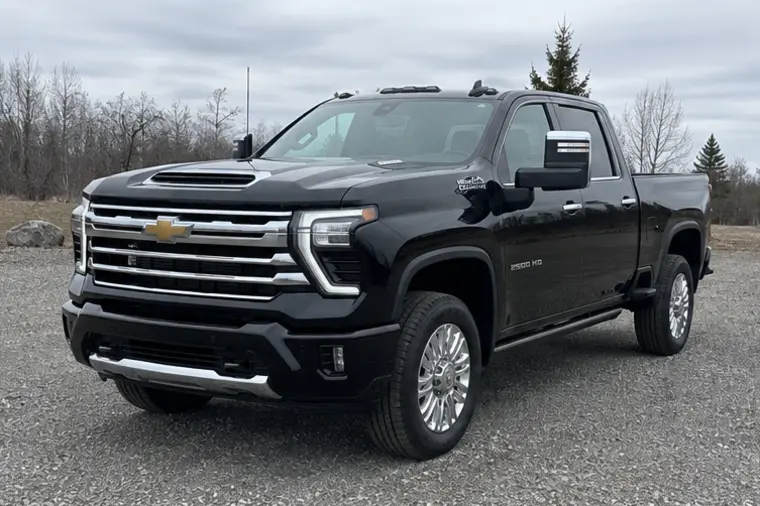
A Chevrolet Silverado 2500HD diesel should be assessed as a complete working vehicle. L5P engine condition matters, but transmission behaviour, emissions equipment, chassis wear, hitch setup and maintenance can all affect whether it completes the next assignment. The primary records here support focused inspections and ownership decisions. They do not establish a universal Canadian failure rate, guaranteed service life or single reliability-winning year.
Judge dependability against a defined assignment
Write down what the truck must do, where it will operate and how quickly it must enter service. A local work vehicle with flexible scheduling presents a different support problem from a pickup needed for a fixed towing departure. These circumstances do not change mechanical condition, but they determine whether an unresolved concern is manageable for the owner.
Distinguish failure frequency, consequence and recovery. Comparable frequency is not quantified by the selected documents. Consequence concerns what happens if a fault occurs. Recovery concerns diagnosis, parts, service access and a capable substitute. A material finding can justify a purchase pause without proving that most trucks of the same year will experience the condition.
Use an evidence-based decision rather than a numerical score without a denominator. Identify which systems have been assessed, what work is required and which questions remain open. The strongest result is an explainable assessment of this truck for this job, with limits stated clearly enough to support action.
Equipment changes are not reliability statistics
Chevrolet's 2024 announcement documents the revised diesel and other equipment changes. Its move from a six-speed to a ten-speed specifically concerns the gasoline engine; the diesel already had a ten-speed. Keep those applications separate when interpreting reports or comparing a repair history with the manufacturer's description.
GM also distinguishes the later L5P revision from 2023-and-older engines. That establishes an equipment boundary, not a matched failure-rate improvement. Obtain the exact year, engine, transmission and build information. Where a candidate has been modified, assess the installed hardware and calibration instead of assuming the original configuration still fully describes it.
| Vehicle fact | Why it affects the assessment |
|---|---|
| Exact model year and engine | Determines relevant service information |
| Diesel versus gasoline | Prevents unrelated transmission changes or faults being combined |
| Actual cab, package and wheel configuration | Establishes the basis for load suitability |
| Factory versus modified equipment | Changes inspection and documentation questions |
| Work history and completed repairs | Helps identify material current concerns |
Fuel-pressure faults should lead to diagnosis
GM's 20-NA-197 identifies a possible fuel-pressure sensor connector cause within specified 2017–2020 L5P applications. It is a diagnostic lead when the actual vehicle and findings fit, not proof that every pressure-related code needs a connector or a fuel pump. Ask the technician to match the concern to current service information.
Read the original complaint and findings before interpreting a list of replaced parts. If a repair did not resolve the symptom, determine what the next investigation established. A large invoice can still leave uncertainty about the cause. A smaller, well supported repair can provide useful evidence when the record connects the work to a satisfactory outcome.
If contamination or another major fuel-system concern is suspected, request the evidence and a written scope. Do not infer it from a code alone or borrow another Duramax application's repair story. The estimate and expected interruption should follow the supported diagnosis, not an assumption about which component is most likely to be expensive.
Cooling and cold-start history deserve their own questions
GM's 18-NA-098 provides leak-path context for defined 2017–2020 Duramax applications. A visible leak location can be misleading, so coolant loss should be traced rather than assigned to a particular repair from appearance alone. Ask whether the cause was located and whether the original complaint returned after the work.
The separate 19-NA-108 covers a defined 2017–2019 L5P cold-start concern under stated diagnostic conditions. Rough running alone does not establish that cause. Arrange a cold-start assessment when the history warrants it and give the technician the circumstances of the complaint. An evaluation performed only after warm-up may not answer the question that matters to the buyer.
Keep these concerns separate from an unsupported model-year blacklist. A documented diagnostic possibility does not describe every engine in the population. The individual truck may have no relevant finding, a repaired condition or an unresolved symptom. Those are different ownership decisions requiring different evidence.
Review transmission condition beyond campaign completion
Transport Canada 2024637 includes specified 2020–2022 diesel Silverado HD applications. Obtain the current VIN result and relevant completion record. A campaign entry addresses defined work; it does not establish the condition of every internal component or explain all continuing shift complaints.
Ask about behaviour before and after the visit and review any separate diagnosis or mechanical repair. A software action is not automatically a transmission rebuild. A replacement component also needs context about why it was required and what happened afterwards. Read the history as a sequence rather than accepting a single repaired label.
Have a qualified professional choose an appropriate evaluation when symptoms remain. Do not deliberately provoke a potentially serious fault through aggressive driving. If a material safety concern is suspected, pause use and obtain diagnosis. A short normal demonstration cannot certify future life, especially when the records describe recurring behaviour that remains unexplained.
Maintenance and emissions condition affect practical availability
The 2025 6.6L supplement explicitly addresses PTO and extended idle use in maintenance planning. Use the applicable year documentation and request available operating-hour information when relevant. Do not treat low odometer distance as a complete description of working use or apply a later schedule indiscriminately to an earlier vehicle.
Discuss towing, short journeys, storage, winter use and stationary operation with the servicing shop. These are inspection and maintenance questions, not a basis for inventing a failure probability. Separate normal service, wear items and repairs triggered by symptoms. A recent oil change does not settle every question about the previous maintenance history.
For an emissions complaint, establish the actual equipment, diagnostic findings and corrective scope. GM's 16-NA-380 distinguishes DPF-related indications within its stated coverage. Do not assume that every warning requires the same part or that regeneration can fix every condition. An undocumented modification or temporary clearing should not be treated as an explanation of the underlying fault.
Inspect the truck that will carry the load
Check tires, brakes, hitch hardware, bed and frame condition, visible corrosion and aftermarket wiring along with the powertrain. Work equipment can change both loading and condition. Ask whether installations are documented and identify any specialist system the general inspector cannot evaluate.
Use the candidate's labels and appropriate Chevrolet configuration information for the real loaded assignment. The 2024 2500HD chart separates cab, wheel, tire, package and hitch conditions. Do not transfer a 3500HD maximum or another configuration's rating to the candidate. A sound engine cannot correct a capability mismatch.
Provide the inspector with the intended use and repair history before the appointment. A focused assessment of a recurring issue can be more useful than another generic checklist. Record what was observed, what was not assessed and what additional information would change the decision. This makes a later recheck purposeful rather than repetitive.
Turn the findings into a usable ownership plan
Budget from identified needs, separating scheduled work, consumables, diagnosed faults and optional upgrades. No universal repair allowance or remaining-distance prediction is provided here. Ask about parts and appointments before assuming an unresolved repair can be fitted into a committed work schedule.
Confirm that a temporary vehicle could perform the same trailer or cargo task. Transportation for the driver alone may not preserve work capability. If the plan depends on immediate uninterrupted use while a material concern remains unexplained, another candidate may offer a more dependable practical choice without establishing a blanket judgment about the model year.
| Finding | Evidence needed next | Decision supported |
|---|---|---|
| Diagnosed repair | Written scope, estimate and service timing | Whether the work can be completed before use |
| Repeated unexplained symptom | Focused diagnosis and repair history | Whether the remaining uncertainty is acceptable |
| Missing maintenance records | Applicable schedule and baseline review | What can be established now and what remains unknown |
| Specialist work installation | Relevant documentation and assessment | Whether the complete vehicle suits the assignment |
| Load mismatch | Actual labels and loaded requirements | Whether another configuration is necessary |
Silverado 2500HD reliability questions
Does the L5P badge guarantee dependable service? No. Evaluate the actual application, whole-truck condition, history and required work.
Do equipment updates prove lower failure rates? No. Design changes and reliability statistics are different evidence.
Can a completed recall replace an inspection? No. Campaign work and present condition answer different questions.
What supports a confident purchase? Appropriate capability, explainable maintenance and repairs, a satisfactory current assessment and a realistic plan for remaining needs.
Evidence note: manufacturer documents establish the specific facts and applications cited. Buying workflows and cost scenarios are DieselTrucks.ca editorial guidance. These pages do not publish measured failure rates or confirm the condition, recall status or capacity of a particular truck.
General educational content for Canadian diesel-pickup research. Verify the exact truck, model year, certification labels, owner manual and manufacturer documentation, and obtain qualified mechanical or towing advice where appropriate.
Sources & Further Verification
Use the exact model year, VIN, truck labels and current manufacturer documentation when moving from general research to a purchase or towing decision.
- Chevrolet 2024 Silverado HD announcement — original manufacturer equipment changes, updated June 2023
- GM L5P technical description — later specification versus 2023-and-older engines
- GM 20-NA-197, September 2020 — fuel-pressure connector diagnosis
- GM 18-NA-098, June 2019 — Duramax coolant leak diagnosis
- GM 19-NA-108, June 2019 — defined L5P cold-start concern
- Transport Canada 2024637 — diesel transmission recall
- GM 2025 6.6L Duramax diesel supplement — original manufacturer operating and maintenance instructions
- GM 16-NA-380, September 2022 — DPF fault distinctions
- Chevrolet 2024 Silverado 2500HD chart — original manufacturer hitch, cab, wheel and package conditions
- Chevrolet Canada manuals and guides