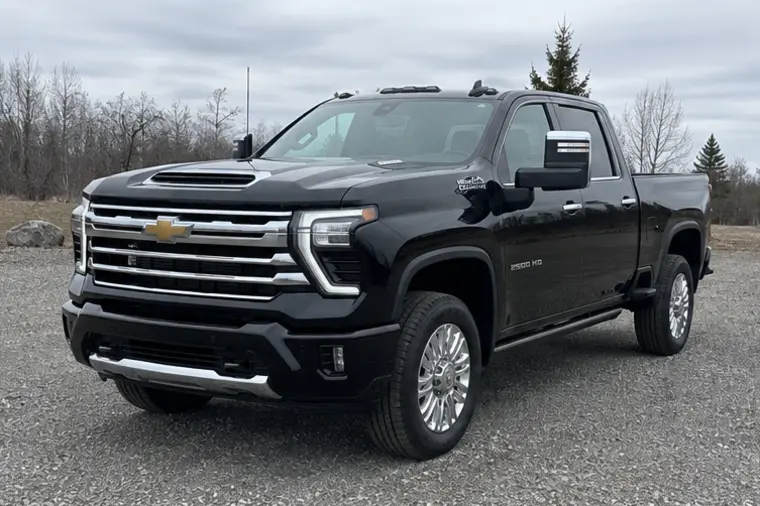
A 2024 Chevrolet Silverado 2500HD diesel is a useful starting point when you want the revised Duramax engine and the updated equipment available for that year. An earlier L5P can still be the better individual purchase when its configuration and evidence are stronger. Choose the real load and required features first, then assess condition, repairs and service support. No universal reliability-winning year is established here.
Why start a comparison with 2024?
Chevrolet's 2024 announcement identifies the revised diesel and updated equipment, including trim-dependent cabin changes and available towing technology. Use those differences to decide whether the later truck offers something you will actually use. They do not establish a lower failure rate or guarantee that a particular 2024 candidate will need less work than an earlier truck.
The ten-speed change in the announcement needs care: the gasoline engine moved from six speeds to ten, while the diesel already used a ten-speed. Do not describe 2024 as the diesel's first ten-speed year. A buyer comparing listings needs the actual engine and transmission application, not a headline that combines two different powertrains.
Start with a written feature requirement. If you need a particular camera function or cabin arrangement, verify that the candidate has it and that it works with the intended equipment. If the change adds little to your use, a suitable earlier truck with better records may deserve more attention. Model-year preference should follow a meaningful difference rather than an assumed reputation.
Earlier and later L5P candidates remain separate comparisons
GM's technical description distinguishes its later L5P revision from 2023-and-older engines. Do not assign current output figures to every vehicle with an L5P badge. For an earlier candidate, obtain the correct model-year information and actual build details. For a modified truck, establish what equipment and calibration are installed now.
An engine revision cannot explain the condition of a used vehicle. A later truck may have a recurring warning or poorly documented work, while an earlier candidate may have a coherent maintenance file and satisfactory assessment. The reverse can also be true. Compare the evidence that affects the purchase instead of treating age as a substitute for inspection.
| Shortlist category | Reason to consider it | Essential check |
|---|---|---|
| Earlier L5P candidate | Suitable equipment with an established service history | Exact application, current condition and identified needs |
| 2024 revised diesel | Later engine and available equipment changes | Actual trim, installed features and repair history |
| Later model year | Equipment may further suit the assignment | Its own documents and current inspection |
| Gasoline 2500HD | A different powertrain proposition | Do not apply diesel service or campaign evidence |
| Silverado 3500HD | A different configuration may fit the load better | Actual rear-wheel arrangement and loading requirements |
The towing package may matter more than the year
Chevrolet's 2024 2500HD chart separates conventional and bed-hitch configurations, with cab, wheel, tire, package and trim conditions. Identify the relevant configuration before relying on a capacity figure. A diesel engine or Max Trailering label does not make every number in the chart applicable to the candidate.
Obtain the vehicle's labels and correct documentation, then account for occupants, hitch hardware, bed cargo and installed equipment. Use measured weights where practical. A trailer's load on the truck must be considered alongside its total loaded weight. Check all relevant limits rather than selecting whichever advertised number makes the combination appear acceptable.
If you are choosing between a work-oriented configuration and an off-road-oriented trim, compare the actual ratings and installed equipment rather than assuming the more expensive truck has more towing capability. The ZR2 and other configuration branches deserve their own check. Accessories and appearance should be evaluated after the actual assignment has been shown to fit.
Decide whether the 2500HD is the right model
For a work truck, describe the heaviest ordinary operating day: people, tools, materials, permanently installed equipment and the trailer. For recreation, include the luggage and equipment that stays in the truck while towing. An assessment based on an empty pickup may overlook the load that matters most during actual use.
Compare a 3500HD when the assignment requires a configuration the candidate 2500HD cannot support. Do not transfer the larger model's advertised maximum to the smaller one, and do not assume a later 2500HD year automatically closes the gap. The correct model and configuration can be a more consequential choice than a small difference in engine output.
Include daily practicality in that comparison. Parking, site access, bed use, trailer connection and the availability of a suitable substitute all matter. The larger truck has its own inspection and ownership questions. Choose it because the whole vehicle fits better, rather than treating a different badge as a cure for uncertainty about a used candidate.
Match service concerns to the year and symptoms
GM's 20-NA-197 identifies a fuel-pressure sensor connector diagnostic possibility within defined 2017–2020 L5P applications. If a candidate has relevant history, ask how the cause was established and whether the complaint returned. A listed code alone is not proof that the truck needs either a simple connector repair or a major fuel-system replacement.
Transport Canada 2024637 covers specified 2020–2022 diesel Silverado HD applications. Verify the actual VIN and retain evidence of completed work. Review any continuing shift complaint separately from the campaign entry. A software action does not certify all mechanical components, and a model-year match does not establish the candidate's current status.
Read the service record as a sequence of complaint, diagnosis, work and result. A documented repair that addressed the original issue can be useful evidence. Repeated invoices without an explanation of why the symptom continues leave a different question. Compare what remains unresolved instead of counting repairs as either automatic reassurance or automatic rejection.
What to collect before choosing a candidate
Use these records to decide whether the truck merits a visit. If one missing fact would determine suitability, address it before investing more travel or inspection time. An incomplete advertisement can sometimes be clarified with good records, but an unresolved identity or capability issue should not be hidden by an attractive specification list.
Agree on the purchase criteria in advance. Identify which findings require repair, a focused recheck or rejection. That helps keep optional features from displacing the original requirements when a particular truck becomes appealing. Apply the same criteria to an earlier and a later candidate.
- VIN and build information that identify the actual engine, transmission and configuration.
- Relevant loading labels, hitch details and documentation for installed work equipment.
- Dated service and repair records with a coherent mileage sequence.
- Current campaign information and evidence supporting claimed completion.
- A description of towing, stationary use, storage, winter operation and unresolved symptoms.
- Permission for an independent inspection focused on the intended assignment.
Inspect the complete vehicle and the promised features
Arrange a cold start, qualified diagnostic review and appropriate road evaluation. Provide recurring complaints and repair history to the inspector beforehand. A general checklist may not resolve an intermittent fault unless its circumstances are understood. Do not seek an aggressive test intended to trigger a potentially serious condition.
Inspect tires, brakes, hitch attachments, bed and frame condition, visible corrosion and aftermarket wiring. Verify the equipment you specifically wanted from the model-year change, including compatibility and actual function where relevant. A camera view or dashboard feature should be assessed as equipment, not treated as a substitute for load calculations or driver responsibility.
The written report should distinguish urgent concerns, scheduled or wear work, optional improvements and unassessed items. Keep the limitations explicit. A satisfactory inspection supports a purchase decision at that time; it does not guarantee trouble-free operation for a fixed number of years or kilometres.
Compare the complete ownership proposition
Obtain estimates for identified needs and separate required work from optional upgrades. Build the maintenance plan from the selected vehicle's applicable documents and actual operating pattern. Keep the records with the truck so that the next service decision begins from a known baseline rather than an optimistic assumption.
| Factor | Stronger purchase evidence | Reason to reconsider |
|---|---|---|
| Equipment benefit | A verified feature that helps the actual assignment | Preference rests only on a model-year label |
| Repair needs | Supported cause, scope and estimate | Price depends on an unverified easy fix |
| Capacity | Actual configuration and loaded assessment | Another model's maximum is doing the work |
| Timing | Service and recheck can be completed before use | Immediate work depends on an unresolved symptom |
| Recovery | A substitute can perform the same loaded task | Only driver transportation has been arranged |
Silverado 2500HD best-year questions
Is 2024 proven most reliable? No. It is the equipment reference used in this shortlist, not a measured reliability winner.
Did the diesel first get ten speeds in 2024? No. The announcement's change from six to ten speeds concerned the gasoline engine.
Does a newer diesel solve every capacity problem? No. Verify the actual configuration and loaded requirements.
What should decide between suitable candidates? Prefer the truck with stronger relevant condition evidence, manageable identified needs and equipment that serves the intended job.
Evidence note: manufacturer documents establish the specific facts and applications cited. Buying workflows and cost scenarios are DieselTrucks.ca editorial guidance. These pages do not publish measured failure rates or confirm the condition, recall status or capacity of a particular truck.
General educational content for Canadian diesel-pickup research. Verify the exact truck, model year, certification labels, owner manual and manufacturer documentation, and obtain qualified mechanical or towing advice where appropriate.
Sources & Further Verification
Use the exact model year, VIN, truck labels and current manufacturer documentation when moving from general research to a purchase or towing decision.
- Chevrolet 2024 Silverado HD announcement — original manufacturer equipment changes, updated June 2023
- GM L5P technical description — later specification versus 2023-and-older engines
- Chevrolet 2024 Silverado 2500HD chart — original manufacturer hitch, cab, wheel and package conditions
- GM 20-NA-197, September 2020 — fuel-pressure connector diagnosis
- Transport Canada 2024637 — diesel transmission recall
- Chevrolet Canada manuals and guides