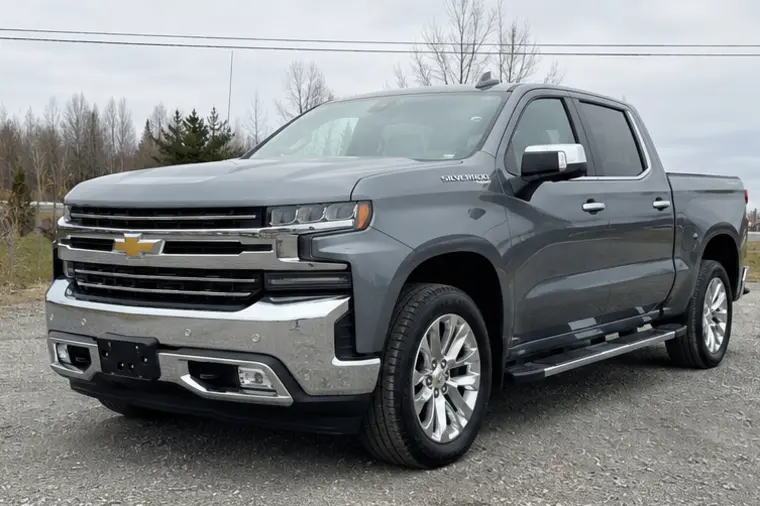
No universal Chevrolet Silverado 1500 diesel year blacklist is established by the primary evidence reviewed here. Give specified 2020–2022 diesel candidates a current transmission-campaign check, identify the correct LM2/LZ0 and 2022 LTD application, and investigate material symptoms. Decline an individual truck when its condition, identity or capability cannot be supported for your intended use, rather than treating model year alone as a diagnosis.
Which years deserve a closer look?
Transport Canada 2024637 lists defined 2020–2022 diesel Silverado applications. That is a reason to check the actual VIN and repair record, not to reject every truck carrying those model years. A candidate may have completed work, an open campaign or a separate unresolved symptom. Those are different purchase situations that should be established from current evidence.
GM's LM2 wiring document and 2023 LZ0 software bulletin describe other application-specific questions. The former narrows its cited 2022 Silverado entry to the LTD with stated identifiers; the latter expressly lists 2023 LZ0 vehicles. Do not merge all those populations into one claim that every 3.0L diesel has the same faults.
An older, documented and suitable truck can remain preferable to a newer candidate with unanswered questions. A later year can also be appropriate when its actual equipment and condition fit better. Neither conclusion needs a universal best-or-worst ranking. The practical task is to identify what would stop this purchase and what evidence could reasonably change that decision.
Resolve identity before interpreting the history
Chevrolet's 2020 chart separates general Silverado and Trail Boss configurations, while its 2023 diesel rows carry their own package and wheel conditions. Use these distinctions to ask for evidence when a listing appears inconsistent. An incorrect advertisement can sometimes be clarified; do not assume either deliberate deception or mechanical unsuitability without investigating the relevant facts.
If labels, records and the actual vehicle cannot be reconciled, pause before making a deposit or travelling further. Repair history has limited value when you cannot establish which equipment it describes. An engine-family badge or an off-road appearance is insufficient to resolve that identity question.
| Candidate description | What to verify | Why it can change the decision |
|---|---|---|
| LM2 or LZ0 diesel | Actual engine and build information | Service information must match the application |
| 2022 Silverado | LTD status and relevant identifiers | The cited wiring bulletin does not cover every variant identically |
| Claimed 2020 diesel Trail Boss | Factory identity and modifications | Chevrolet's 2020 Trail Boss table lists gasoline engines |
| Max Trailering candidate | Actual package, wheels and configuration | A package claim alone does not establish every advertised rating |
| Modified pickup | Installed hardware, calibration and documentation | Original build data may not fully describe the vehicle now |
Use pause, decline and reconsider deliberately
Pause when a material missing fact can plausibly be established before purchase. Decline when the truck cannot meet the assignment or the unresolved issue exceeds the budget, timing or support available. Reconsider when a substantive correction directly answers the original question. These are decisions about the candidate, not statements that every truck from its year belongs on a blacklist.
Write down the evidence needed to change your decision. A VIN-linked repair order may answer a campaign question. A qualified diagnostic report may explain a recurring warning. Actual labels and loaded weights may resolve a capacity question. Another generic document that repeats the seller's description may add little.
The time already invested in a candidate should not lower the standard. An inspection that identifies a truck to avoid has served a useful purpose. If later work supports reconsideration, compare the revised vehicle with alternatives on equal terms. You are not obliged to buy because an earlier uncertainty has finally been clarified.
Transmission symptoms need attention beyond the recall entry
Obtain the current campaign result and the work record for the individual VIN. Ask whether the owner experienced abnormal shifting, warnings or other material behaviour before or after the visit. A completed software action does not establish that every mechanical component is healthy or that a continuing complaint has been resolved.
Have a qualified professional decide how to assess an abnormal transmission concern. Do not use aggressive driving to provoke a potentially serious fault. If a safety issue is suspected, stop the evaluation and obtain diagnosis before further use. A brief normal drive is useful but cannot certify future life or explain a previously recurring problem by itself.
Read the repair sequence rather than accepting a single reassuring phrase. Identify the complaint, findings, performed work and outcome. A replacement component and a software visit are different actions. Repeated visits with the same unexplained symptom deserve a focused review, particularly if the purchase depends on immediate towing or work availability.
Do not buy an assumed easy warning-light repair
The selected GM documents illustrate why a warning requires application-specific diagnosis. A listed condition may involve wiring or software in the stated circumstances, but the dashboard message alone does not prove either cause. A seller's claim that it only needs a sensor is a repair hypothesis until the actual findings support it.
Ask for a qualified scan review and an explanation of active faults, history and any limitations caused by recent clearing. Clearing does not itself establish concealment, but it may leave insufficient evidence for the purchase decision. Agree on whether additional normal operation or a targeted recheck is needed. A cleared light should not be represented as the corrective work.
If emissions equipment or calibration has been altered, establish what is installed and obtain an assessment of the actual corrective scope needed for your intended use. Do not make the purchase depend on an undocumented shortcut. A discounted price may make a diagnosed repair affordable; it does not make an unknown cause or timing predictable.
Scheduled maintenance is a different question from failure
The 2021 Chevrolet/GMC 3.0L supplement includes oil-pump-belt replacement in its maintenance schedule and separate fuel-filter conditions. For that application, ask what scheduled work is documented or approaching. The existence of a maintenance item does not establish that the engine is unreliable or identify the distance at which a particular candidate will fail.
Do not automatically substitute a later engine's service statement for the earlier schedule. Match the vehicle, documentation and actual operating conditions. Where records are missing, distinguish work that can be established through inspection or baseline servicing from history that remains unknown. A recent oil-change receipt does not resolve every earlier maintenance question.
Budget for supported needs rather than using a maintenance item as a blanket reason to reject the year. Obtain estimates where relevant and leave time for the work before a fixed assignment. If the transaction relies on ignoring documented requirements because the truck appears to run well, the purchase plan needs revision even if no current fault has been observed.
Reject a real load mismatch even on a desirable engine
Assess the fully loaded combination using the candidate's labels and appropriate Chevrolet information. Include occupants, hitch equipment, bed cargo, accessories and the trailer's load on the truck. A range-wide towing figure does not establish that the specific vehicle can satisfy every relevant limit for your assignment.
For work, consider the heaviest ordinary day rather than an empty demonstration. For travel, include the equipment and people that will actually accompany the trailer. Use measured weights where practical and record assumptions still needing verification. Choosing a later diesel year cannot automatically correct a carrying-capacity mismatch.
If the job calls for a Silverado 2500HD, compare that model on its own evidence and practical tradeoffs. Do not force the half-ton choice merely because it is a preferred year or attractive trim. Conversely, a bigger truck is not automatically a better everyday choice when the 1500 meets the actual requirements. The correct decision follows the work and the vehicle's condition.
What would justify reconsidering a paused candidate?
Preserve the final inspection and repair evidence together. Record what remains unassessed rather than assuming a missing comment means approval. Confirm that support arrangements match the actual trailer or cargo task; transporting the driver alone may not preserve the planned work. Reconsider only when the improved evidence supports a purchase that fits your needs.
| Original concern | Evidence that could resolve it | What is not enough |
|---|---|---|
| Unclear identity | Matching build information and actual equipment | A revised listing title alone |
| Recurring warning | Supported cause, repair and relevant recheck | Clearing the code without explanation |
| Campaign uncertainty | Current VIN result and work record | A generic statement that recalls were done |
| Uncertain loading | Actual labels and loaded assessment | Another truck's capacity figure |
| Unknown repair timing | Diagnosed scope, appointment and suitable substitute | An assumed quick fix after purchase |
Silverado 1500 years-to-avoid questions
Should I reject every 2020–2022 diesel? No. Verify the actual campaign status, repair history and current condition.
Does an LZ0 badge guarantee a better candidate? No. Inspect the individual truck and confirm the configuration.
Is a scheduled oil-pump-belt service proof of an unreliable year? No. Maintenance planning is distinct from measured failure frequency.
What is the clearest reason to walk away? A material unresolved safety, identity, repair or load issue that cannot be addressed within your requirements.
Evidence note: manufacturer documents establish the specific facts and applications cited. Buying workflows and cost scenarios are DieselTrucks.ca editorial guidance. These pages do not publish measured failure rates or confirm the condition, recall status or capacity of a particular truck.
General educational content for Canadian diesel-pickup research. Verify the exact truck, model year, certification labels, owner manual and manufacturer documentation, and obtain qualified mechanical or towing advice where appropriate.
Sources & Further Verification
Use the exact model year, VIN, truck labels and current manufacturer documentation when moving from general research to a purchase or towing decision.
- Transport Canada 2024637 — diesel transmission recall
- GM 21-NA-149, May 2022 — engine-specific wiring diagnosis
- GM 23-NA-071, April 2023 — 2023 LZ0 engine software
- Chevrolet 2020 Silverado 1500 trailering chart — original manufacturer configurations and separate Trail Boss table
- Chevrolet 2023 Silverado 1500 trailering chart — original manufacturer package and wheel conditions
- Chevrolet/GMC 2021 3.0L Duramax supplement — original manufacturer maintenance and fuel-system instructions
- Chevrolet Canada manuals and guides