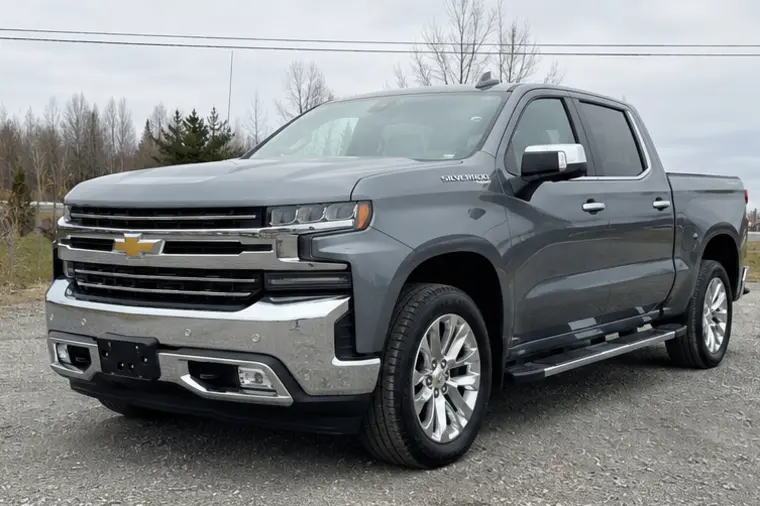
Start with a 2023 Chevrolet Silverado 1500 LZ0 when the later 3.0L diesel generation is your priority, then compare it with documented earlier LM2 candidates. The best purchase depends on the actual cab, drivetrain, package, condition and work you need the truck to do. This is a conditional equipment shortlist, not a claim that one year has a proven lowest failure rate.
A practical best-year starting point
The 2023 LZ0 is a useful reference for buyers seeking GM's later 3.0L diesel development. GM identifies LZ0 as the successor to LM2, and its 2023 service bulletin explicitly lists the Silverado 1500 LZ0 application. These sources establish equipment and diagnostic context, not a matched reliability comparison across model years.
An earlier LM2 can remain the better individual purchase when its configuration, records and present condition fit your needs more convincingly. Do not choose a year merely because it falls outside one recall window. Nor should a newer engine make you overlook a recurring warning, an unsuitable load configuration or a repair history that cannot be explained.
Write down the reasons for preferring later equipment before comparing advertisements. If those features do not change how you will use the truck, condition and documented needs may deserve more weight. If a particular configuration is essential, confirm it before making the year the deciding factor. The goal is a useful shortlist that can survive inspection, not a date selected in isolation.
Chevrolet's own configuration tables matter
Chevrolet's 2020 chart separates its general Silverado 1500 and Trail Boss tables; the latter lists gasoline engines. Do not assume that a diesel listing with an off-road appearance matches a factory 2020 Trail Boss diesel configuration. Verify its identity and installed equipment before relying on the advertisement's description.
The 2023 chart also distinguishes diesel towing rows by cab, drivetrain, Max Trailering Package and wheel conditions. A later diesel badge alone does not establish the advertised maximum. Use the actual vehicle's documentation and relevant chart row. GMC specifications should not be substituted merely because another truck shares the engine family.
| Candidate group | Why it belongs in the comparison | What to establish |
|---|---|---|
| 2020–2022 LM2 candidate | Earlier 3.0L alternative with an inspectable history | Engine, configuration, applicable campaign and repairs |
| 2022 LTD candidate | A distinct identification question within that year | Correct variant and bulletin identifiers |
| 2023 LZ0 candidate | Later engine-generation reference | Actual build, package and diagnostic history |
| Later diesel candidate | Equipment may better meet your requirements | Its own model-year evidence and present condition |
| Off-road or modified listing | Appearance may conceal a configuration mismatch | Factory identity, modifications and applicable limits |
Decide whether the half-ton fits before ranking years
List the loaded trailer, people, hitch hardware, bed cargo and accessories. Obtain the candidate's labels and the correct year-specific information, then assess the actual combination. A truck can have enough advertised towing capacity in one configuration while another limit remains unresolved for your planned use. Keep those questions separate instead of relying on a single headline number.
For family travel, include passengers, pets, luggage and equipment that stays in the truck while towing. For work, account for the tools and materials carried on a busy day. Use measured weights where practical. If assumptions remain, identify what must be checked before the truck enters that assignment rather than treating an empty demonstration as proof of loaded suitability.
Compare a Silverado 2500HD if the actual requirements point beyond the candidate half-ton. The larger vehicle brings its own configuration, inspection and everyday-use considerations. Buying a later 1500 year does not automatically solve a carrying-capacity mismatch, and selecting an HD should be a considered load-class decision rather than a reaction to an unsupported reliability story.
Use service evidence to narrow the inspection
GM's 21-NA-149 includes an LM2-specific diagnostic branch and restricts its cited 2022 Silverado application to the LTD with stated identifiers. Keep the gasoline portions of that document separate. An electrical complaint on a correctly identified candidate should receive diagnosis matching the actual engine and symptoms.
For the 2023 LZ0, the cited software bulletin supports a calibration check for its specified conditions. It does not establish that every warning is software-related or that an update can replace proper diagnosis. Ask what the shop found and whether the original complaint returned. The value of the record is in explaining the candidate, not in assigning a blanket reputation to its year.
Request the sequence of complaint, diagnosis, performed work and result. A documented repair that resolved an issue can be useful evidence. Repeated visits with the same unexplained symptom leave a different purchase question. Compare what remains unresolved rather than simply counting invoices or accepting the claim that an expensive replacement must have fixed everything.
Check campaigns without treating them as year rankings
Transport Canada 2024637 lists defined 2020–2022 diesel Silverado applications. Verify the individual VIN and retain evidence supporting any claimed completion. A model-year match prompts that check; it does not establish the candidate's open status, completed work or present transmission condition.
Ask whether there were shift complaints before or after the campaign visit and review any additional repair record. A software action is not automatically a mechanical rebuild. An invoice for a replacement component also needs context about the original complaint and outcome. A useful purchase comparison distinguishes these events rather than reducing the history to recall done or not done.
Do not reject every campaign-year truck or assume a later candidate needs no campaign review. The selected record is not an exhaustive current recall list. Obtain the appropriate current check for the actual VIN, then judge the truck's present condition through inspection and relevant diagnosis.
Compare suitable candidates on equal terms
If one vehicle has a recent independent inspection and another has only an assurance from the seller, obtain the missing evidence before declaring the newer year superior. A fair comparison requires consistent standards. Decide what would require repair, another focused check or rejection, then apply those criteria to every candidate.
Separate required work from optional improvements. Cosmetic appeal, trim and accessories can matter after the truck meets the original assignment, but should not obscure a material condition or capacity question. Keep estimates for identified needs alongside the inspection so that the final choice reflects the whole ownership proposition.
| Purchase question | Evidence that helps | Weak substitute |
|---|---|---|
| Is the identity correct? | VIN, labels and matching build information | A listing title or exterior badge |
| Does the configuration fit? | Actual loaded assessment and applicable documentation | A model-range maximum |
| Is maintenance explainable? | Dated records and a coherent mileage sequence | A broad claim of regular servicing |
| Are concerns resolved? | Diagnosis, work and an appropriate recheck | A cleared warning or unrelated invoice |
| Can the truck enter service when needed? | Known repair scope and support arrangements | An assumed quick appointment or easy fix |
Inspect and plan for the way you will use it
Arrange a cold start, qualified diagnostic review and appropriate road evaluation. Give the inspector the repair history and any recurring complaint beforehand. A generic inspection may not resolve an intermittent issue unless its operating circumstances are explained. Do not ask for aggressive driving intended to provoke a potentially serious fault.
Inspect tires, brakes, hitch installation, bed condition, visible corrosion and aftermarket wiring alongside the engine and transmission. For a modified or off-road-styled truck, establish what was changed and whether the actual installation suits the intended use. Record inspection limits explicitly rather than assuming every component was certified because no comment was made.
After choosing a candidate, build the maintenance plan from its applicable documentation and actual operating pattern. Obtain estimates for known work and allow time for any recheck before a fixed departure or work assignment. Confirm whether a temporary vehicle can carry the real load or tow the intended trailer; transportation for the driver alone may not preserve the same capability.
Silverado 1500 best-year questions
Is 2023 proven most reliable? No. It is the later-engine reference used in this conditional shortlist.
Should an LM2 be dismissed? No. A correctly identified, suitable and well documented candidate can remain competitive.
Does the Max Trailering label settle towing suitability? Verify the actual package, configuration, applicable limits and loaded combination.
What should decide between adjacent years? The candidate's fit for your work and the strength of the evidence about its condition, repairs and remaining needs.
Evidence note: manufacturer documents establish the specific facts and applications cited. Buying workflows and cost scenarios are DieselTrucks.ca editorial guidance. These pages do not publish measured failure rates or confirm the condition, recall status or capacity of a particular truck.
General educational content for Canadian diesel-pickup research. Verify the exact truck, model year, certification labels, owner manual and manufacturer documentation, and obtain qualified mechanical or towing advice where appropriate.
Sources & Further Verification
Use the exact model year, VIN, truck labels and current manufacturer documentation when moving from general research to a purchase or towing decision.
- GM LZ0 technical description — later 3.0L version and LM2 comparison
- GM 23-NA-071, April 2023 — 2023 LZ0 engine software
- Chevrolet 2020 Silverado 1500 trailering chart — original manufacturer configurations and separate Trail Boss table
- Chevrolet 2023 Silverado 1500 trailering chart — original manufacturer package and wheel conditions
- GM 21-NA-149, May 2022 — engine-specific wiring diagnosis
- Transport Canada 2024637 — diesel transmission recall
- Chevrolet Canada manuals and guides