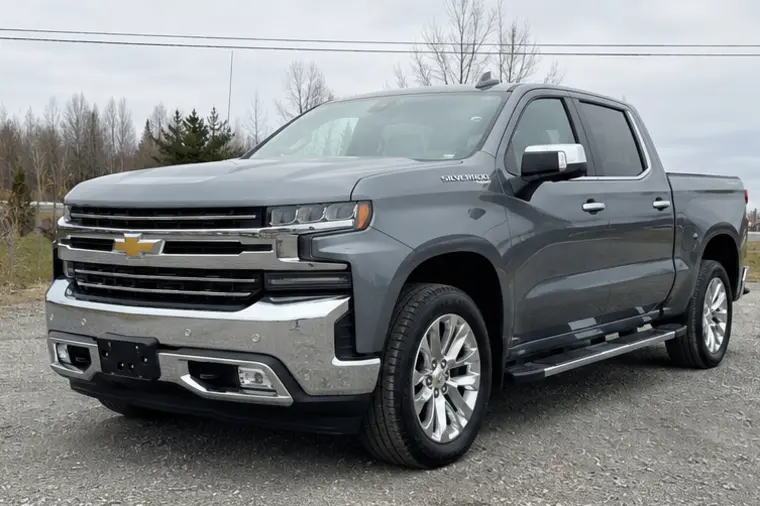
Chevrolet Silverado 1500 diesel dependability should be assessed by the exact LM2 or LZ0 application, service history, current symptoms and intended use. Primary records identify useful diagnostic and maintenance questions, but they do not establish a fair Canadian failure-rate ranking of all years. Separate the engine, transmission, emissions equipment and whole-truck condition before deciding whether a candidate is reliable enough for the next assignment.
Reliability evidence needs an application and a denominator
A bulletin can establish that a manufacturer documented a condition and a diagnostic approach. It does not, by itself, tell you how often comparable owners experienced the problem. Recall populations, complaint counts and online anecdotes also answer different questions. Do not combine them into a numerical reliability score without the data needed to support that comparison.
Assess frequency, consequence and recovery separately. Frequency is not quantified here. Consequence concerns what a fault would mean for the intended journey or work. Recovery concerns diagnosis, parts, service access and a suitable substitute. A material inspection finding can warrant a purchase pause even when no model-wide failure pattern is established.
Define the assignment clearly. A local vehicle with flexible scheduling and another available truck presents a different ownership decision from a pickup needed immediately for a remote towing trip. The mechanical facts remain the same, but the ability to absorb uncertainty changes. Dependable enough should be judged against that actual use rather than a universal reputation.
Match LM2 and LZ0 evidence to the actual truck
GM identifies LZ0 as the later 3.0L development. Its 2023 bulletin 23-NA-071 explicitly covers Silverado 1500 LZ0 vehicles for specified warning-code conditions and a software check. That scope should not be extended to every LM2 or later model year, and the existence of an update does not establish that every warning has the same cause.
The cited LM2 wiring document has a separate engine-specific branch. Its 2022 Silverado entry is limited to the LTD with stated identifiers. Confirm the vehicle's actual engine and variant before using the document. Gasoline conditions elsewhere in the same bulletin are not evidence of the diesel candidate's condition.
| Identification | Why the distinction matters |
|---|---|
| LM2 versus LZ0 | Different engine application and relevant service information |
| 2022 LTD versus another configuration | The cited wiring bulletin has a narrower 2022 scope |
| Diesel versus gasoline | Similar Silverado branding can hide unrelated powertrains |
| Factory versus modified truck | Installed equipment may need assessment beyond original build data |
| Actual cab and package | Loading suitability cannot be inferred from the engine alone |
Diagnose the warning before pricing a component
A warning or stored fault is the start of an investigation. Depending on the application and findings, the cause may involve wiring, calibration, a sensor or other hardware. A seller's claim that the truck only needs one inexpensive part remains a hypothesis until appropriate testing supports it. The opposite assumption, that a warning necessarily means the most expensive repair, is equally unhelpful.
Ask the technician to explain active and historical faults, relevant data and any limits created by recent clearing or incomplete history. Recent clearing alone does not prove concealment, but it may reduce what the assessment can establish. Decide whether additional normal operation and a focused recheck are needed before the evidence is sufficient for a purchase.
Read repairs as a sequence: complaint, diagnosis, work and outcome. Repeated visits for the same issue deserve attention even if several parts were replaced. A documented repair that directly resolved the concern can be useful ownership evidence. The number or value of invoices should not replace an explanation of how the truck behaves now.
Keep transmission campaign work separate from present condition
Transport Canada 2024637 includes defined 2020–2022 diesel Silverado applications for the recorded transmission concern. Obtain the candidate's current VIN result and any completion evidence. That record addresses the specified campaign; it does not certify all internal components or settle an unrelated continuing shift complaint.
Ask about behaviour before and after the work. If a transmission warning or abnormal shifting persists, obtain a professional assessment rather than accepting a prediction that another update will solve it. Do not use an aggressive road test to provoke a potentially serious event. A safety concern warrants diagnosis before further use.
Separate a campaign software visit from diagnosis or mechanical repair documented elsewhere. A replacement assembly needs context about the original complaint and outcome just as a software entry does. For an owner who needs immediate towing capability, unexplained intermittent behaviour is relevant even if a short demonstration appears normal.
Maintenance records should distinguish service from breakdowns
The 2021 Chevrolet/GMC 3.0L supplement includes oil-pump-belt replacement and a separate fuel-filter schedule with time/message conditions. Those are maintenance obligations for that application, not proof of a failure rate. Ask whether relevant scheduled work is documented, and do not apply a later LZ0 service statement automatically to an earlier LM2.
A recent oil change does not answer every maintenance question. Review dated records, mileage progression and the applicable schedule with the servicing shop. Separate normal service from repairs triggered by symptoms. If documentation is missing, establish what can be checked or brought to a known baseline and preserve the uncertainty about earlier work.
Discuss winter operation, storage, towing, short journeys and extended stationary use. These details help focus the maintenance review and inspection; they should not be turned into an invented probability of failure. A low odometer reading can coexist with a history that deserves careful assessment. Use the actual documentation and current condition to decide what the next owner needs to do.
Emissions evidence requires the same diagnostic care
GM's 16-NA-380 distinguishes DPF-related fault indications within its stated diesel scope. A code does not automatically establish the same failed part on every truck, and regeneration should not be assumed to cure every emissions complaint. Diagnosis should follow the applicable information and observed findings.
Ask about reduced-power events, repeated warnings and any modifications. Have the inspector establish what equipment is present and whether the current condition is explainable. A clean dashboard during one viewing is limited evidence when the records describe an unresolved recurring complaint. Document the limitation instead of certifying trouble-free future use.
If corrective work is identified, obtain a written scope and an appropriate recheck. Do not make the purchase depend on an undocumented shortcut or an assumed quick reset. The question is whether the system can be assessed and supported for your intended use, not whether the warning can temporarily be made invisible.
Check the whole Silverado and its real load
Inspect tires, brakes, hitch attachments, bed condition, visible corrosion and aftermarket wiring alongside the powertrain. Off-road appearance, wheels or accessories should prompt verification of the actual configuration rather than assumptions about factory equipment. Chevrolet's year-specific charts contain their own cab and package conditions; a GMC table is not a substitute for the Silverado's evidence.
Check the loaded combination with occupants, cargo, hitch hardware and the trailer's load on the truck. Use measured weights where practical. A mechanically sound half-ton can still be unsuitable for the required assignment. If another model is needed, that capability decision should be made before trying to justify the current truck through a favourable engine reputation.
Arrange a cold start, diagnostic review and appropriate road evaluation with a qualified professional. Provide the repair history and recurring symptoms in advance so that the assessment can focus on material questions. Retain the written findings, including urgent work, scheduled needs and anything that could not be evaluated.
Convert findings into an ownership decision
Budget from identified needs, separating consumables, scheduled service, diagnosed faults and optional upgrades. No universal repair allowance or remaining-life prediction is provided here. Confirm whether a substitute vehicle can perform the same trailer or cargo task; carrying the driver alone may not preserve the assignment.
| Finding | Evidence needed next | Practical implication |
|---|---|---|
| Diagnosed repair | Written scope, estimate and appointment plan | Budget and entry into service can be assessed |
| Recurring unresolved fault | Focused diagnosis and relevant history | A generic inspection may not close the question |
| Missing maintenance evidence | Applicable schedule and baseline review | Some historical uncertainty remains |
| Load mismatch | Actual labels and loaded requirements | A year change alone is insufficient |
| Inflexible departure or work date | Repair timing and capable substitute | Recovery planning affects the purchase choice |
Silverado 1500 reliability questions
Is LZ0 proven more reliable than LM2? The cited evidence establishes a revision, not a matched failure-rate ranking.
Does a service bulletin mean my truck has that problem? No. Match the application and obtain diagnosis when symptoms or findings justify it.
Is scheduled belt replacement a breakdown prediction? No. Maintenance planning and failure-frequency evidence are different things.
What supports a dependable purchase? Suitable capability, explainable records, a satisfactory current assessment and a realistic plan for identified needs and remaining uncertainty.
Evidence note: manufacturer documents establish the specific facts and applications cited. Buying workflows and cost scenarios are DieselTrucks.ca editorial guidance. These pages do not publish measured failure rates or confirm the condition, recall status or capacity of a particular truck.
General educational content for Canadian diesel-pickup research. Verify the exact truck, model year, certification labels, owner manual and manufacturer documentation, and obtain qualified mechanical or towing advice where appropriate.
Sources & Further Verification
Use the exact model year, VIN, truck labels and current manufacturer documentation when moving from general research to a purchase or towing decision.
- GM LZ0 technical description — later 3.0L version and LM2 comparison
- GM 23-NA-071, April 2023 — 2023 LZ0 engine software
- GM 21-NA-149, May 2022 — engine-specific wiring diagnosis
- Transport Canada 2024637 — diesel transmission recall
- Chevrolet/GMC 2021 3.0L Duramax supplement — original manufacturer maintenance and fuel-system instructions
- GM 16-NA-380, September 2022 — DPF fault distinctions
- Chevrolet 2023 Silverado 1500 trailering chart — original manufacturer package and wheel conditions
- Chevrolet Canada manuals and guides