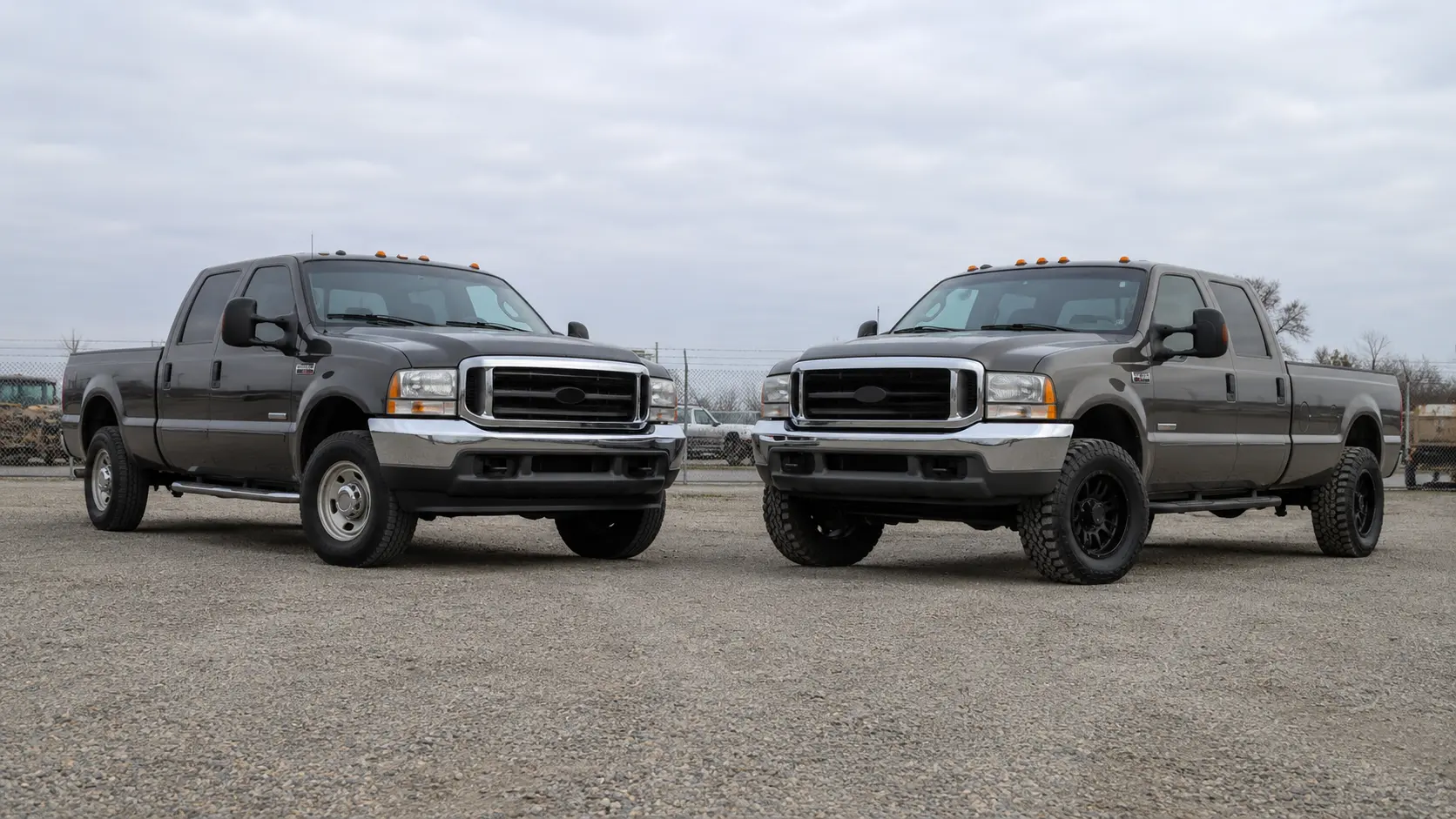
A modification is not automatically good or bad. Buyers need to know what changed, why, who performed the work and how it affects safety, legality, serviceability and warranty.
Separate a claimed return to stock into four verifiable questions
“Returned to stock” should describe a documented condition, not simply the removal of a tuner or an aftermarket badge. For a purchase inspection, ask the shop to separate hardware identity, software identity, observed operation and unresolved history. A finding in one category cannot automatically close the others. This is an editorial evidence framework, not a manufacturer certification procedure.
First, identify the installed components against the exact vehicle application. Second, ask a suitably equipped technician what can be established about current module software and compatibility. Third, record the operating checks actually performed and their limitations. Finally, retain the earlier modification and repair history: returning a component to its original specification does not establish how the truck was previously operated.
Request a written conclusion that names what was checked rather than an unqualified “stock” verdict. If a shop can identify the current calibration but cannot reconstruct previous software changes, that is a useful result with a clear limit. Do not ask a seller to erase information or clear faults as a substitute for diagnosis.
| Evidence category | Useful handoff record | What it does not prove |
|---|---|---|
| Hardware | Installed parts and application match | That the truck was never modified |
| Software | Technician’s current identification and compatibility findings | A complete lifetime calibration history |
| Operation | Dated inspection results and test conditions | Guaranteed future reliability |
| History | Installer invoices and restoration work | That every undisclosed change has been found |
An absent warning light is not the same as completed diagnostics
The 2026 Sierra HD owner manual explains that critical emissions-system checks may not be complete after recent service, a discharged battery or battery replacement. The truck may therefore not be ready for an applicable inspection. That is a reason to request the actual diagnostic status, not proof by itself that a seller concealed a defect.
For a candidate recently repaired or restored, give the inspecting technician the service dates and ask whether the available observations support a conclusion now or require follow-up. Record an incomplete check as incomplete. Do not replace it with either a clean bill of health or an accusation of tampering.
Keep mechanical readiness, a particular inspection result and local legal requirements separate. This guide has not established a province-by-province approval rule. Ask the relevant authority which requirements apply to the truck and intended use; a manufacturer’s discussion of inspection readiness does not establish that every Canadian pickup must undergo the same test.
Check accessory interactions, including equipment left by a previous owner
GMC’s same manual warns that add-on electrical equipment can drain the battery, and that devices connected to the diagnostic connector may interfere with vehicle systems. Its alteration guidance also discusses effects on safety and driver-assistance systems. A harmless-looking accessory therefore deserves identification even when the engine hardware appears original.
Ask the seller and inspecting shop to identify unused switches, old fleet equipment, accessory wiring and remaining mounts. Record which items are included in the sale, which are to be removed and who will confirm satisfactory operation afterward. An abandoned harness is not automatically defective, but an unexplained installation should not disappear from the inspection report.
Use the correct documentation family. GM’s 2026 upfitter index separates the HD chassis material from Chevrolet and GMC HD pickup electrical sections, and also separates 1500 material. A document for another model, year or body application is not a sufficient installation reference. Have the installer identify the instructions used rather than relying on the general statement that the part fits GM trucks.
Make the restoration decision before valuing the accessories
GMC’s warranty language concerns damage resulting from modifications and possible effects on coverage for affected parts. It should not be rewritten as either “all modifications void the entire warranty” or “returning to stock guarantees coverage.” Obtain the applicable warranty terms and a vehicle-specific answer from the responsible provider.
For your buying decision, separate three commitments: diagnosing the current condition, performing any agreed restoration and verifying the resulting operation. A quote covering only parts removal may leave diagnosis, damaged connectors, missing original parts or follow-up checks outside its scope. Ask the shop to identify those exclusions before comparing the total commitment with an intact alternative.
At handover, preserve the original findings, work order and post-work report together. Record any outstanding items and whether the purchase still makes sense without relying on a promised future repair. Do not assign resale value to unwanted modifications simply because the previous owner paid for them. The useful comparison is the truck you will actually receive, with documented limitations and a realistic path to service.
A tuned truck needs a change history, not just a parts list
Ask what hardware and calibration were changed, who performed the work, why it was done and whether the original fault or objective was documented. Separate an accessory installation from an engine calibration change, and separate both from emissions-equipment removal. The word “modified” is too broad to price the risk without details.
Request invoices, original-component information where available and an independent assessment of the current configuration. A truck described as returned to stock still needs verification of the installed hardware and calibration. A stock-looking exhaust or an absent warning light does not answer every question.
Should you buy a deleted diesel truck?
Treat missing or disabled factory emissions equipment as a material issue to resolve before purchase. Ask a qualified shop to identify the actual configuration and the work required to restore appropriate factory operation. Confirm applicable requirements with the relevant provincial authority and insurer for the intended use; a seller's statement that it is acceptable somewhere else is not sufficient evidence for your transaction.
Do not count removal of a system as proof that the truck has become reliable. Ford's 2009 F-Super Duty material describes the DPF as part of that application's operation. The correct equipment differs by model year and engine, so identify what the truck was built with before interpreting what is now missing or altered.
If restoration is part of your buying plan, obtain a written scope and quote before comparing the truck with an intact candidate. Include diagnosis and any related work the shop identifies. An inexpensive asking price does not establish that restoration will be simple or economical.
Keep capacity claims separate from modifications
More engine output, different tires or suspension assistance should not be treated as a replacement for the original payload, axle, tire, hitch and combination-limit checks. Ford's towing guide illustrates how ratings depend on the complete factory configuration. A modification claim cannot supply a missing guide row or label.
For a used tow vehicle, inspect the hitch installation, wiring, tires and chassis with the modifications disclosed. Ask the technician to distinguish observed condition from assumptions about how the truck was used. A polished installation can still require further verification.
Document every change
Ask for parts, software, installer invoices and the original components where available. Unknown tuning or undocumented wiring increases uncertainty.
Keep emissions disclosure neutral
Confirm factory emissions equipment is present and functioning. DieselTrucks.ca does not encourage tampering; buyers should verify applicable requirements for their jurisdiction.
Inspect the surrounding truck
Power changes can affect transmission, cooling, driveline, tires and brakes. Have a qualified technician assess the complete build.
Build a modification inventory
Document tuning, intake, exhaust, fuel system, turbo, transmission, suspension, wheels/tires, towing equipment and electrical accessories. Ask who installed each part, why, and what factory components remain.
Research compliance without defeat instructions
Identify whether emissions equipment appears modified and seek qualified legal, mechanical and provincial guidance. DieselTrucks.ca does not provide instructions to disable or bypass emissions systems.
Classify each change by what it affects
A bed liner, tire-size change, suspension lift and engine calibration create different inspection questions. Record the original specification, installed part, installer and date. For wheels and tires, investigate load suitability and clearance; for suspension and hitch changes, investigate alignment, attachment and trailer geometry.
| Change | Purchase evidence |
|---|---|
| Engine calibration | Current calibration identity and documented compatibility |
| Suspension or tire size | Installation instructions, alignment and load information |
| Auxiliary fuel or equipment | Mounting, routing and actual added weight |
Value a modification by its fit to your use
Money spent modifying a truck is not automatically value transferred to the buyer. Budget for removing equipment you cannot use and for investigating changes that affect several systems. A return to original appearance does not prove the truck has its original calibration or emissions hardware. Ask the inspection shop to record what it can verify physically and electronically.
GM’s body-builder resource is an application-specific starting point for alterations affecting a GM vehicle. Obtain the relevant manufacturer’s instructions for another truck.
Evidence note: manufacturer documents establish the specific facts and applications cited. Buying workflows and cost scenarios are DieselTrucks.ca editorial guidance. These pages do not publish measured failure rates or confirm the condition, recall status or capacity of a particular truck.
General educational content for Canadian diesel-pickup research. Verify the exact truck, model year, certification labels, owner manual and manufacturer documentation, and obtain qualified mechanical or towing advice where appropriate.
Sources & Further Verification
Use the exact model year, VIN, truck labels and current manufacturer documentation when moving from general research to a purchase or towing decision.
- GM — body-builder information for vehicle alterations
- Ford 2009 diesel supplement — F-Super Duty 6.4L and DPF sections
- Ford 2024 Super Duty pickup towing guide — original configuration tables and footnotes
- GMC 2026 Sierra HD owner manual — readiness, electrical additions and modifications, pp. 123, 278, 282–283
- GM Upfitter — select the exact model-year and application documentation