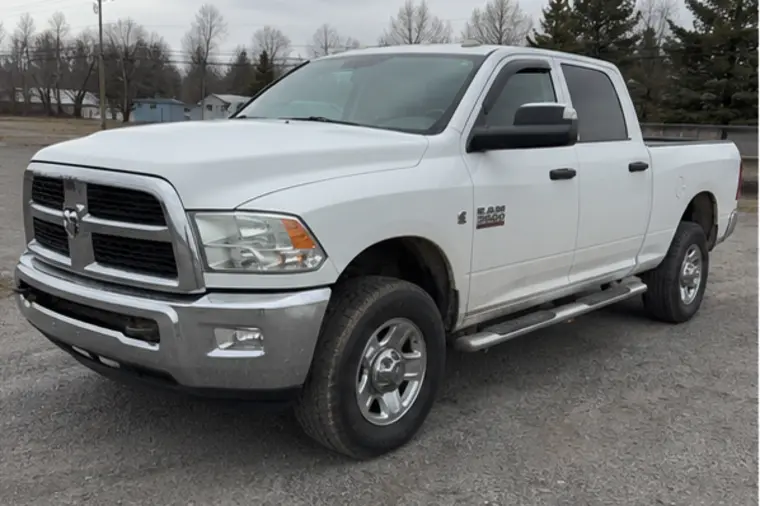
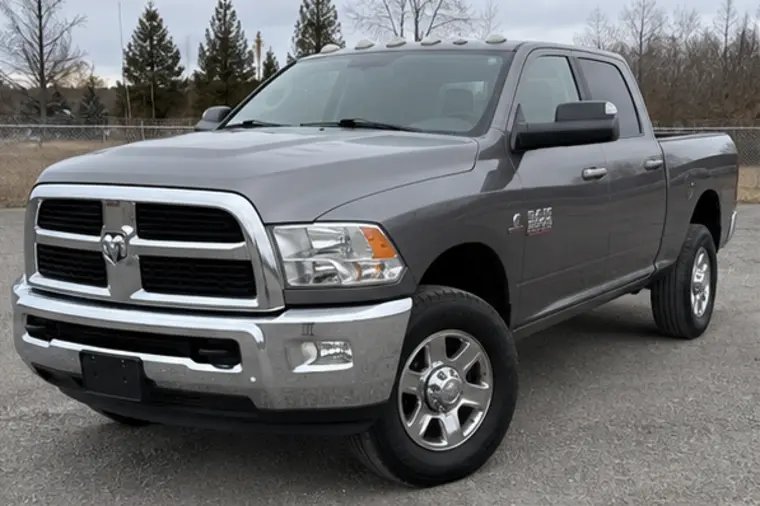
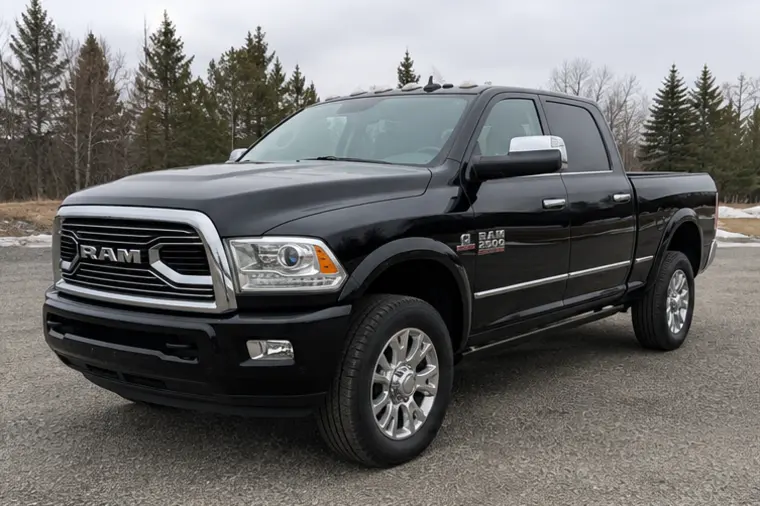
The fourth-generation RAM HD era covers many model years and significant mechanical and interior updates. Narrow the truck to an exact year and configuration before applying generation-level guidance.
Place the truck in the correct era
Record the model year, build date, RAM 2500/3500, pickup or chassis-cab, cab, bed and rear-wheel layout.
Engine and transmission context
6.7L Cummins output versions, transmission pairings and emissions systems vary across the era. Use official year-specific documentation and the truck's records.
Cab, bed, axle and rear-wheel choices
RAM 2500 and 3500 suspension, SRW/DRW and payload roles differ; a shared cab design does not make their capacity interchangeable.
Used-buying questions for this era
Ask how the truck was used and require the history to support the seller's description.
- Which engine-output and transmission configuration is verified?
- What emissions, recall and software history exists?
- Was the truck used for heavy towing, commercial work or idling?
- Are steering, suspension, brakes, tires and hitch structure consistent with the asking price?
Inspect the RAM configuration, not just the Cummins badge
Record the model year, 2500 or 3500 class, transmission, wheel configuration and actual factory equipment. Do not assume one output or transmission pairing applies throughout this body era. Where an upfit or replacement powertrain is involved, reconcile the build information with what is installed.
Ask the previous operator about towing, idling, short-trip work and emissions warnings. Connect those answers with hours, dated service records and qualified scan findings. For a service or landscape body, add completed axle weights and installer evidence to the purchase file. The same engine family can support trucks with very different day-to-day load limits and repair needs.
Do not combine all six-speed transmission records
The RAM 2018 diesel supplement distinguishes 68RFE and AS69RC six-speed automatic applications. Use the actual installed unit to interpret service invoices. A generic transmission-service entry needs its fluid and procedure clarified before it becomes useful evidence.
Compare evidence of towing and stationary use with recorded hours. For a commercial body, assess the body electrical and hydraulic history separately from the Cummins service file. One organized folder should connect those records without pretending they describe the same equipment.
| Fourth-generation purchase field | Why to keep it explicit |
|---|---|
| 2500 or 3500 | Establishes the truck configuration being assessed |
| Automatic or manual, exact unit | Directs service and road-test questions |
| SRW, DRW or completed body | Changes load placement and inspection access |
Evidence note: manufacturer documents establish the specific facts and applications cited. Buying workflows and cost scenarios are DieselTrucks.ca editorial guidance. These pages do not publish measured failure rates or confirm the condition, recall status or capacity of a particular truck.
General educational content for Canadian diesel-pickup research. Verify the exact truck, model year, certification labels, owner manual and manufacturer documentation, and obtain qualified mechanical or towing advice where appropriate.
Sources & Further Verification
Use the exact model year, VIN, truck labels and current manufacturer documentation when moving from general research to a purchase or towing decision.