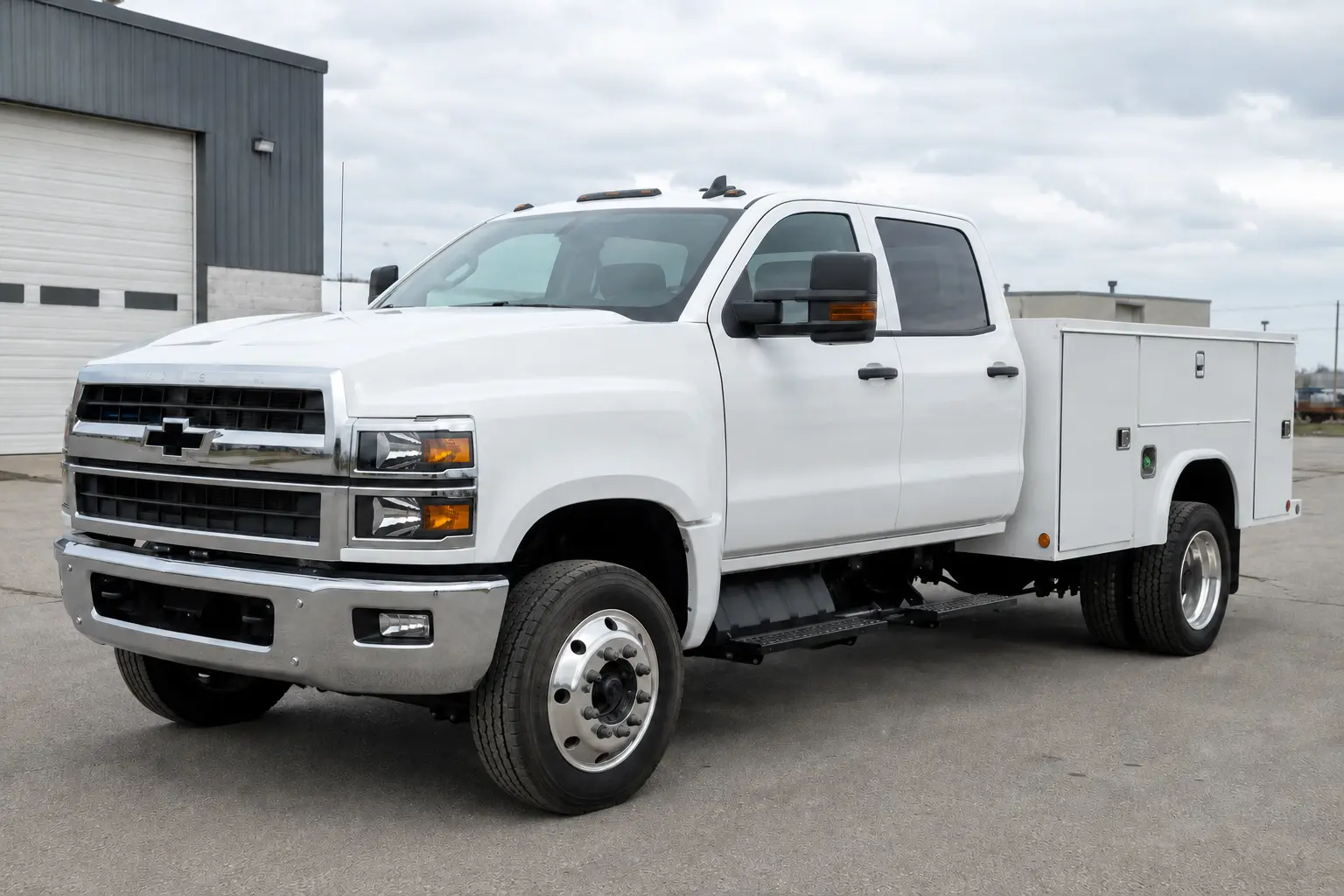
An empty service body is only the beginning of the load. A working truck carries the tools, parts, fluids and equipment that keep a technician productive throughout the day.
Build the buying decision
Stock the body
Tools + parts + mounted equipment
Check integration
Labels + mounting + electrical supply
Prove the work
Axle weights + equipment demonstration
Inventory the body before choosing the chassis
Make a compartment-by-compartment list of tools, spare parts, reels, fluids and portable equipment. Separate items always carried from occasional job loads. Count the crew and anything mounted above or behind the body, including racks, a compressor or a crane.
Ask for the actual completed vehicle weight rather than subtracting a brochure chassis weight from a model-family maximum. Obtain axle weights with the body stocked as it will be used. Heavy equipment mounted toward the rear can create a rear-axle constraint even when total weight appears acceptable.
Audit the installation as a second vehicle system
GM's body-builder manuals supplement incomplete-vehicle documentation; that distinction matters because a bare chassis specification is not a finished service-truck specification. Obtain the body model, installer invoice, mounting details and final-stage labels for the candidate.
Have the installer or qualified upfit shop inspect mounting points, wiring protection, exhaust clearances and auxiliary equipment. Operate compartment doors and locks, test water seals and confirm safe access with the equipment installed. An attractive body can conceal repair costs in its structure or electrical installation.
Match the power source to the service day
List which tasks require the engine to run and which use independent electric or engine-driven equipment. Review idle hours alongside kilometres and ask how the previous operator handled service intervals and emissions warnings.
Request a demonstration of installed functions with the seller or qualified operator. If the work depends on a compressor or hydraulic system, include its condition and service records in the purchase decision. The truck passing a road test does not establish that its revenue-producing equipment is ready for work.
Evidence note: manufacturer documents establish the specific facts and applications cited. Buying workflows and cost scenarios are DieselTrucks.ca editorial guidance. These pages do not publish measured failure rates or confirm the condition, recall status or capacity of a particular truck.
General educational content for Canadian diesel-pickup research. Verify the exact truck, model year, certification labels, owner manual and manufacturer documentation, and obtain qualified mechanical or towing advice where appropriate.
Sources & Further Verification
Use the exact model year, VIN, truck labels and current manufacturer documentation when moving from general research to a purchase or towing decision.