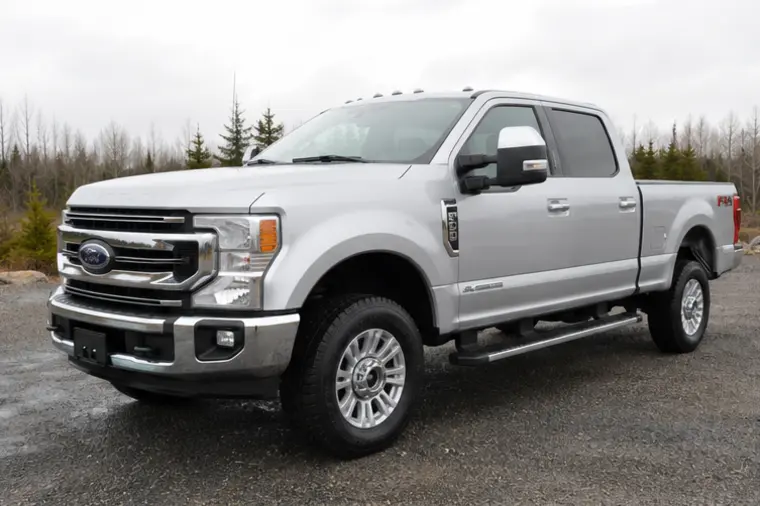

Ford diesel-pickup research centres on Super Duty capability, Power Stroke engine generations and the difference between a truck badge and its exact configuration.
Diesel pickup lineup
The F-250, F-350 and F-450 pickups serve different load and configuration needs. F-350 pickups offer single- and dual-rear-wheel configurations; the F-450 pickup is dual rear wheel. Distinguish both from chassis-cab applications.
- F-250: three-quarter-ton Super Duty research
- F-350: one-ton SRW and DRW research
- F-450: heavier pickup configuration and commercial-use questions
Power Stroke research
The Power Stroke name spans several engine generations. The 6.7L guide is the current starting point, while older 7.3L, 6.0L and 6.4L trucks require generation-specific research rather than a blanket reputation claim.
Used Ford questions
Confirm the model year, engine generation, transmission, axle ratio, cab, bed and payload label. Review cold-start behaviour, service history, emissions-system condition, corrosion and evidence of sustained towing or work use.
Separate the Ford pickup from the chassis cab
Start with the body you need. An F-350 pickup can be single or dual rear wheel; an F-450 pickup is a dual-rear-wheel configuration. F-450 and F-550 chassis cabs belong to a separate upfit decision, where the completed body, installed equipment and load distribution matter.
Do not assume that moving up the badge sequence increases every capacity. Compare the exact truck's labels, cab, bed, axle ratio and towing-guide row. A truck carrying a service body cannot be evaluated as though it were an empty pickup.
Build a Ford shortlist in three steps
Choose the class and rear-wheel configuration first. Next identify the Power Stroke era and transmission. Finally compare service evidence and inspection findings between trucks with comparable equipment.
For a used Super Duty, ask for records supporting any major engine, cooling, fuel-system or transmission work. Treat modifications as a reason to investigate the exact installation and operating history, not as proof of either quality or failure.
Evidence note: manufacturer documents establish the specific facts and applications cited. Buying workflows and cost scenarios are DieselTrucks.ca editorial guidance. These pages do not publish measured failure rates or confirm the condition, recall status or capacity of a particular truck.
General educational content for Canadian diesel-pickup research. Verify the exact truck, model year, certification labels, owner manual and manufacturer documentation, and obtain qualified mechanical or towing advice where appropriate.
Sources & Further Verification
Use the exact model year, VIN, truck labels and current manufacturer documentation when moving from general research to a purchase or towing decision.