The best diesel truck is the one whose verified capacity, operating pattern and ownership cost fit your job. Start with a half-ton for a suitable lighter-duty brief, compare three-quarter-ton pickups for heavier mixed use, and examine one-ton SRW or DRW configurations when carried weight becomes the deciding constraint. Brand preference comes after those requirements.
Our shortlist by the job you need to do
These are conditional editorial picks, not instrumented road-test awards. Manufacturer documents support the powertrain and configuration facts cited below. The recommendations explain which candidates deserve a closer look; the exact truck still needs a payload check, an operating-cost comparison and, when used, an inspection.
| Your brief | Start the comparison here | Why it belongs on the shortlist | What could rule it out |
|---|---|---|---|
| Daily use with a lighter trailer and verified payload margin | Silverado 1500 or Sierra 1500 3.0L Duramax | Diesel option in a half-ton platform | Family, cargo and trailer tongue weight exceed the actual truck's limits |
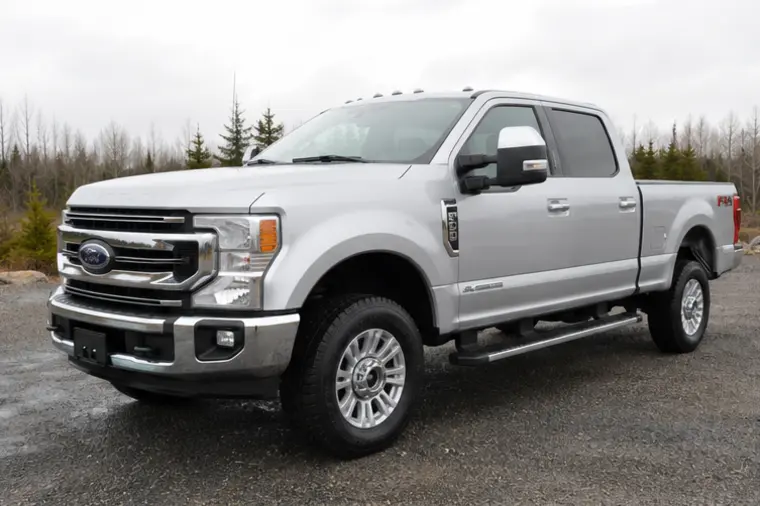
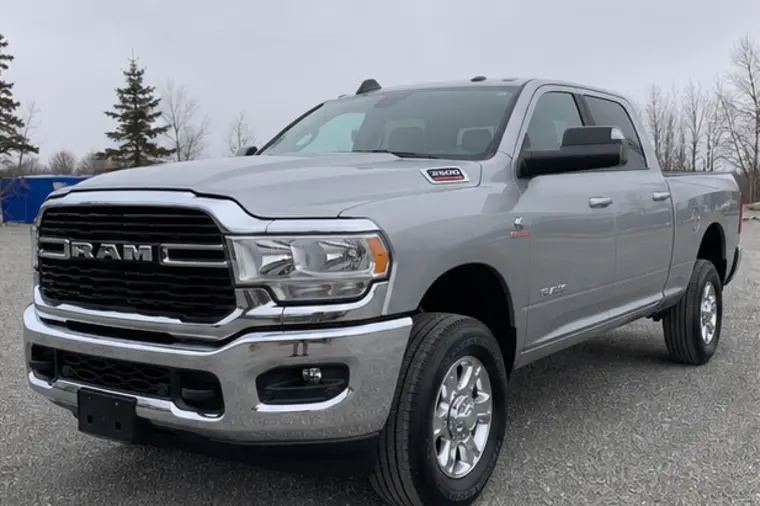
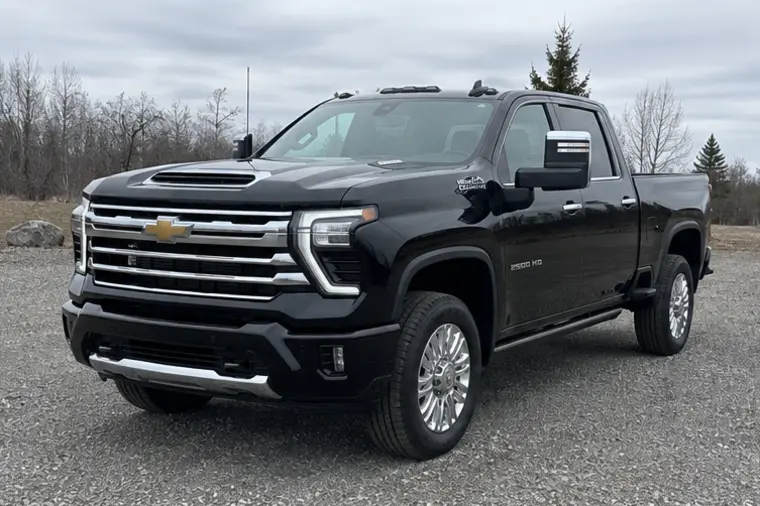
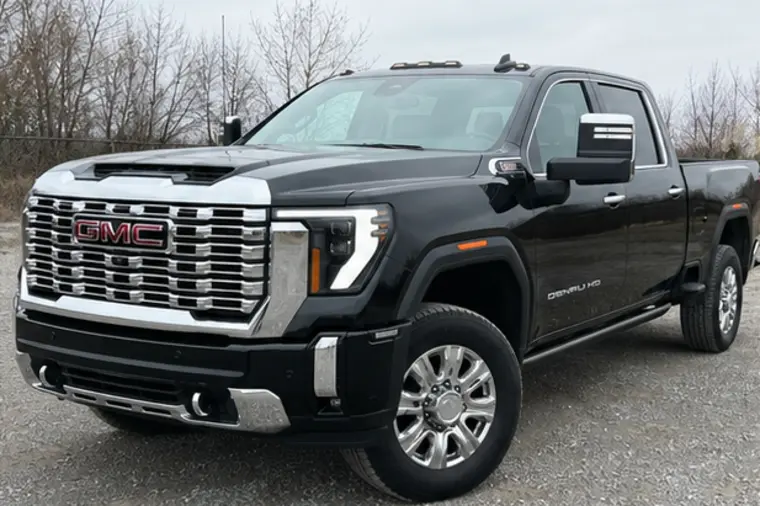
| Heavier mixed towing and daily use | F-250, RAM 2500, Silverado 2500HD, Sierra 2500HD | Several HD diesel and cab/bed combinations to compare | A diesel configuration leaves insufficient carried-load capacity |
| Substantial bed cargo or fifth-wheel pin weight | F-350, RAM 3500, Silverado 3500HD, Sierra 3500HD | One-ton SRW/DRW configurations create a broader load-planning shortlist | Exact label, rear axle or hitch limit is still exceeded |
| A large trailer brief that warrants examining DRW pickups | F-450 pickup and suitably configured one-ton DRW alternatives | Dedicated comparison of the complete loaded combination | Width, access, tires or ownership cost do not fit the job |
| An older truck bought for value | Documented, inspected candidates in the correct class | Condition and completed work can be compared against total outlay | Unexplained major repairs, corrosion or modification history |
Best starting point for lighter-duty diesel use
The 3.0L Duramax Silverado 1500 and Sierra 1500 belong on a shortlist when an HD truck's size and load capability are unnecessary. Keep the engine generation straight: the later LZ0 is a revised version of the earlier LM2, and GM lists 305 hp and 495 lb-ft for the LZ0 technical application. Those figures describe the engine, not the towing capacity of every truck carrying it.
Choose between the two half-tons by the specific cab, bed, equipment, ergonomics and purchase proposition. Check whether the available payload still works after occupants, permanent accessories, cargo and loaded trailer tongue weight are counted. A trailer within a brochure tow rating can still create too much carried weight for a richly equipped half-ton.
This is also where a gas alternative deserves a fair hearing. A buyer making mostly short trips with occasional light towing should compare actual use and total cost rather than assuming diesel automatically pays back its purchase premium. The fuel calculator helps compare supplied assumptions; it does not predict the consumption of an untested truck.
Best starting point for regular heavy-duty towing
Put the Ford F-250, RAM 2500, Chevrolet Silverado 2500HD and GMC Sierra 2500HD on the same specification sheet. Record the same model year where possible, the diesel version, cab, bed, drivetrain, axle equipment, payload label and hitch arrangement. Compare complete trucks rather than matching the largest torque number from one year with a towing maximum from another.
For powertrain context, Ford's 2024 guide separates standard and high-output 6.7L pickups. RAM's 2025 change introduced a revised Cummins and eight-speed transmission, while current Canadian GM HD material describes the later 6.6L Duramax and ten-speed. Those transitions matter when comparing a used truck beside a newer candidate; they are not evidence that the newest powertrain has the longest service history.
The strongest candidate is the one that clears the load checks and remains practical when unhitched. Sit in the truck, assess sight lines with its actual mirrors, test access with the intended passengers and measure the parking constraints you encounter regularly. A specification advantage is only useful if the truck can perform the whole assignment.
When a one-ton is the better diesel choice
Move the comparison toward one-ton pickups when bed cargo or loaded fifth-wheel pin weight consumes the margin in the three-quarter-ton candidates. The question is not simply whether the engine can pull the trailer. It is whether the truck can carry the people, hitch equipment and transferred trailer load while remaining within all applicable ratings.
Compare SRW and DRW configurations explicitly. A single-rear-wheel truck may meet the assignment with easier everyday width management. A dual-rear-wheel candidate deserves attention when the required carried load leads beyond the suitable SRW options. DRW still requires the actual label and axle checks; it is not permission to load by appearance.
Ford F-450 pickup research belongs here for buyers with a serious trailer brief, but keep it separate from F-450 chassis-cab specifications. Similarly, RAM pickup and chassis-cab output figures must not be mixed. An unfinished commercial chassis and a factory pickup are different buying propositions even when their model numbers look related.
Best value means comparing the whole ownership period
A low purchase price can be offset by immediate tires, corrosion work, delayed maintenance or time in the shop. Build a first-year sheet containing purchase and transaction costs, known repairs, scheduled service, insurance, fuel and an explicit contingency. Keep a contingency separate from diagnosed repair costs so it does not disguise missing inspection evidence.
Then decide how long you expect to keep the truck. A buyer with seasonal towing needs may prioritize a different combination of purchase cost and capability than a contractor whose truck must be available each weekday. For work use, ask local shops about the particular powertrain and their ability to diagnose it; the relevant service access is the access you can actually use.
Financing should be compared on total cost as well as payment. A longer term can make a more expensive truck look affordable monthly while increasing exposure to owing more than its value. Obtain actual written quotes and use the same truck price and down payment when comparing offers.
How to make the final choice between two good candidates
Remove trucks that fail the load or condition requirements. For the remaining pair, write down three reasons one is better for your specific use and attach evidence to each reason: a label, an inspection report, a quote or a measurement. “More reliable brand” is not equivalent to a repair history; “can tow more” needs a configuration-specific rating and enough remaining payload.
Give unknowns a resolution step. Ask for the missing build information, price the identified repair or measure the loaded trailer. If an important unknown cannot be resolved before purchase, the shortlist should reflect that uncertainty rather than assigning a confident score.
The most useful next step is a focused comparison: towing suitability, used-buying value or reliability evidence. Each guide below addresses a different decision so you can move beyond an overall brand ranking.
Common questions about the best diesel truck
Is the highest-output diesel the best? Output is one input. The truck's load limits, gearing, equipment, condition and operating costs can decide the purchase before peak output does.
Should I buy a diesel for occasional towing? Compare a gas truck in the required class using your annual distance, trailer duty and local fuel prices. Diesel ownership should fit the actual work rather than a hypothetical future trailer.
Are Chevrolet and GMC interchangeable in a shortlist? They share relevant powertrain families, but compare the actual Silverado and Sierra configurations and equipment. A shared engine does not make two individual trucks identical buys.
Evidence note: manufacturer documents establish the specific facts and applications cited. Buying workflows and cost scenarios are DieselTrucks.ca editorial guidance. These pages do not publish measured failure rates or confirm the condition, recall status or capacity of a particular truck.
General educational content for Canadian diesel-pickup research. Verify the exact truck, model year, certification labels, owner manual and manufacturer documentation, and obtain qualified mechanical or towing advice where appropriate.
Sources & Further Verification
Use the exact model year, VIN, truck labels and current manufacturer documentation when moving from general research to a purchase or towing decision.
- GM LZ0 technical description — later 3.0L version and LM2 comparison
- GMC Canada 2026 Sierra 1500 — diesel and trim availability
- Ford 2024 Super Duty pickup towing guide — original configuration tables and footnotes
- Cummins January 2025 announcement — revised engine, eight-speed and separate pickup/chassis-cab outputs
- Chevrolet Canada 2026 Silverado HD — powertrains and configuration choices
- GMC Canada 2026 Sierra HD Pro/SLE/SLT — diesel powertrain
- RAM Canada 2026 3500 capability — pickup powertrain and configuration-dependent maximum
- Financial Consumer Agency of Canada — shopping around for auto financing
- Financial Consumer Agency of Canada — depreciation, negative equity and loan-term risks