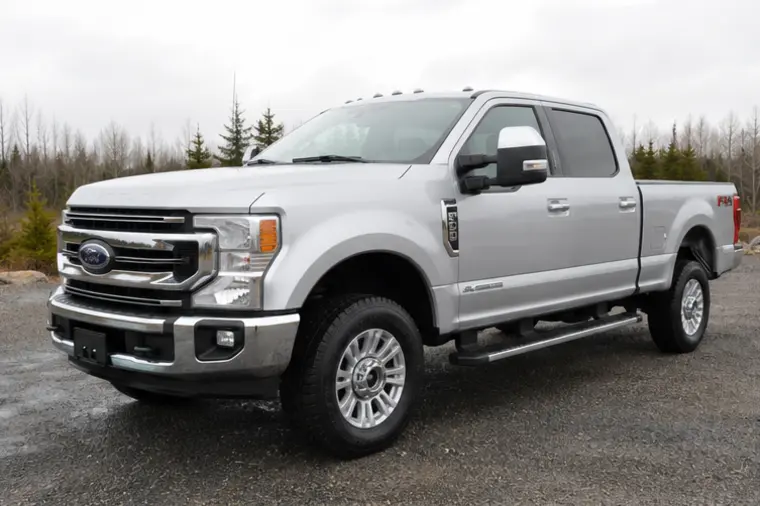
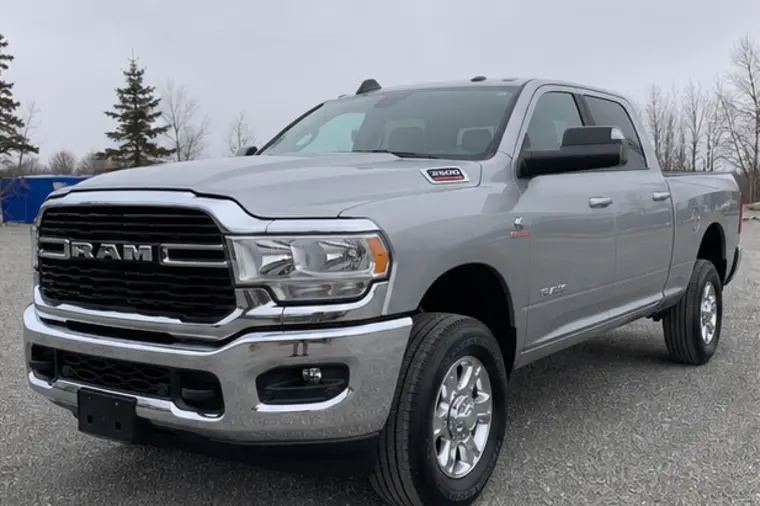
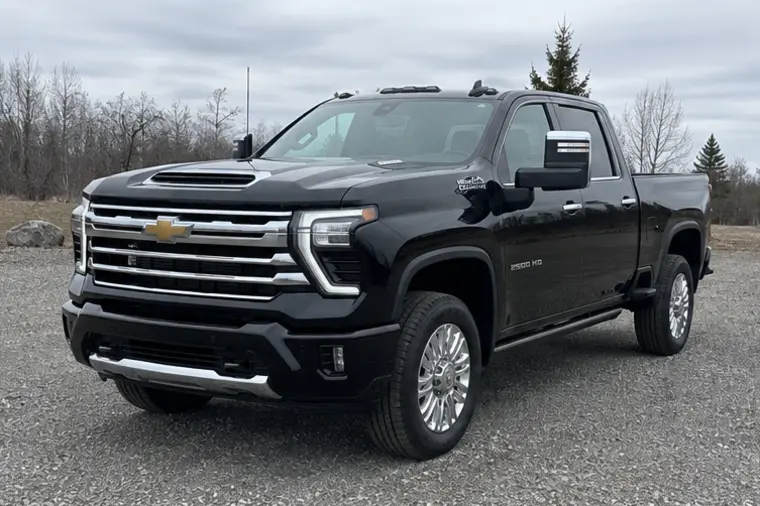
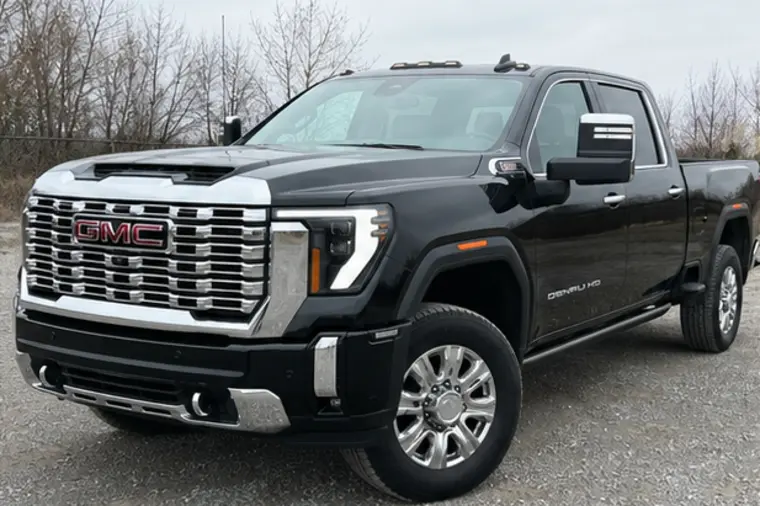
The strongest reliability buy is usually the truck with the clearest condition and maintenance evidence in a configuration that suits its next job. No source set reviewed here establishes one Ford, RAM, Chevrolet or GMC diesel as the statistically most reliable truck across all ages and uses. You can still build a useful shortlist by separating engine history, known campaigns and the condition of each candidate.
A reliability shortlist you can actually investigate
Instead of assigning an unsupported winner, use the following candidate groups to structure inspection and document requests. Being included means the truck deserves a particular research approach. It is not an endorsement of every year, engine revision or seller description within the group.
| Candidate group | Evidence that strengthens the case | Evidence that leaves the decision unresolved |
|---|---|---|
| Recent 6.7L Power Stroke Super Duty | Exact model year, applicable campaign completion, consistent service and diagnostic records | A generic “6.7 is reliable” claim with no VIN or repair history |
| 6.7L Cummins RAM HD | Verified engine/transmission combination and documented fuel-system and maintenance history | Treating pre-2025 and revised 2025 powertrains as the same long-term evidence set |
| L5P 6.6L Duramax Silverado/Sierra HD | Engine-code verification, condition report and records for the particular truck generation | Assuming the engine name proves that every transmission, calibration and output year is identical |
| 3.0L Duramax Silverado/Sierra 1500 | LM2/LZ0 identification, suitable duty and correct service history | Borrowing HD Duramax reputation or service assumptions for a different engine |
| Older 7.3L Power Stroke or 5.9L Cummins truck | Strong present condition, documented repairs and a realistic age-related budget | Treating a durable-engine reputation as proof of a sound frame, transmission or fuel system |
What would justify calling one truck the most reliable?
A defensible statistical ranking needs a defined population, comparable exposure, a consistent definition of failure and transparent collection methods. Mileage, engine hours, age, maintenance and duty would have to be considered. A warranty claim, a roadside breakdown and an owner complaint do not automatically measure the same thing.
Manufacturer documents are valuable for different reasons. A manual describes operation and maintenance. A recall filing identifies a specified defect population and remedy process. A service bulletin describes a diagnostic condition. None, on its own, ranks all competing diesel pickups by expected lifetime repair cost.
That distinction protects the buying decision from false precision. A list of complaints without a denominator can make a widely sold truck look worse simply because more examples exist. A low complaint count for a new design can reflect shorter exposure. Ask what a reliability claim actually measures before using it to choose between two expensive vehicles.
Newer powertrains need their own evidence timeline
Cummins introduced a revised 6.7L pickup engine system for 2025 with an eight-speed transmission. It cannot inherit decades of service experience unchanged from every older 5.9L or 6.7L truck. The history of the engine family is useful context, while the revised components and transmission combination create a separate ownership question.
GM likewise distinguishes its later LZ0 3.0L engine from the LM2 and describes revisions to the later L5P 6.6L specification. Ford separates standard and high-output 6.7L pickup ratings in its 2024 guide. These facts help identify candidates; they do not establish that higher output or a newer revision is more or less reliable.
For a newer truck, review warranty terms for the actual transaction, maintenance requirements, current campaigns and the availability of suitable service. For an older one, place more weight on accumulated evidence about that individual truck. Do not fill a short history with a confident longevity prediction.
Recalls belong in the assessment, but not as a brand score
Ford's 24S78 / U.S. 24V-957 fuel-pump filing and FCA's Y78 / U.S. 21V-880 filing address defined diesel populations. They justify asking precise VIN and repair-history questions. Counting them as points against all Power Stroke or Cummins trucks would go beyond what the documents establish.
Check current Canadian applicability and completion with the manufacturer. Then ask whether the truck has experienced a related fault and obtain the repair details. A completed campaign and a clean condition inspection answer different questions. A seller should be able to distinguish a software campaign, an inspected component and an actual failure repair rather than presenting them as the same event.
Repeat the check close to purchase. Recall information can change after an earlier inspection or advertisement was prepared. Retain the result so a future owner can understand what was checked and when.
Reliability of the truck is broader than reliability of the engine
An older diesel may have a healthy engine but require extensive corrosion, steering, brake or electrical work. A newer truck may have excellent service paperwork yet be poorly matched to repeated short trips or the load you want to carry. The useful question is whether the complete vehicle can perform its next assignment with acceptable uncertainty.
Inspect the frame and underbody, identify the transmission, verify tire and hitch condition and review modifications. Look for continuity between invoices, odometer readings and the claimed duty. If hours are available, record them without inventing a universal hours-to-kilometres conversion. Hours add context; they do not diagnose wear by themselves.
Ask the inspecting technician to distinguish measured findings from further tests they recommend. “Needs investigation” should remain visible in the buying decision. Turning an unresolved symptom into an average repair allowance can make an uncertain truck look artificially comparable to a well-documented one.
For commercial buyers, availability is a reliability outcome
The same repair can have very different consequences for a recreational owner and a contractor. Ask who can diagnose the particular powertrain, when they can see it, how parts are sourced and whether an appropriate replacement truck can carry the same load. A readily available rental that cannot tow your trailer does not fully cover the downtime problem.
Build a budget using diagnosed work, scheduled maintenance and a separate contingency. Use actual local quotes where available. Do not attach a universal annual repair number to a brand or treat an engine's reputation as a guarantee of uninterrupted work.
When two candidates have similar documented condition, service access and fit for duty can decide the purchase. That is an operational recommendation based on your situation, not a claim that one manufacturer has a lower measured failure rate.
The evidence package to request before calling a candidate reliable
- VIN and exact engine/transmission identification, including model-year transitions.
- Dated maintenance and repair invoices with kilometres and the work performed.
- Current manufacturer campaign applicability and completion information.
- Independent cold-start, diagnostic, underbody and road-test findings where safe and appropriate.
- Explanation of modifications and verification of factory emissions equipment and calibration.
- Itemized estimates for diagnosed outstanding work and a realistic service schedule.
Common reliability questions
Is an old pre-DPF diesel automatically the most reliable choice? Its system layout differs from a newer diesel, but age, corrosion, prior repairs and transmission condition remain important. Simpler equipment in one area does not establish lower whole-truck ownership risk.
Does high mileage mean a diesel is worn out? Mileage alone cannot determine remaining life. Review service continuity, operating duty, symptoms and measured inspection findings. Equally, a low odometer reading cannot certify a lightly used or well-maintained truck.
Should I avoid a model with a recall? Investigate the specific defect, applicability, remedy and individual condition. A recall is a reason to verify facts, not a complete buying verdict.
Evidence note: manufacturer documents establish the specific facts and applications cited. Buying workflows and cost scenarios are DieselTrucks.ca editorial guidance. These pages do not publish measured failure rates or confirm the condition, recall status or capacity of a particular truck.
General educational content for Canadian diesel-pickup research. Verify the exact truck, model year, certification labels, owner manual and manufacturer documentation, and obtain qualified mechanical or towing advice where appropriate.
Sources & Further Verification
Use the exact model year, VIN, truck labels and current manufacturer documentation when moving from general research to a purchase or towing decision.
- Cummins January 2025 announcement — revised engine, eight-speed and separate pickup/chassis-cab outputs
- GM LZ0 technical description — later 3.0L version and LM2 comparison
- GM L5P technical description — later specification versus 2023-and-older engines
- Ford 2024 Super Duty pickup towing guide — original configuration tables and footnotes
- Ford 24S78 / U.S. 24V-957 filing — defined 2020–2022 Super Duty population
- FCA Y78 / U.S. 21V-880 filing — specified 2019–2020 diesel population