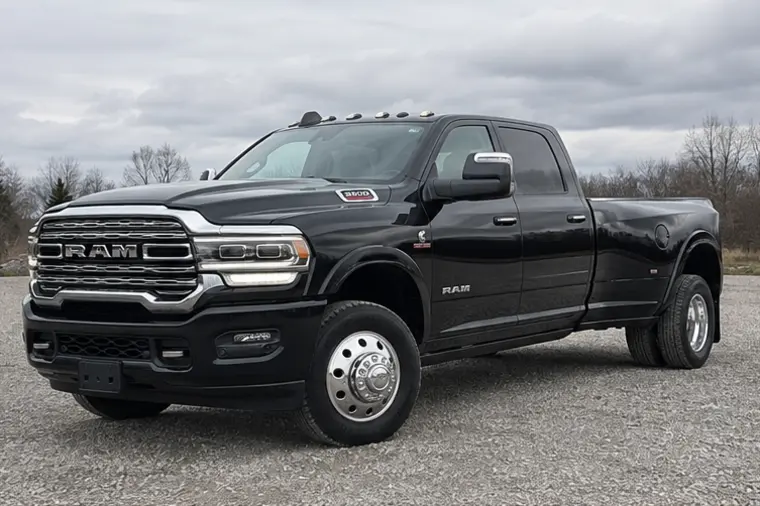
Avoid a RAM 3500 candidate when its identity, condition or loaded-use suitability cannot support the assignment. Screen documented year and equipment groups carefully, but do not turn a 68RFE-specific concern into an Aisin blacklist or treat a preferred year as exempt from inspection.
The direct answer for a one-ton diesel buyer
For an immediate-use purchase, decline when a material safety, identity or suitability question cannot be resolved and the seller still expects the truck to be accepted as ready for work. Pause when an appropriate inspection or missing record can answer the question. Reconsider only when the evidence changes in a way that addresses the original concern.
There is no matched Canadian failure-frequency evidence in the sources reviewed that justifies naming one complete RAM 3500 year as the worst. A year window can identify checks, but it does not reveal the present condition of every truck in that group. A repaired and documented candidate may deserve a different decision from an unresolved one.
Keep the buyer's circumstances explicit. A diagnosed project can suit someone with specialist support and another truck. It can be unsuitable for a business with a committed load and no backup. That distinction is more useful than pretending that one generic year verdict fits both owners.
The transmission boundary matters to the avoid question
The cited ZA3 filing covers specified 2020–2022 RAM 3500 pickups with 68RFE. It does not establish an Aisin defect. Confirm the actual transmission before applying the campaign or accepting reassurance based on another powertrain's reputation.
Y78 fuel-pump and 13A heater-relay concerns are separate questions. Exclusion from a transmission population is not clearance from every other campaign. Ask RAM for current Canadian VIN applicability and completion rather than combining all model-year references into a single yes-or-no answer.
For an affected unrepaired 13A vehicle, follow the manufacturer's outdoor-parking and separation instructions. Retain the relevant current record and final-repair evidence. A broad description in a U.S. filing cannot determine the individual Canadian truck's present status.
Screening windows and purchase decisions
These are targeted screening questions, not estimates of occurrence. Their scopes overlap differently. A candidate outside one listed population still needs a general condition assessment and current campaign check; absence from a selected filing does not establish universal mechanical health.
Document the reason for a pause in plain language. That makes it easier to tell whether a later invoice or inspection result actually resolves the concern. It also prevents a sales discussion from replacing a specific open question with a general claim that the truck has been looked after.
| Candidate evidence | What to investigate | Decision before resolution |
|---|---|---|
| Defined 2019–2020 diesel population | Y78 position and separate fuel-system repair history | Pause where applicable work or a present symptom remains unresolved |
| Specified 2020–2022 68RFE pickup | Correct transmission and ZA3 position | Do not transfer an Aisin reassurance to the actual equipment |
| Defined 2021–2023 heater-relay population | Current 13A applicability, precautions and final repair | Follow manufacturer instructions and resolve the outstanding action |
| SRW or DRW with uncertain load suitability | Actual labels, hitch, equipment and intended load | Choose another configuration if the assignment cannot be supported |
| Completed work-body truck with missing records | Present chassis/body identity and installation evidence | Resolve the completed configuration before using pickup assumptions |
Do not buy a repair description without its diagnosis
Ask what complaint led to major engine, fuel-system or transmission work, what the shop found and how the result was verified. A new component is not automatically a reason to reject the truck. The problem is an unexplained repair or continuing symptom that the buyer cannot assess or support.
Read invoices in sequence. Repeated visits can represent a staged successful repair or recurring unresolved work. The paperwork should help distinguish those outcomes. Where it does not, provide the history to an appropriate specialist and obtain a clear next assessment step.
Avoid assigning a precise repair allowance from a symptom with no confirmed cause. Ask for the diagnostic scope and what might change once work begins. A business needing immediate availability can reasonably decline an open-ended project even when another buyer has the resources to accept it.
An appealing year cannot resolve the wrong rear-wheel configuration
Establish the actual occupants, tools, hitch equipment and trailer load before deciding whether an SRW or DRW candidate fits. Obtain the vehicle's labels and matching towing information. Do not apply the largest number found for a different 3500 configuration to the truck being viewed.
If an SRW candidate is unsuitable, compare an appropriately configured DRW or another vehicle rather than treating the preferred year as non-negotiable. A suspension accessory does not replace the missing rating or installation evidence. Suitability should be established before investing in improvements intended to make the truck feel capable.
For a DRW truck, inspect the full tire and wheel arrangement, including the inner rear pair. A clean exterior or a strong engine demonstration does not settle abnormal wear, contact or damage. Ask the technician what the findings mean and whether further investigation is required.
Do not confuse a completed chassis cab with a factory pickup
Identify the vehicle type and present body early. A flat deck, service body or specialized installation may require completion and installation records that a factory pickup guide does not provide. Similar badges and engine descriptions do not make the documents interchangeable.
Ask what was installed, what has changed and which equipment the inspection covers. Missing records do not prove poor workmanship, but they can leave a material uncertainty about the current vehicle. If that uncertainty cannot be reduced enough for the assignment, pause or decline the purchase.
Keep body, hitch and work-system questions separate from engine health. A satisfactory diesel assessment is useful, but it cannot certify a specialized installation that was not examined. Name the systems needed for the next job and retain any limitations on what was tested.
Newer equipment is neither an automatic cure nor a penalty
The 2024 RAM chart distinguishes the pickup diesel pairings; Cummins identifies the new eight-speed system for 2025. These boundaries help match evidence to equipment. They do not supply a universal first-year failure penalty or prove that a later truck fixes every earlier concern.
Ask which documented improvement or configuration feature matters to the purchase. Do not accept a broad claim that a later year solved everything without identifying the actual system and supporting evidence. A change to one component cannot certify the condition of the full vehicle after use.
Use the best-year page for a conditional equipment shortlist, then apply the rejection criteria here independently. A benchmark-year high-output truck can leave the list when its condition or configuration is unsuitable. An earlier standard-output truck can remain eligible when its evidence supports the work.
Undocumented modifications and older projects
Ask for the present engine, transmission and calibration information when changes are claimed. A seller's informal upgrade label is not a standardized certification of reliability. Identify installed parts, the reason for the change, workmanship evidence and any follow-up inspection.
An older truck should receive an engine-appropriate assessment and maintenance review. Do not treat an informal engine demonstration or a warm-start video as a remaining-life test. A useful report explains which observations and measurements were appropriate and which questions remain open.
Decide whether you are buying a project before making a work commitment around the truck. Known repairs with a credible scope can be manageable. Unknown repairs with no reliable timetable can be a poor fit even at an attractive purchase price. The difference should remain visible in the budget and decision.
What can make a paused truck worth reconsidering?
Ask whether the new information closes the original question directly. An unrelated invoice, a cleared warning or a changed advertisement is not necessarily a resolution. Preserve any remaining limitation and compare the revised candidate with alternatives using equivalent evidence.
For commercial work, confirm a substitute with the required hitch and load capability. For recreational towing, consider repair timing before departure. Reconsideration is permission to evaluate the candidate again, not an obligation to buy after spending time investigating it.
- Identity: matching VIN, actual powertrain and adequate records for the current body and equipment.
- Condition: a qualified diagnosis, necessary work and a verification result that addresses the original complaint.
- Campaign position: current manufacturer information and relevant final-repair evidence.
- Suitability: a configuration whose labels, ratings and installation evidence support the real assignment.
- Commitment: a credible repair scope, timing and contingency that fit the owner.
RAM 3500 years-to-avoid questions
Should I reject every truck in a recall year? No. Confirm applicability, completion and present condition; the model year alone cannot determine those facts.
Does a 68RFE campaign prove the Aisin is affected? No. Match the defined equipment and population.
Is a dually automatically the correct work truck? No. Verify the actual vehicle, hitch and load position, then inspect its condition.
What is the clearest walk-away signal? An unresolved material safety, identity or suitability concern that cannot be supported within the owner's budget, timing and operating needs.
Evidence note: manufacturer documents establish the specific facts and applications cited. Buying workflows and cost scenarios are DieselTrucks.ca editorial guidance. These pages do not publish measured failure rates or confirm the condition, recall status or capacity of a particular truck.
General educational content for Canadian diesel-pickup research. Verify the exact truck, model year, certification labels, owner manual and manufacturer documentation, and obtain qualified mechanical or towing advice where appropriate.
Sources & Further Verification
Use the exact model year, VIN, truck labels and current manufacturer documentation when moving from general research to a purchase or towing decision.
- FCA ZA3 / U.S. 22V-835 — specified 68RFE transmission and model years
- FCA Y78 / U.S. 21V-880 filing — specified 2019–2020 diesel population
- FCA 13A / U.S. 23V-060 — defined 2021–2023 intake heater relay population
- RAM 2024 Heavy Duty towing and powertrain chart — original manufacturer configuration matrix
- Cummins January 2025 announcement — revised engine, eight-speed and separate pickup/chassis-cab outputs
- Cummins–RAM engine history