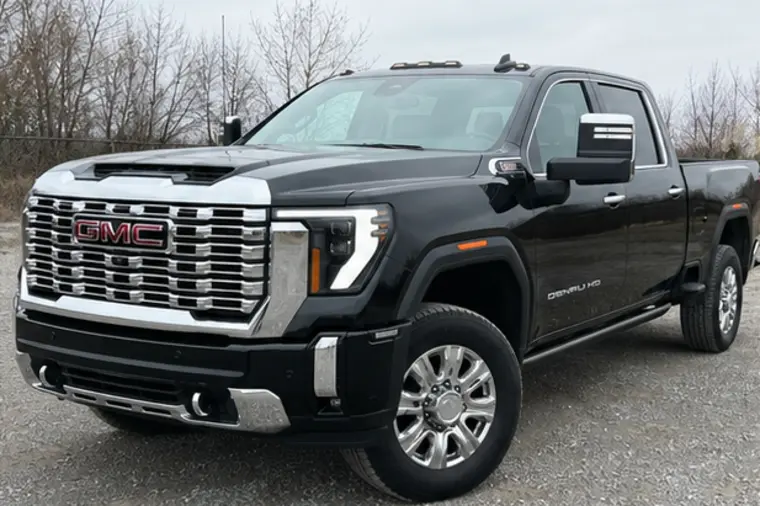
A 2020 GMC Sierra 2500HD diesel is a useful reference when you want the documented L5P/Allison ten-speed combination; a later revised L5P is a different equipment choice. Neither is a proven universal reliability winner. Select the truck around its real load, then compare year-specific equipment, condition, campaign history and support for the work you expect it to perform.
Begin with the job, then choose the year
Start the shortlist with the 2020 configuration if an L5P diesel paired with the Allison ten-speed meets your equipment preference. GMC's original guide explicitly documents that pairing. Use 2020 as a comparison point, not as a claim that the first truck you find from that year is the strongest value or has the lowest failure rate.
If you want the later L5P revision, compare its actual application and equipment against that earlier reference. GM's technical description distinguishes the later engine from 2023-and-older L5P engines. Verify the specific vehicle's model-year documentation rather than copying a current output figure into every listing carrying an L5P badge.
The better purchase is the candidate that satisfies your load and operating requirements with acceptable condition and uncertainty. A newer truck with an unresolved complaint may be less useful for an immediate work assignment than an older candidate with a clear inspection and documented history. That is an individual comparison, not an argument that older years are inherently more reliable.
Equipment boundaries that change the comparison
Do not combine the 2500HD diesel with gasoline HD records or Sierra 1500 transmission discussions. The original 2020 guide separates the HD diesel 10L1000 from the half-ton diesel transmission. Similar gear counts and a shared manufacturer do not make their service histories interchangeable.
An equipment table cannot determine whether one used truck has been cared for better than another. Use the table to establish what you are comparing, then make the condition assessment separately. This avoids paying for an assumed specification that the candidate does not have or dismissing a suitable truck because another configuration had an unrelated concern.
| Candidate group | Purpose in the shortlist | Verification priority |
|---|---|---|
| Defined 2017–2019 L5P candidates | Earlier alternative for a buyer considering older equipment | Exact transmission, condition, records and relevant service scope |
| 2020 L5P with Allison ten-speed | Documented equipment reference in the manufacturer guide | Actual configuration, campaign status and present operation |
| 2021–2023 candidate | Compare its own equipment and history against the reference | Correct year documents; do not infer identical condition |
| Later revised L5P candidate | Consider the later engine configuration where useful | Build-specific specifications and a full inspection |
| 3500HD or completed commercial vehicle | Evaluate when the job needs a different configuration | Actual loading, hitch, body and completed-vehicle evidence |
Payload and hitch needs can overrule a favourite year
Account for the people, bed cargo, installed equipment and trailer load that the actual truck must carry. For a contractor, that may include a toolbox, fuel carried as cargo, materials and permanently fitted equipment. For a fifth-wheel owner, the truck's carrying requirements include the installed hitch and the trailer's load on the truck. Check the candidate's labels and the relevant manufacturer information.
Do not transfer a 3500HD advertised maximum to a 2500HD. The 2020 GMC guide's highest HD figures have specific model, rear-wheel, cab and hitch conditions. A model-range headline cannot establish this candidate's towing or payload capacity. Use actual loaded weights where possible, and keep every applicable limit in the assessment rather than checking only one prominent number.
Compare a Sierra 3500HD if the required configuration points beyond the candidate 2500HD. That comparison should also include dimensions, parking, ride expectations and the usefulness of a temporary substitute. Selecting a different year of 2500HD does not automatically solve a load problem. The appropriate model can be a more consequential decision than choosing between adjacent years.
Use documented concerns to ask better questions
GM bulletin 20-NA-197 covers specified 2017–2020 L5P applications and identifies the fuel-pressure sensor connector as one possible cause of listed faults. If the candidate has relevant symptoms or repair history, ask how the diagnosis was established. A pressure-related code alone does not justify assuming a failed high-pressure fuel system.
Transport Canada 2024637 identifies a transmission concern for defined 2020–2022 diesel Sierra HD applications. Obtain the VIN result, the repair order and an account of any continuing shift complaint. This evidence belongs in a purchase comparison even when the truck is otherwise attractive. It does not establish a blanket ranking of every year before or after the recall window.
Separate a clearly completed repair from an open-ended diagnosis. One candidate may have a supported repair scope that can be evaluated before purchase; another may still have intermittent symptoms after several visits. Compare what remains unresolved, not merely the total number of invoices or the seller's claim that everything important has already been replaced.
What to request before travelling to see a truck
Use the responses to decide whether a visit is worthwhile. If a missing label or unresolved repair question would decide the purchase, address it before arranging travel. A detailed advertisement can still omit the one fact that determines suitability. Conversely, incomplete advertising can be corrected with clear records; it is not itself evidence of a mechanical defect.
Record your required configuration and the concerns that would stop the purchase. This keeps the comparison consistent when equipment, trim or cosmetic condition changes the appeal of a candidate. A truck should meet the original assignment before optional features become the deciding factor.
- The VIN, model year, engine identification and actual cab, bed and drivetrain details.
- Photographs of relevant vehicle and loading labels, plus installed hitch and work equipment.
- Dated service and repair records with a consistent mileage sequence.
- Current campaign information and records supporting claimed completion.
- An account of towing, idle time, storage, winter use and unresolved symptoms.
- Permission for an independent inspection that addresses the intended job.
Inspect the whole working vehicle
Arrange a cold start, diagnostic review and an appropriate road evaluation with a qualified technician. Discuss any past fuel-pressure, cooling, emissions or transmission complaint before the inspection so that the relevant system receives focused attention. A generic check may not resolve an intermittent concern unless its history and operating circumstances are supplied.
Inspect the bed, frame, hitch, tires, brakes, visible corrosion and aftermarket wiring as well as the engine. Work equipment can change both condition and loading. Ask whether installations are documented and whether repairs show evidence of a coherent diagnosis. Photographs and written findings make it easier to obtain estimates or a second opinion on a specific issue without repeating the entire evaluation.
The report should distinguish urgent repairs, work due soon, optional improvements and items that remain unassessed. It should not imply guaranteed future life. A satisfactory inspection supports a purchase at the time of assessment; it does not prove that any year of used HD pickup will complete every future assignment without interruption.
Decide with condition, support and cost scope together
Obtain estimates for identified needs rather than applying a universal repair budget. Separate routine consumables, scheduled work and diagnosed faults. Ask about parts and appointment availability before assuming the truck can enter service on a particular date. A replacement vehicle must suit the real trailer and cargo to preserve the same work capability.
Keep the inspection and service history with the selected truck after purchase. Build its maintenance plan from the applicable documentation and operating conditions. The strongest year-selection process ends with an ownership plan, not simply a verdict that one model year is desirable.
| Comparison | Prefer stronger evidence of | Be cautious when |
|---|---|---|
| Earlier versus later equipment | A useful feature difference matched to your work | The argument rests on an unsupported reliability label |
| Repaired versus undocumented truck | Cause, completed work and outcome | An invoice is offered without the original complaint |
| Lower asking price versus known needs | Written repair and maintenance scope | The discount depends on an unverified easy fix |
| Immediate work versus flexible use | Inspection time and a capable substitute | Purchase timing leaves no room for a recheck |
Sierra 2500HD best-year questions
Is 2020 the most reliable year? No such ranking is established here. It is a documented ten-speed equipment reference.
Should I automatically choose the latest L5P? Only if the actual configuration, condition and ownership proposition fit your needs better.
Does a completed recall settle every transmission question? No. Review any current symptom and additional repair history separately.
What should take priority over model year? The candidate's suitability for the real load and the quality of evidence supporting its present condition.
Evidence note: manufacturer documents establish the specific facts and applications cited. Buying workflows and cost scenarios are DieselTrucks.ca editorial guidance. These pages do not publish measured failure rates or confirm the condition, recall status or capacity of a particular truck.
General educational content for Canadian diesel-pickup research. Verify the exact truck, model year, certification labels, owner manual and manufacturer documentation, and obtain qualified mechanical or towing advice where appropriate.
Sources & Further Verification
Use the exact model year, VIN, truck labels and current manufacturer documentation when moving from general research to a purchase or towing decision.
- GMC 2020 trailering guide — original manufacturer powertrain and configuration tables
- GM L5P technical description — later specification versus 2023-and-older engines
- GM 20-NA-197, September 2020 — fuel-pressure connector diagnosis
- Transport Canada 2024637 — diesel transmission recall
- Chevrolet Canada manuals and guides