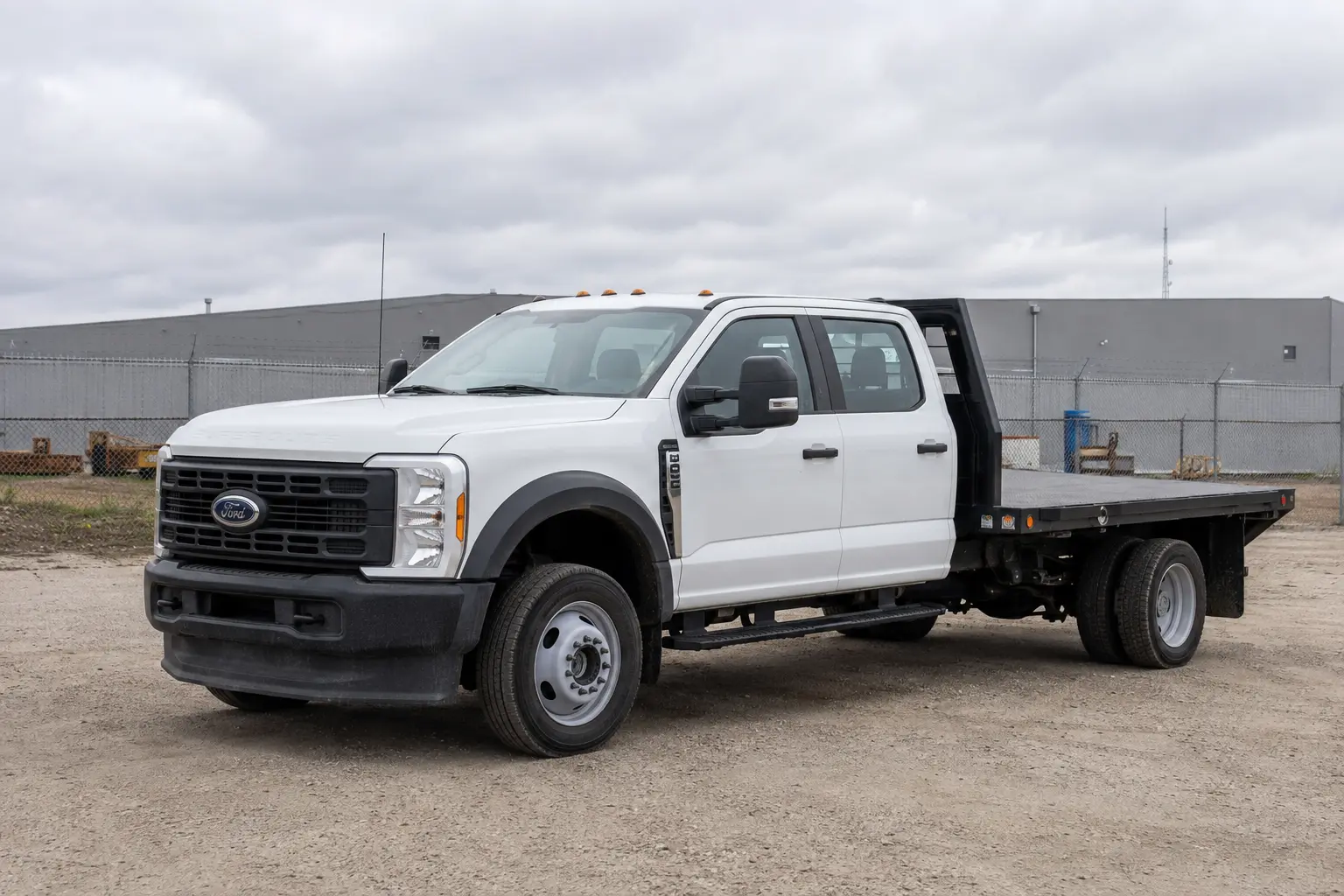
Do not blacklist every Ford F-550 from a model year. Apply defined 2019 steering-hose, 2020–2021 ambulance/wrecker and 2020–2022 diesel fuel-pump evidence to the exact candidate, then decide from current symptoms, repair outcomes, completed-body suitability and support. Avoid an individual truck when a material risk or load mismatch cannot be resolved—not because an unsupported online list condemns its year.
Use year windows as screening prompts
The reviewed records address different systems. Ford 19B27 concerns defined 2019 steering hoses. Ford 21B42 concerns certain 2020–2021 ambulance and wrecker packages. The updated 24S78 filing concerns specified 2020–2022 6.7L F-550s. Combining those windows into “avoid 2019–2022” would misrepresent their scope.
Ask whether each document applies to the VIN and configuration, what action occurred and whether a related symptom remains. A candidate may be inside a broad population without the condition, or may have a completed repair and sound current assessment. A truck outside these selected sources can still have a serious individual problem.
Pause a fuel-system candidate when the evidence is incomplete
For a defined 2020–2022 diesel, obtain the current 24S78 status and actual work order. Programming intended to improve pump cooling is not a mechanical replacement and does not prove pre-existing debris or pump wear was repaired. Extended crank, noise, warning lights or reduced power require diagnosis.
Pause when the seller treats campaign completion as the answer to a continuing symptom. Reconsider after a qualified diagnosis, supported repair scope and relevant recheck. Decline when unresolved fuel-system risk, timing or potential interruption cannot fit the assignment and budget.
Treat steering or Hydro-Boost symptoms as material
For an applicable 2019 truck, review hose identification and repair history. Investigate leaks, changed steering effort and brake-assist concerns where Hydro-Boost is fitted. The historical U.S. program expired in 2020, so it cannot be offered as a current free-repair promise or Canadian eligibility decision.
Stop an evaluation rather than intentionally provoke an assist failure. A written diagnosis should identify what is leaking or malfunctioning and what the repair includes. A general “power steering service” invoice may not answer whether the defined hoses or continuing symptoms were addressed.
Former ambulance and wrecker configurations need current load evidence
For certain 2020–2021 packages, 21B42 describes front springs that matched certification labels but fell below order-guide expectations. Because customer options differed, verify the candidate's actual corrective history and present front-axle capability. Do not assume all labels were wrong or every vehicle received new springs.
Pause when body changes, equipment additions or missing scale evidence leave the front axle question unresolved. Obtain final-stage and later modification records and weigh the working vehicle. Decline a configuration that cannot support its actual crew, equipment and load even if the chassis otherwise drives well.
Conditions worth avoiding regardless of year
This is an individual-candidate rejection table, not a model-year ranking. A repairable truck can return to the shortlist when the original material question is actually resolved and the timing fits the buyer.
| Finding | Why it matters | Evidence needed to reconsider |
|---|---|---|
| Unresolved loss-of-power symptom | May interrupt or end loaded operation | Diagnosis, repair and successful recheck |
| Steering or brake-assist concern | Safety consequence can be serious | Applicable inspection and resolved cause |
| Undocumented body/frame alteration | Load path and serviceability are unknown | Installer/engineering evidence and specialist assessment |
| Axle or total-weight mismatch | Correct year cannot cure insufficient capacity | Representative scale weights and suitable configuration |
| Essential equipment fault | Truck cannot perform its assigned work | Specialist repair and controlled demonstration |
| No credible support or recovery path | Repairable concern can become prolonged downtime | Capable shops, parts, transport and substitute plan |
Challenge seller explanations with the right evidence
“All recalls are done” should lead to a current VIN result and dated work orders. “It only needs programming” should lead to an application-specific diagnosis explaining why mechanical damage is not present. “The body is factory” should lead to final-stage and installation records. Each claim may be true, but the purchase file should show why.
Do not accept a cleared warning light as a completed repair. Ask what code or symptom appeared, what testing was performed, what changed and how the result was checked. If the truck has not repeated the duty that originally triggered the concern, the recheck may still have a stated limitation.
Avoid adversarial testing. A seller's willingness to overload, aggressively drive or bypass an interlock does not improve the evidence. Use professional inspection methods and stop when safety or equipment support is inadequate.
Separate price negotiation from diagnosis
A discount can pay for defined maintenance or a written repair scope. It cannot turn an unexplained loss-of-power, steering-assist or structural concern into a predictable expense. Diagnose material items before deciding whether the price accounts for them.
Ask estimates to include access, body removal, towing or recovery, reassembly, programming and post-repair testing where applicable. Specialized vehicles can incur costs beyond the replacement part. Do not use national average repair numbers or an unrelated pickup quote as if they cap the F-550 work.
Set a decision deadline based on evidence and operational need, not seller pressure. Inspection spending is useful even when it supports declining the truck. Money already spent on due diligence is not a reason to accept a candidate that remains unsuitable.
Inspect the completed truck before deciding
Confirm chassis and body identity, labels, powertrain and installed equipment. Arrange a cold start, scan and safe road evaluation. Inspect steering, brakes, fuel-system evidence, cooling, driveline, suspension, tires, wheels, corrosion, frame-visible areas and body interfaces.
Have hydraulics, lifts, PTO equipment, auxiliary electrics and structural mounting assessed when beyond the general inspection. Retain limitations. An area hidden by the body or a function not demonstrated remains unknown rather than satisfactory.
A staged inspection reduces expensive surprises
Start with identity, ownership, final-stage records, labels and obvious configuration fit. Then review history and current VIN information. If those pass, proceed to chassis inspection, diagnostic review and body/equipment assessment. Finish with scale evidence and estimates for identified work.
Provide the inspector with the intended load and route. A generic roadworthiness check may not answer whether a recovery body, crane, dump or trailer interface is suitable. Ask each specialist to state their scope and refer unanswered systems rather than silently treating them as passed.
Where a concern is intermittent, record temperature, load, speed, body function and warning sequence. Better reproduction information can make diagnosis more efficient. Do not keep repeating a risky symptom merely to prove it exists.
Maintenance gaps need proportionate treatment
Use the applicable manual and consider special duty, extended idle, towing, dust and winter operation. Ask for hours where stationary work matters. Low kilometres do not resolve a missing service history, while high kilometres do not automatically condemn a truck with strong records and condition.
Identify work needed to establish a known baseline and separate it from unexplained symptoms. Routine catch-up can be priced; an open-ended intermittent concern may need diagnosis before purchase. Do not pad an estimate with generic failure averages or assume a new fluid change repairs prior neglect.
Consider candidate history without stereotyping its industry
A former fleet truck may have detailed maintenance, assigned inspections and repeatable duty, or it may have deferred equipment work. A privately operated truck may be lightly used, or it may have undocumented modifications. Judge the file and condition rather than assuming ownership category predicts reliability.
Review collision, body-transfer and structural repair evidence. Confirm that the installed equipment in the sale matches what was assessed. If significant equipment will be removed or added, revisit weights, wiring, controls and final-stage implications before accepting the earlier inspection.
Corrosion severity also requires individual assessment. Canadian salt, coastal exposure and trapped debris around body mounts can affect serviceability. A cosmetic coating may protect or obscure; ask what preparation and inspection occurred beneath it.
Define pause, reconsider and decline
Pause when a material question is unanswered but a credible diagnostic or documentation path exists. Reconsider when the resulting evidence addresses the same concern and the truck still meets the assignment. Decline when the safety, capacity, body or support problem cannot be resolved within the buyer's requirements.
Record the reason in specific terms. “Bad year” is less useful than “continuing reduced-power complaint without diagnosis” or “front axle lacks reserve in representative working condition.” Specific reasons prevent the next candidate from inheriting an unsupported blacklist.
If the truck is declined, preserve the inspection and comparison sheet. That work improves the next purchase and can identify which configurations or records deserve priority without pretending the entire F-550 generation is defective.
Do not publish or repeat the rejected truck's unresolved symptom as a confirmed defect without diagnosis. The purpose of the years-to-avoid framework is to make a safe purchase decision from limited evidence, not to manufacture a model-wide reliability claim from one candidate. Keep observed condition, reported history and professional conclusion clearly separated.
Reconsider through evidence, not urgency
Keep the original concern visible through diagnosis, repair and recheck. A cosmetic improvement or unrelated invoice is not resolution. Compare the revised candidate with alternatives using the same load, body and support requirements.
Plan downtime honestly. A substitute must perform the specialized task, and recovery must suit the completed vehicle. If evidence remains incomplete and the truck is needed immediately for remote or safety-critical work, declining can be rational without declaring the entire model year unreliable.
F-550 years-to-avoid questions
Should all 2020–2022 diesel F-550s be avoided? No. Verify 24S78 applicability, work performed and current condition.
Does 21B42 make every ambulance or wrecker unsafe? No. It identifies a defined capability issue; assess the actual package, correction and weights.
Is a 2019 automatically bad? No. Apply the hose record only to its defined scope and inspect the candidate.
What is the clearest reason to decline? A material unresolved safety, capability, body or repair-support problem that cannot be brought within the buyer's requirements.
Evidence note: manufacturer documents establish the specific facts and applications cited. Buying workflows and cost scenarios are DieselTrucks.ca editorial guidance. These pages do not publish measured failure rates or confirm the condition, recall status or capacity of a particular truck.
General educational content for Canadian diesel-pickup research. Verify the exact truck, model year, certification labels, owner manual and manufacturer documentation, and obtain qualified mechanical or towing advice where appropriate.
Sources & Further Verification
Use the exact model year, VIN, truck labels and current manufacturer documentation when moving from general research to a purchase or towing decision.
- Ford 19B27 Supplement 1 — original defined 2019 steering-hose and Hydro-Boost program
- Ford 21B42 Supplement 1 — original 2020–2021 ambulance/wrecker spring and rating program
- Ford 24S78 / 24V957 — manufacturer filing updated 23 January 2026, defined 6.7L populations
- Ford 2020 Super Duty owner manual — Canadian/U.S. vehicle and diesel maintenance sections
- Ford owner manuals