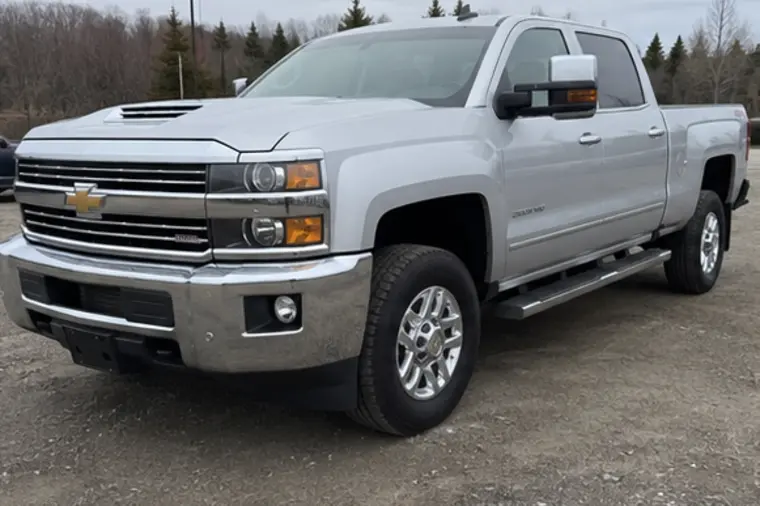
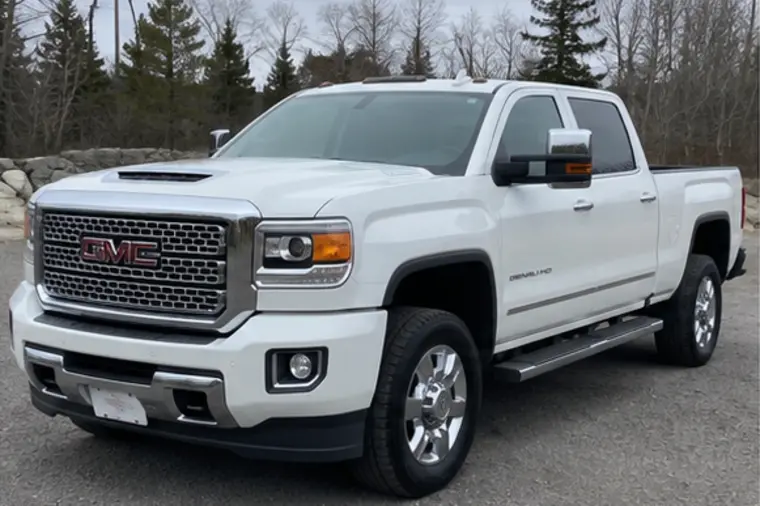
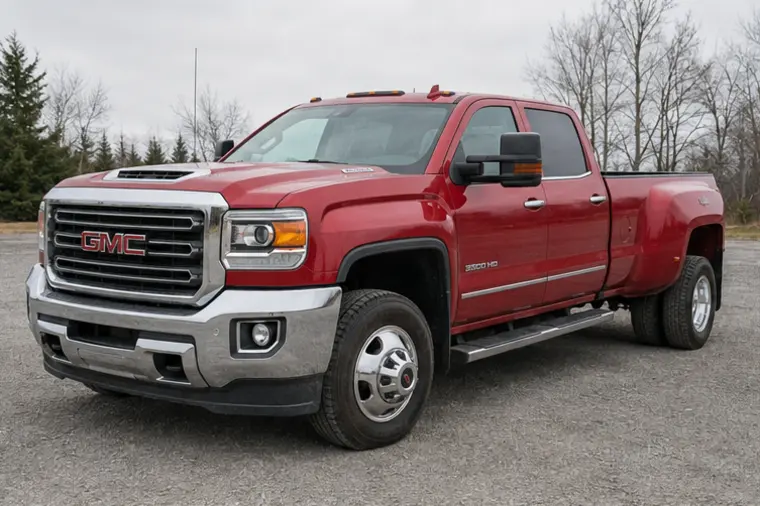
The 2015–2019 GM HD period crosses a Duramax engine-code transition. Model year and VIN identification must come before engine-specific claims or price comparisons.
Place the truck in the correct era
Confirm the exact year and whether the truck is a Silverado or Sierra 2500HD/3500HD, then record cab, bed, drivetrain and SRW/DRW.
Engine and transmission context
This period includes late LML and L5P contexts. Use year-specific manufacturer material for engine, transmission and towing claims.
Cab, bed, axle and rear-wheel choices
Trim and styling do not establish payload. Read the exact truck's labels and compare installed options, passengers, cargo and hitch load.
Used-buying questions for this era
Ask how the truck was used and require the history to support the seller's description.
- Which engine code and transmission context are verified?
- Do maintenance, emissions and recall records form a coherent history?
- Was the truck tuned, lifted or used for sustained towing?
- Does the inspection support engine, transmission and chassis condition?
Separate the engine-era split from body appearance
Identify the truck's actual Duramax code when cross-shopping within this body-era grouping. A similar cab or trim appearance does not establish that fuel, emissions or service information is interchangeable. Use build evidence and the engine-specific research path before applying a bulletin or ordering an inspection scope.
For buyers considering a later 2020-era HD as well, compare the transmission and full configuration explicitly. Allison's announcement documents the 2020 Silverado HD 10-speed introduction, but it does not establish that a later truck is universally more reliable. Compare service history, initial repairs, loaded-job fit and useful equipment on the actual candidates before assigning value to the newer platform.
Establish the engine before comparing similar-looking trucks
This grouping crosses late LML and L5P research paths. Put the factory code and any replacement-engine identity at the top of the worksheet. The resulting inspection and service questions can differ even when cab layout and trim appear similar.
| Candidate comparison | Evidence that changes value |
|---|---|
| Engine-era difference | Matching technical documentation and repair history |
| Transmission condition | Service record and reproduced road-test behaviour |
| Installed equipment | Functional features that the intended job will use |
Compare the next body era on a complete cost basis
When adding a 2020-era truck to the shortlist, account for its actual transmission and equipment rather than assigning value to age alone. Add initial repairs, useful accessories and time out of service to both prices. A newer platform does not establish a lower individual repair risk without supporting condition evidence.
Evidence note: manufacturer documents establish the specific facts and applications cited. Buying workflows and cost scenarios are DieselTrucks.ca editorial guidance. These pages do not publish measured failure rates or confirm the condition, recall status or capacity of a particular truck.
General educational content for Canadian diesel-pickup research. Verify the exact truck, model year, certification labels, owner manual and manufacturer documentation, and obtain qualified mechanical or towing advice where appropriate.
Sources & Further Verification
Use the exact model year, VIN, truck labels and current manufacturer documentation when moving from general research to a purchase or towing decision.