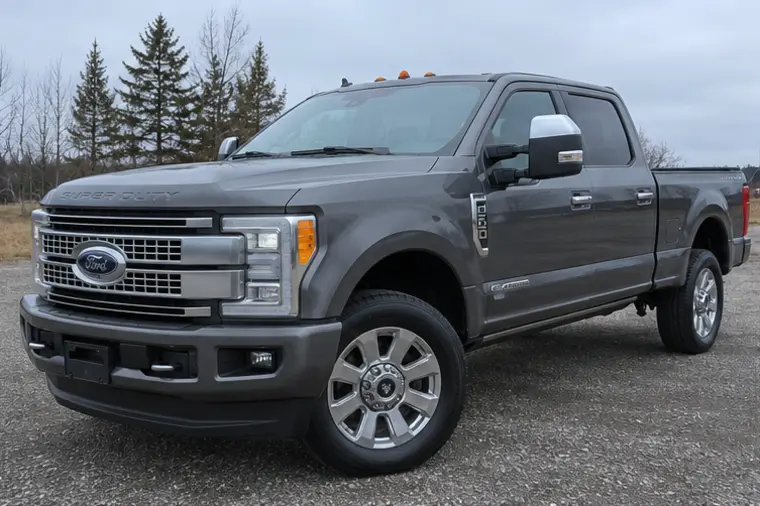
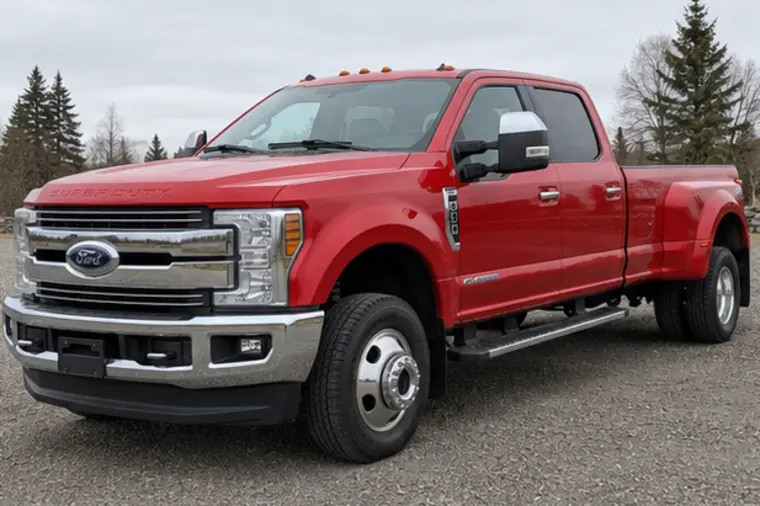
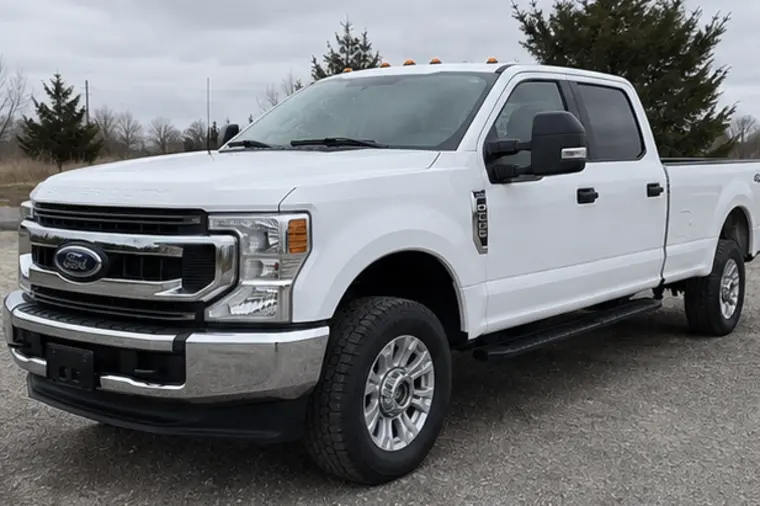
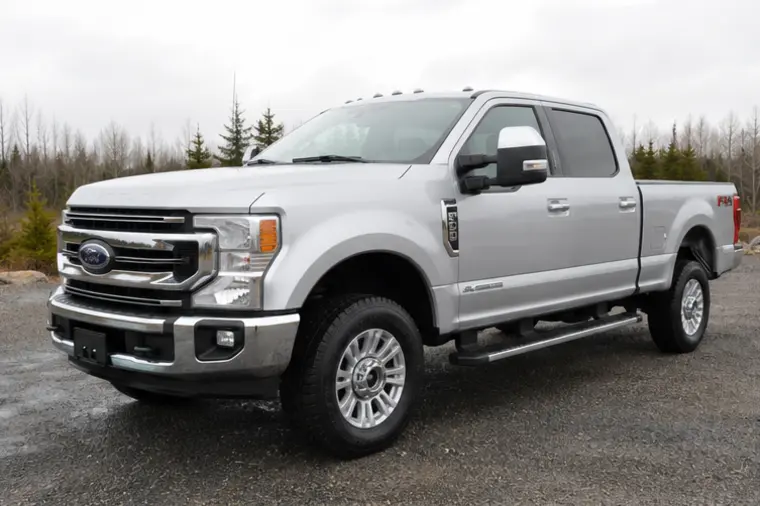
The 2017–2019 and 2020–2022 Super Duty groups share a broad body-generation context, but updates within the period make exact model-year research necessary.
| Decision factor | 2017–2019 Super Duty | 2020–2022 Super Duty |
|---|---|---|
| Model-year group | 2017–2019: first portion of the broad modern body era | 2020–2022: updated portion; verify year-specific changes |
| Powertrain research | 6.7L Power Stroke with year-specific documentation | 6.7L Power Stroke with later year-specific documentation |
| Buying priority | Condition, configuration, records and update history | Condition, configuration, records and update history |
Place the truck in the correct era
Identify which side of the 2020 update the truck belongs to, then confirm build details and equipment rather than assuming from exterior styling.
Engine and transmission context
Both groups use 6.7L Power Stroke applications, but output, transmission and supporting systems must be verified from year-specific Ford documentation.
Cab, bed, axle and rear-wheel choices
Compare exact F-250/F-350/F-450, cab, bed, SRW/DRW, axle and label information. Maximum claims do not describe every truck in either group.
Used-buying questions for this era
Ask how the truck was used and require the history to support the seller's description.
- Which model-year manual and towing guide apply?
- What service, recall, software and emissions history is documented?
- Was the truck used for towing, payload or commercial idling?
- Do inspection results support the asking price difference?
Compare equipment and powertrain within the body era
Use a candidate worksheet with separate entries for truck year, engine, transmission, axle information and fitted towing equipment. A shared exterior era does not prove those entries match. Verify the factory configuration and any subsequent changes before comparing the two purchase prices.
Inspect the equipment the job relies on: hitch installation, trailer connections, cameras if fitted, body accessories and documented load capacity. For an upfitted truck, use Ford's year-specific publications and completed-vehicle evidence. Evaluate the service history and road test independently of trim level; additional features add little business value when the installed configuration cannot cover the recurring load or needs unresolved repairs.
Compare the two year groups with an equipment worksheet
Treat 2017–2019 and 2020–2022 as separate shortlist columns, then enter the actual powertrain and towing equipment for each truck. A shared body-era label should not fill those fields automatically.
The newer candidate earns its price difference only if its condition, equipment or job fit is useful to you. Compare road-test findings and immediate repairs before valuing additional gears or electronics. A truck with more features still needs compatible hitch hardware and adequate loaded axle capacity.
| Field to compare | Evidence to retain |
|---|---|
| Engine and output specification | Matching Ford model-year material |
| Transmission | Installed identity and service records |
| Trailer assistance equipment | Build information and functional demonstration |
| Working allowance | Label photos and the same occupant/cargo calculation |
Evidence note: manufacturer documents establish the specific facts and applications cited. Buying workflows and cost scenarios are DieselTrucks.ca editorial guidance. These pages do not publish measured failure rates or confirm the condition, recall status or capacity of a particular truck.
General educational content for Canadian diesel-pickup research. Verify the exact truck, model year, certification labels, owner manual and manufacturer documentation, and obtain qualified mechanical or towing advice where appropriate.
Sources & Further Verification
Use the exact model year, VIN, truck labels and current manufacturer documentation when moving from general research to a purchase or towing decision.