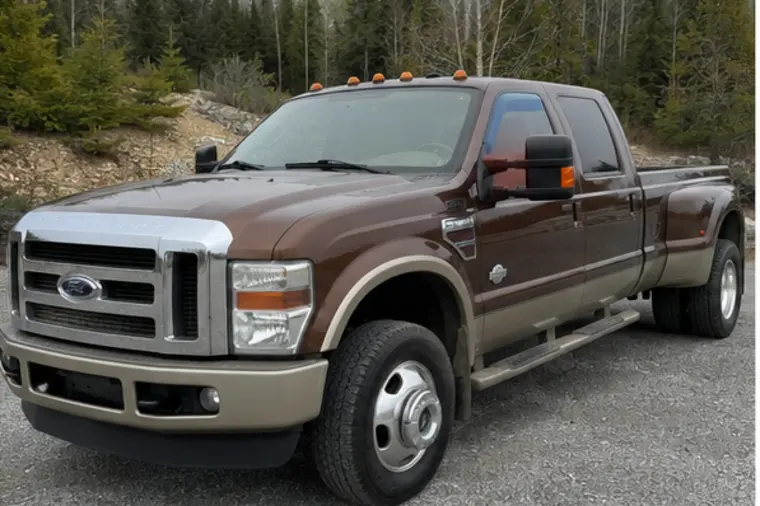
The 2008–2010 Super Duty is a compact research era centred on the 6.4L Power Stroke. Its short production window makes exact history and present condition more useful than broad year rankings.
Place the truck in the correct era
Confirm that the truck belongs to the 2008–2010 Super Duty era and record the exact F-250/F-350/F-450, cab, bed, drivetrain and rear-wheel configuration.
Engine and transmission context
Research the 6.4L Power Stroke, its transmission pairing and emissions-era ownership together. Service, warning and modification history deserve a complete scan and document review.
Cab, bed, axle and rear-wheel choices
A crew-cab short-bed F-250 and a long-bed DRW F-350 may share styling while serving very different payload and towing roles.
Used-buying questions for this era
Ask how the truck was used and require the history to support the seller's description.
- Is emissions equipment present and supported by repair records?
- What towing, commercial or idle history is documented?
- Has the truck been tuned or otherwise modified?
- Do the chassis, brakes, tires and transmission support the claimed use?
Build a 6.4L-era repair chronology
Ask the seller to place engine, turbo, fuel-system and transmission work on one dated timeline. Record whether the truck was modified before or after each repair and whether later invoices show the complaint returning. This is more informative than a total amount allegedly spent on the truck.
Use the 2009 vehicle guide as a year-specific reference and obtain the exact diesel service information through the inspecting shop. Compare unresolved cooling, fuel or warning concerns with a written diagnostic plan. For a former work truck, inspect body and hitch installations separately. A replacement engine does not reset the age or condition of the chassis, wiring, brakes and transmission.
Keep the 6.4L purchase file distinct
For a truck in this short Super Duty era, request the diesel supplement that matches its year along with the main manual. Do not copy a later 6.7L maintenance or emissions checklist onto it. Record whether the engine and exhaust configuration remain original and obtain the scope of any replacement work.
A low acquisition price is useful only after unresolved powertrain work and the condition of the older truck around it are considered. Price the diagnosed repair, not an assumed common fix.
| Viewing evidence | Follow-up decision |
|---|---|
| Hard start or recurring warning | Diagnose the reported operating condition |
| Rising oil level or repeated fluid concern | Obtain a qualified explanation before purchase |
| Replacement engine claim | Verify assembly identity, included components and installation |
Evidence note: manufacturer documents establish the specific facts and applications cited. Buying workflows and cost scenarios are DieselTrucks.ca editorial guidance. These pages do not publish measured failure rates or confirm the condition, recall status or capacity of a particular truck.
General educational content for Canadian diesel-pickup research. Verify the exact truck, model year, certification labels, owner manual and manufacturer documentation, and obtain qualified mechanical or towing advice where appropriate.
Sources & Further Verification
Use the exact model year, VIN, truck labels and current manufacturer documentation when moving from general research to a purchase or towing decision.