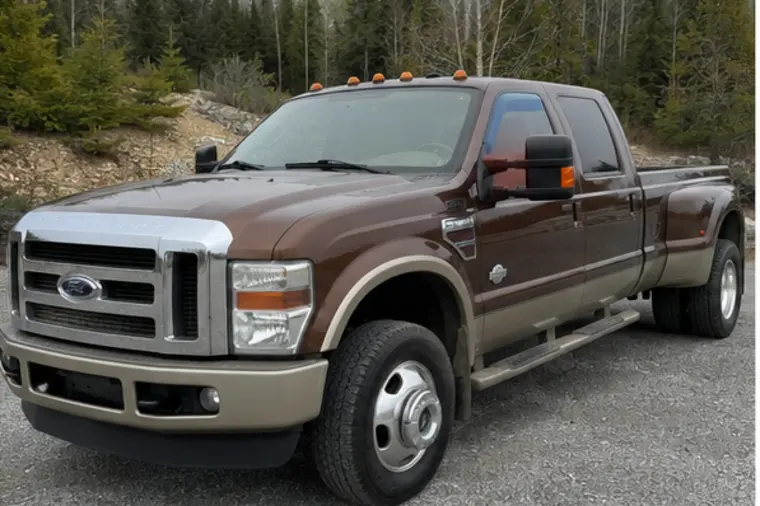
The 6.4L Power Stroke belongs to a short, specific Super Duty era. Buyers should verify maintenance, emissions-system status, modifications, previous towing or work use and the condition of the chassis and transmission.
Identify the 6.4L Power Stroke correctly
Connect the engine to the 2008–2010 Super Duty era and confirm the exact model, cab, bed, drivetrain and transmission.
Read the history before the reputation
Ask for records that explain warning-light work, fuel and cooling service, emissions-system repairs and any engine or transmission work. Missing chronology is different from proof of failure, but it raises the inspection burden.
Inspection priorities
Arrange a genuinely cold start and a qualified inspection that evaluates the whole truck. One symptom is a reason to investigate further, not a remote diagnosis.
- Require a cold-start observation and a complete scan by a qualified technician.
- Check fluid condition, leaks, cooling-system evidence and service documentation.
- Inspect the hitch, bed, rear axle area, brakes and tires for previous heavy use.
- Identify tuning or emissions modifications without requesting defeat instructions.
Ownership and use-case fit
Consider repair access and the intended annual workload. A truck bought for occasional use has a different risk and downtime profile from a primary commercial tow vehicle.
Include expected catch-up work, tires, brakes, corrosion, insurance and downtime in the purchase decision. A lower asking price does not automatically offset missing history or a configuration that does not fit the job.
Decide after the uncertain repairs are identified
For a 6.4L purchase, insist on an inspection scope that captures the seller's specific complaints and modification history. Ask what the quoted repair includes and whether further testing could change it materially.
A truck may be inexpensive because it needs work the next owner must absorb. Compare purchase plus diagnosed initial work with a documented alternative, and include time to get it into service. Avoid treating an online engine reputation as either proof of failure or reassurance that a current symptom is harmless.
| Buying evidence | Decision value |
|---|---|
| Current scan and operating observations | Establishes the condition actually evaluated |
| Fluid history and repair invoices | Connects symptoms with previous work |
| Installed repair estimate | Shows labour, access and unresolved contingencies |
Evidence note: manufacturer documents establish the specific facts and applications cited. Buying workflows and cost scenarios are DieselTrucks.ca editorial guidance. These pages do not publish measured failure rates or confirm the condition, recall status or capacity of a particular truck.
General educational content for Canadian diesel-pickup research. Verify the exact truck, model year, certification labels, owner manual and manufacturer documentation, and obtain qualified mechanical or towing advice where appropriate.
Sources & Further Verification
Use the exact model year, VIN, truck labels and current manufacturer documentation when moving from general research to a purchase or towing decision.