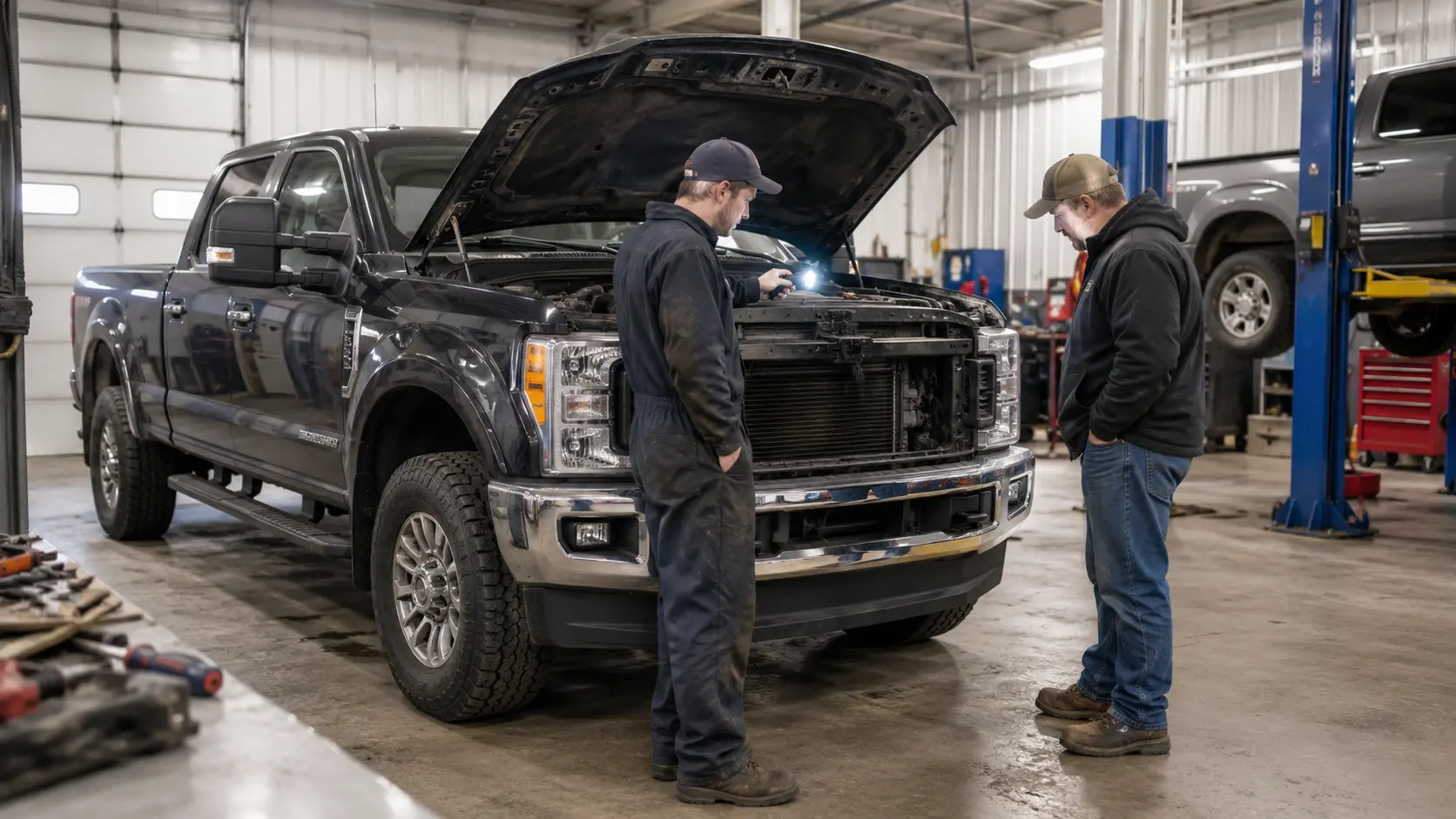
Coolant loss is a reason to investigate, not a diagnosis of a particular failed part. A buyer needs to know what was observed, what was tested and whether the cause was resolved.
Build the buying decision
Record symptom
When it occurs + level history + repairs
Commission diagnosis
Exact engine procedure + written findings
Price uncertainty
Repair scope + verification + unresolved risk
Build a temperature and repair history
Ask when the complaint occurs: cold start, highway towing, idling or after shutdown. Request invoices for coolant changes, hose work, radiator repairs and previous overheating diagnosis. Note repeated top-ups separately from a documented repair with a follow-up check.
Describe the observation precisely. A stain, odour, low reservoir level and warning message are different pieces of evidence. Record the operating conditions rather than combining them into a claim that the truck has a head-gasket problem.
Give the shop a question it can test
Ask a qualified diesel technician to assess the cooling circuits appropriate to the exact engine and application. The inspection may require pressure testing, examination for external leaks and additional diagnostic work selected from the manufacturer's procedure. Agree on authorization before testing expands.
Do not remove a pressurized coolant cap on a hot engine. A pre-purchase inspection should follow the vehicle's service and safety instructions. Avoid applying an internet temperature-difference threshold from another engine, model year or operating condition.
Make the purchase decision from the result
Request the findings in writing: confirmed cause, unresolved possibilities, proposed repair and how completion will be verified. A recent coolant change is maintenance evidence; by itself it does not establish why coolant was changed or whether an earlier fault remains.
Compare the estimate with the truck's asking price and your ability to tolerate further diagnosis. If the seller will not permit the necessary inspection, record the condition as unresolved. Do not turn missing evidence into either a clean bill of health or a claimed engine failure.
Evidence note: manufacturer documents establish the specific facts and applications cited. Buying workflows and cost scenarios are DieselTrucks.ca editorial guidance. These pages do not publish measured failure rates or confirm the condition, recall status or capacity of a particular truck.
General educational content for Canadian diesel-pickup research. Verify the exact truck, model year, certification labels, owner manual and manufacturer documentation, and obtain qualified mechanical or towing advice where appropriate.
Sources & Further Verification
Use the exact model year, VIN, truck labels and current manufacturer documentation when moving from general research to a purchase or towing decision.