
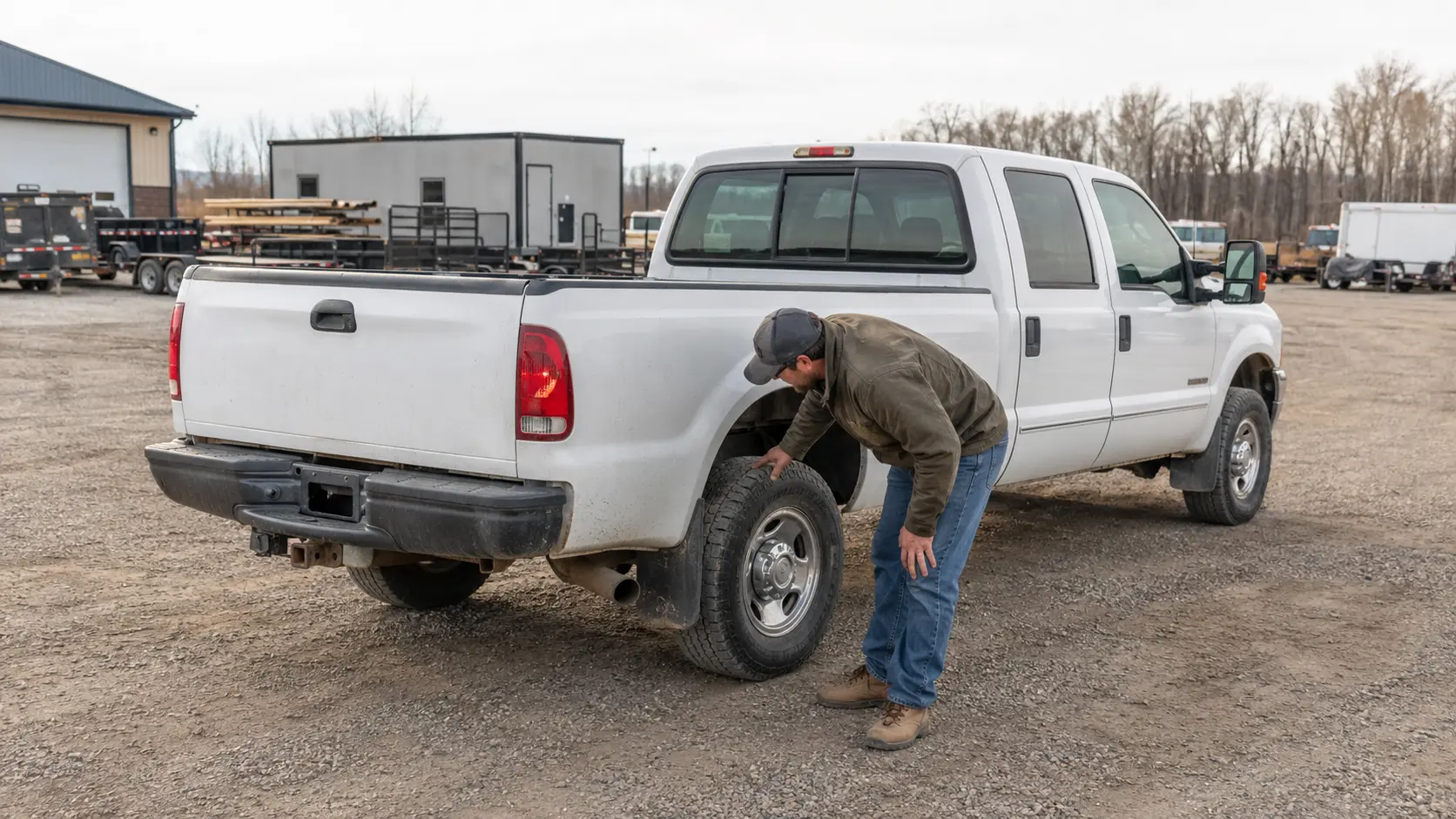
Former work use can produce excellent documentation or hard, uneven wear. Inspect the truck's actual duty cycle instead of treating a fleet decal, tidy cab or high engine-hour figure as a verdict by itself.
Reconstruct the duty cycle
Ask what the truck did each day: highway travel, local service calls, snow work, construction access, towing, power take-off use or long stationary idling. Kilometres and engine hours answer different parts of that history.
Cab, controls and accessories
Seat, pedal, steering-wheel and switch wear can add context but should not be used alone to accuse a seller of odometer fraud. Inspect wiring for lighting, radios, inverters, plows, tanks and removed equipment.
- Identify added circuits and confirm proper protection.
- Check dash warnings and scan relevant modules.
- Ask for removal records when commercial equipment is gone.
Bed, chassis and running gear
Inspect bed floor, rack or toolbox mounts, frame, crossmembers, suspension, steering, brakes, wheels and tires. Look for evidence of overload or collision repair while keeping normal work wear separate from structural defects.
Fleet records and independent inspection
Fleet history is valuable only when records identify the truck and dates. Compare maintenance logs, repair orders, inspection sheets and recall completion with the VIN and odometer sequence.
- Confirm service intervals from the exact model-year manual.
- Review engine, transmission and axle work together.
- Obtain a qualified inspection independent of the seller.
Recover the work history from installed equipment
Look for removed rack mounts, hitch wear, bed reinforcement, auxiliary wiring, PTO controls and body-installation labels. Ask what each supported and whether removal left unused wiring or openings. These clues help define the inspection scope without proving abuse by themselves.
| Former role | Evidence to request |
|---|---|
| Fleet transport | Service schedule, driver defect reports and distance/hours |
| Stationary equipment | PTO or idle hours and auxiliary-system maintenance |
| Construction or site use | Underbody cleaning, suspension and body repair history |
Check what changed before sale
A truck converted back to a pickup-like appearance may still carry altered wiring, suspension or calibration. Request a list of removed equipment and the restoration work. Inspect the remaining utility of the truck: tool-storage damage may be cosmetic, while a missing body support or compromised wiring circuit changes repair cost and readiness for work.
Evidence note: manufacturer documents establish the specific facts and applications cited. Buying workflows and cost scenarios are DieselTrucks.ca editorial guidance. These pages do not publish measured failure rates or confirm the condition, recall status or capacity of a particular truck.
General educational content for Canadian diesel-pickup research. Verify the exact truck, model year, certification labels, owner manual and manufacturer documentation, and obtain qualified mechanical or towing advice where appropriate.
Sources & Further Verification
Use the exact model year, VIN, truck labels and current manufacturer documentation when moving from general research to a purchase or towing decision.