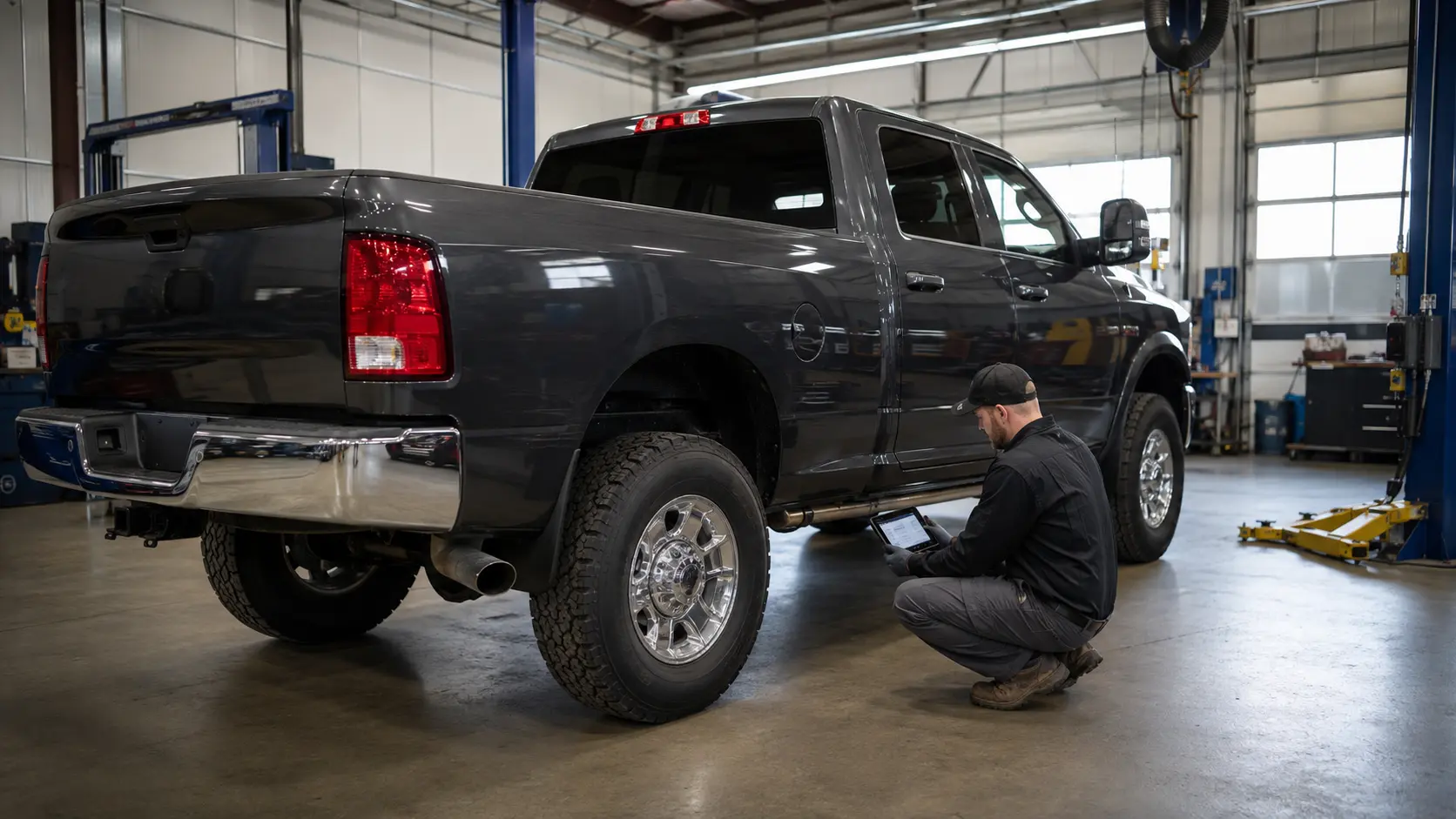
A buyer should know whether emissions hardware or software differs from the factory configuration before money changes hands. Unknown status can affect inspection, warranty, resale and future service.
Identify hardware and software status
Ask for written disclosure, invoices, tuning-device information and original components where available. A visual inspection alone may not establish software status.
Compliance and warranty questions
Requirements differ by jurisdiction and vehicle use. Verify current rules with the relevant provincial or federal authority and confirm warranty implications with the manufacturer or provider.
Plan for service and resale
Confirm whether qualified shops will service the configuration, whether parts and software support exist, and what documentation a future buyer will receive. DieselTrucks.ca does not provide instructions to delete or bypass emissions controls.
Verify physical equipment and electronic state together
Ask the inspector to compare the installed emissions components with the engine's original application, record warning messages and inspect for altered wiring or exhaust joints. An instrument panel without a warning light does not by itself establish that the calibration or hardware is original.
| Evidence | What remains to establish |
|---|---|
| Seller says returned to stock | Which parts and software were restored, by whom and when |
| Replacement exhaust components | Correct application and completed installation |
| Cleared fault history | Why it was cleared and whether monitoring has completed |
Obtain a restoration scope before valuing the truck
If equipment is missing or its status is uncertain, ask a qualified shop to identify the required hardware, calibration and diagnostic work. Availability and installed cost matter more than an online parts subtotal. Resolve road-use and inspection requirements with the applicable authorities for the registration location; a seller's claim that modifications are common is not evidence of compliance.
Ford’s 2011 diesel supplement supplies an original-equipment operating reference for that application. Use the matching diesel manual when comparing another truck’s installed systems.
Evidence note: manufacturer documents establish the specific facts and applications cited. Buying workflows and cost scenarios are DieselTrucks.ca editorial guidance. These pages do not publish measured failure rates or confirm the condition, recall status or capacity of a particular truck.
General educational content for Canadian diesel-pickup research. Verify the exact truck, model year, certification labels, owner manual and manufacturer documentation, and obtain qualified mechanical or towing advice where appropriate.
Sources & Further Verification
Use the exact model year, VIN, truck labels and current manufacturer documentation when moving from general research to a purchase or towing decision.