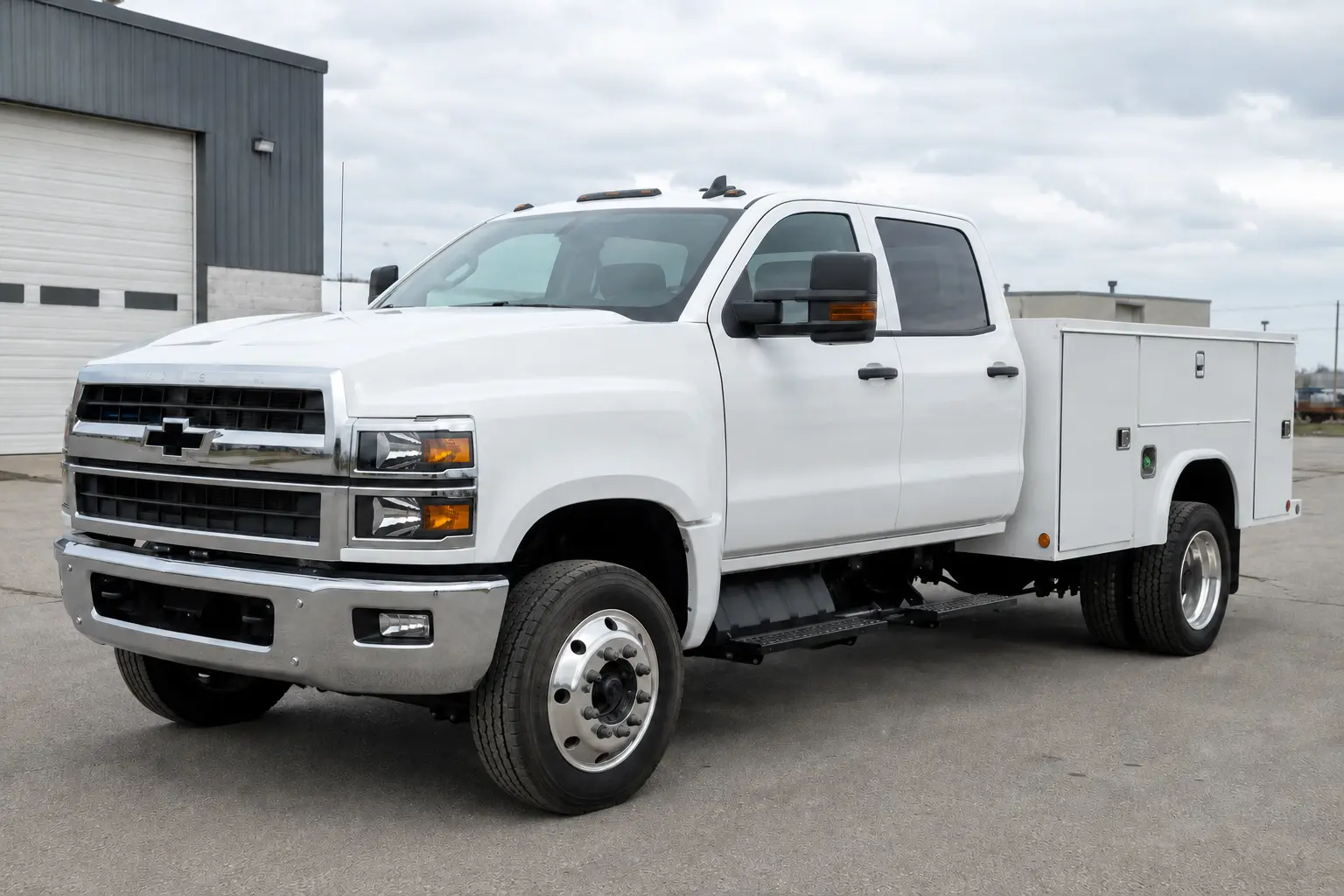
Do not blacklist all 2019–2024 Chevrolet Silverado 5500HD trucks because a U.S. campaign spans that era. Verify the actual VIN, market, repair history, completed body and condition. Avoid an individual candidate when a material brake/electrical, engine, emissions, driveline, frame, body, load or support problem cannot be resolved within the buyer's requirements. The evidence does not establish universal worst years or failure rates.
Treat 25V390 as a VIN question, not a blacklist
The U.S. filing covers certain 2019–2024 trucks and the acknowledgment says prior 23V266-remedied vehicles need the later remedy. Obtain current official status and detailed work order.
Do not infer Canadian applicability or current local parts. Resolve market, jurisdiction and support for the actual candidate.
Keep Park Outside and Do Not Drive distinctions precise. Active smoke, heat, fluid loss or another material concern requires present-condition judgment regardless of filing checkboxes.
Pause unexplained L5D engine history
Request oil records by date, mileage and available hours. GM 23-NA-212 is an evidence-review bulletin, not proof of neglect or frequency. Do not use its inconsistent conversion as a universal interval.
Pause oil warnings, leaks, noise, major engine work or missing history until the complaint, diagnosis, repair scope and outcome are clear.
For replacement engines, identify assembly, installer, reason and related work. Reconsider only after evidence and a relevant check address the original concern.
Pause recurring DPF, DEF or reduced-power symptoms
Identify messages, codes, conditions, tests and repairs. GM 17-NA-374 includes L5D but contains L5P-only details that must not be transferred wholesale.
Cleared codes, regeneration or a seller's short-trip explanation is not a diagnosis. Separate DPF and DEF information using the correct manual.
Do not intentionally reproduce a hazardous fault. Resolve an active or recurring condition before accepting its cost and downtime.
Reject body, frame or load mismatch
Match chassis and final-stage labels, body serial, wheelbase, cab-to-axle and equipment included. Inspect mounts, visible frame, compartments, hydraulics, wiring, interlocks and structural work.
Use representative axle weights with intended fuel, crew, tools, stock, tanks, attachments and trailer load. Decline an unsuitable configuration regardless of year.
If equipment will be removed or transferred, reassess what will actually be delivered. Existing weights and inspection may no longer apply.
Apply explicit pause and decline thresholds
These rules classify an individual truck; they do not condemn its entire year.
| Finding | Initial decision | Evidence needed to reconsider |
|---|---|---|
| Unresolved 25V390 applicability or instruction | Pause | Current official VIN status and remedy record |
| Smoke, heat, fluid loss or brake/electrical warning | Pause operation | Professional diagnosis and safe-condition confirmation |
| Unexplained engine replacement or oil history | Pause | Identity, diagnosis, scope and recheck |
| Recurring soot/DEF/reduced-power concern | Pause | Application-specific diagnosis and successful outcome |
| Undocumented body/frame alteration | Pause or decline | Upfitter/engineering evidence and inspection |
| Axle-load mismatch | Decline that configuration | Different completed truck or assignment |
| No chassis/body support or substitute | Decline if continuity is essential | Credible service and recovery plan |
Triage seller evidence first
Request VIN, market/ownership history, mileage, hours, chassis/body labels, campaign results, maintenance, scale tickets and major-repair/modification disclosures. Resolve mismatches before travel.
Ask for cold start, scan, road evaluation, chassis inspection and equipment assessment. A warmed truck cannot answer the same cold-condition questions. Refusal of reasonable independent review is a concern.
Confirm normal warning-light operation and ask about cleared codes. Never bypass interlocks or overload equipment for a demonstration.
Separate price, diagnosis and downtime
A discount can cover defined work but cannot make an unknown scope predictable. List safety work, maintenance, diagnosed repairs, unresolved investigation, body access and interruption separately.
Use current estimates for the actual completed truck. Include unloading, transport, removal, reassembly and functional testing where applicable.
For time-critical work, a repairable truck may still be unsuitable. State that as consequence and support, not a predicted failure frequency.
Review modifications and repair sequence
Identify tuning/emissions changes, auxiliary fuel, suspension work, PTO programming, wiring, body transfers and structural repair. Ask for installer and engineering evidence where appropriate.
Build timelines for repeated symptoms. A later invoice can be a new cause, failed repair or continued concern. Reconsider only when the evidence addresses the original reason for pause.
Surface coatings require interpretation. Record inaccessible areas rather than calling them passed.
Preserve a defensible decision file
Save the advertisement, VIN result, labels, records, scan, inspections, scale tickets, estimates and limitations. Mark seller claims as reports unless verified.
Classify the candidate as suitable, suitable after defined work, pending diagnosis or unsuitable. A repair and relevant recheck can return it to the shortlist.
Keep rejection reasons specific and do not turn an uncertain candidate condition into a confirmed model-wide defect.
Investigate changes, coatings and body transfers
Identify calibration or emissions changes, auxiliary fuel systems, suspension work, PTO programming, wiring additions, body transfers and structural repair. Ask who performed the work and what documents support it. Unknown changes can affect diagnosis, insurance, registration and shop acceptance.
A coating can protect or conceal. Record what was visible before drawing conclusions about corrosion, frame or mounting condition. Obtain qualified assessment when the finding is structural or access is limited.
Confirm that equipment included in the sale matches what was inspected and weighed. Removal of tools, tanks, cranes or attachments can change both axle load and electrical/hydraulic integration.
Challenge seller explanations consistently
“All recalls are done” requires current official status and repair orders. “The engine is new” requires assembly identity, reason and outcome. “The light only comes on during short trips” requires codes and diagnosis. “It carries anything” requires labels and representative axle weights.
A warm start, cleared warning or cosmetic refinish is not proof of deception, but it cannot answer the missing cold, diagnostic or structural question. Request evidence directed at the same concern.
Refusal of reasonable independent inspection may justify declining the transaction without proving a model defect. The buyer does not need a universal diagnosis to manage uncertainty safely.
Include body access in every repair decision
Ask whether the body must be unloaded, partially removed or disconnected for brake, engine, transmission, wiring or frame work. Identify responsibility for transport, removal, restoration and functional testing.
A component price can substantially understate the completed repair when access work is excluded. Obtain a current written scope for the actual truck and preserve unresolved items separately.
Reconsider only after the original problem is repaired and rechecked. An unrelated service or lower asking price does not close a material question.
Account for continuity, geography and season
Confirm capable chassis and upfit shops, parts path, recovery and a substitute that can perform the same specialized assignment. A pickup rental may not replace a 5500HD service or work body.
Remote routes, winter conditions or a sole-truck operation can make an open-ended but repairable concern unacceptable. State the decision as consequence and support, not a predicted failure rate.
If the candidate will be stored seasonally, inspect batteries, tires, fluids, seals and recommissioning history. Low kilometres alone do not resolve idle, PTO, time or corrosion questions.
Silverado 5500HD years-to-avoid questions
Should every 2019–2024 5500HD be avoided? No. Verify actual campaign scope, completed-body evidence and condition.
Does an older recall invoice settle status? Not necessarily; prior 23V266 work requires the later remedy in the acknowledgment.
Can a newer year cure a body or axle mismatch? No. Completed configuration and working weights decide.
What is the clearest reason to decline? A material unresolved safety, powertrain, body, load or support issue outside the buyer's requirements.
Evidence note: manufacturer documents establish the specific facts and applications cited. Buying workflows and cost scenarios are DieselTrucks.ca editorial guidance. These pages do not publish measured failure rates or confirm the condition, recall status or capacity of a particular truck.
General educational content for Canadian diesel-pickup research. Verify the exact truck, model year, certification labels, owner manual and manufacturer documentation, and obtain qualified mechanical or towing advice where appropriate.
Sources & Further Verification
Use the exact model year, VIN, truck labels and current manufacturer documentation when moving from general research to a purchase or towing decision.
- NHTSA 25V390 acknowledgment — defined 2019–2024 Chevrolet 4500HD/5500HD/6500HD population
- GM 25V390 filing, 12 June 2025 — brake-pressure switch fire risk and remedy description
- GM 25V390 quarterly report, updated 23 January 2026 — notification and remedy activity
- GM 23-NA-212, December 2023 — defined 2019–2023 L5D oil-life and maintenance review
- GM 17-NA-374, September 2022 — L5D/L5P excessive-soot diagnostic guidance
- Chevrolet 2024 Silverado 4500HD/5500HD/6500HD quick-reference guide — original operating guidance
- Chevrolet Canada manuals and guides