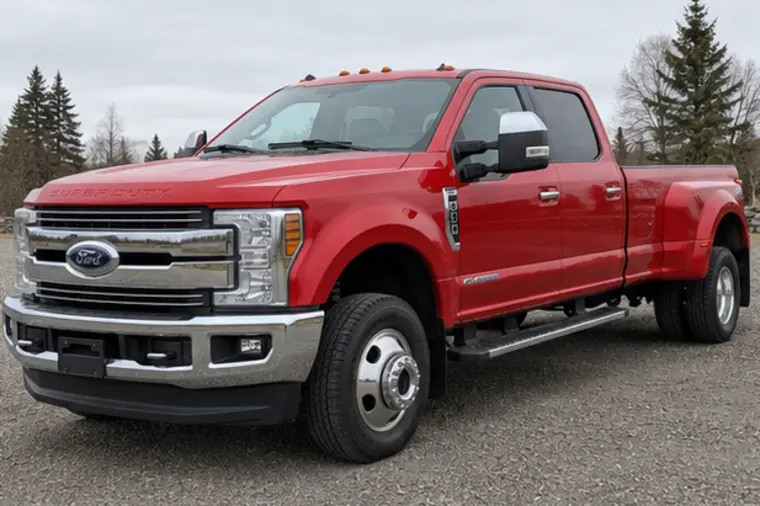
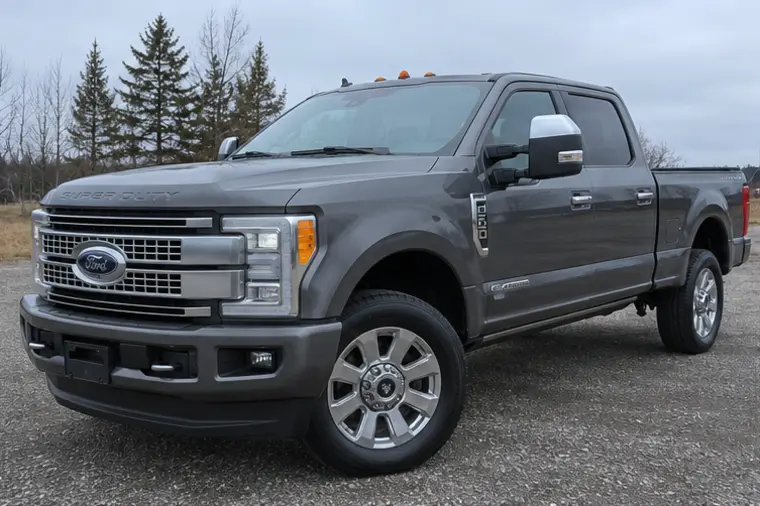
The 2020 Ford F-250 begins the updated 2020–2022 portion of the broader Super Duty generation. Ford's exact-year guide introduces three pickup engine branches—6.2L gas, 7.3L gas and 6.7L diesel—while the diesel is published at 475 hp and 1,050 lb-ft and is paired with the ten-speed TorqShift automatic. Its F-250 matrix also raises the reviewed endpoints to 20,000 lb conventional and 22,800 lb gooseneck, with fifth-wheel use of marked rows capped at 19,000 lb. Two later U.S. Ford filings identify defined 2020 populations for a 6.7L fuel-pump campaign and an upper steering-column-shaft campaign. None of these facts supplies a universal reliability score or Canadian VIN result. A defensible verdict still depends on the candidate's exact build, maintenance and repair records, campaign status, modifications, current operation and independent inspection.
Reliability verdict: treat 2020 as a changed system, not a rank
The 2020 update changes enough powertrain and configuration evidence that an older-year reputation is not an adequate substitute. The reviewed Ford documents establish equipment and bounded campaign questions, but they do not provide exposure-adjusted engine, transmission, fuel-system, steering, electrical or aftertreatment failure rates. This page therefore does not assign stars, name 2020 a best or worst year, or promise a lifespan.
A stronger candidate has matching VIN/build evidence and labels, dated service and repair invoices, compliant emissions and chassis systems, a clean cold start and hot road test, stable steering, correct towing hardware, current campaign verification and a qualified independent inspection. Pause for missing records, active warnings, unexplained pump or injector work, deleted emissions equipment, undocumented tuning, altered steering parts, damaged towing equipment or restricted inspection.
| Decision lane | Evidence that helps | Reason to pause |
|---|---|---|
| Identity | VIN, build data, door labels and equipment agree | Unexplained engine, transmission, axle or package identity |
| History | Dated maintenance and repair invoices match duty | Large gaps or verbal assurances only |
| Operation | Clean cold start, scan, hot restart and road test | Warnings, noise, leaks, reduced power or unstable steering |
| Campaigns | Current Ford VIN result and repair documents | Status inferred from year or U.S. filing alone |
| Inspection | Independent diesel, transmission, chassis and body review | Inspection blocked or replaced by a seller checklist |
What changed in the 2020 F-250 evidence
Ford's 2020 towing guide separates 6.2L gas, new 7.3L gas and 6.7L diesel pickup rows. It publishes the diesel at 475 hp at 2,600 rpm and 1,050 lb-ft at 1,600 rpm, up from the 450-hp/935-lb-ft figures in the reviewed 2019 guide. The exact owner manual identifies the ten-speed automatic transmission. These are factory source differences, not proof of wheel output, durability or the condition of a used truck.
The 2020 matrix also adds a 30,000-lb diesel GCWR branch, the F-250 High-Capacity Trailer Tow Package and distinct Tremor, tire and optional 9,900-lb GVWR conditions. Verify engine, transmission, axle ratio, cab, drive, wheelbase, box, package, tire, payload and hitch labels. Do not transfer a 2019 row or assume that every diesel has the high-capacity equipment.
24S78 / 24V-957 is a defined diesel fuel-pump campaign
Ford's U.S. 24V-957 filing, manufacturer campaign 24S78, identifies a defined 2020–2022 Super Duty population equipped with the 6.7L diesel. It describes aged biodiesel deposits that can affect high-pressure fuel-pump operation, pump wear and possible loss of motive power. Listed warning signs include extended cranking, a check-engine light, noise and reduced power, but those symptoms can have other causes.
Ask two separate questions: is this VIN included in a current Ford campaign, and has this truck had a fuel-system problem? A completion record addresses the campaign action; it does not explain unrelated repairs or certify every downstream component. Obtain itemized pump, injector and contamination findings, and let a qualified diesel technician assess the current system. The U.S. filing does not establish Canadian VIN inclusion, remedy availability or completion.
25S94 / 25V626 is a separate steering-shaft campaign
Ford's September 2025 U.S. filing 25V626, manufacturer campaign 25S94, covers certain 2020–2021 F-250 through F-450 vehicles built within specified dates. It describes an upper steering-column shaft that may separate and cause loss of steering. The filing does not identify a dashboard warning that reliably precedes separation, so a warning-free cluster is not a campaign check.
Do not confuse this later shaft campaign with the 2017–2019 steering-oscillation bulletin; the years, components and conditions differ. Ask Ford to check the actual VIN and retain the campaign number, completion date and repair record. Inspect and road-test the entire steering and suspension system safely, especially when tires, ride height or steering parts have been changed.
Powertrain, transmission and aftertreatment inspection
For a diesel candidate, insist on a true cold start, scan before codes are cleared and a drive long enough to observe hot operation. Check cranking, idle, smoke, turbo response, exhaust brake, cooling, leaks, warnings, reduced-power history, shift quality and aftertreatment status. If fuel-system work is disclosed, obtain the original diagnosis, contamination findings, parts list and follow-up documentation rather than accepting a generic claim that the pump was done.
Use the exact 2020 owner manual and diesel information for maintenance and operating decisions. Service must reflect actual duty, including towing, idling, dust, cold and short-trip use where applicable. Deleted emissions hardware, undocumented tuning, auxiliary fuel systems, lift components and oversized tires add legal, calibration and diagnostic uncertainty; inspect the work rather than treating modifications as proof of abuse or improvement.
Towing history requires the exact 2020 row
Ford's reviewed 2020 F-250 conventional matrix spans 12,300–20,000 lb, while the bed-mounted matrix spans 12,200–22,800 lb. The 20,000-lb conventional result belongs to selected diesel high-capacity configurations with package and tire conditions. The 22,800-lb result is a gooseneck position for a qualifying Regular Cab 4x2 diesel; fifth-wheel use of gooseneck-marked rows is limited to the 19,000-lb fifth-wheel hitch rating.
Inspect the receiver, bed mounts, frame, rear axle, springs, brakes, tires, wheels, wiring and payload label. Ford's guide preserves GVWR, rear GAWR, tire and carried-load limits. Published capacity does not reveal what a used truck hauled, and no maximum overrides the lowest applicable vehicle, axle, tire, hitch or trailer rating.
| 2020 source fact | Valid use | Invalid shortcut |
|---|---|---|
| 475 hp / 1,050 lb-ft diesel | Exact-year factory pickup output | Wheel power, condition or lifespan |
| 20,000-lb conventional endpoint | Selected high-capacity diesel configurations | One conventional rating for every F-250 |
| 22,800-lb gooseneck endpoint | Qualifying Regular Cab 4x2 diesel row | Fifth-wheel capacity |
| 19,000-lb fifth-wheel hitch cap | Separate hitch-method limit | Permission to ignore payload, GAWR or GVWR |
Body, frame, chassis and road-test checks
Inspect aluminum body repairs separately from the steel frame and chassis. Check panel fit, paint, seams, tailgate, bed mounts and dissimilar-metal contact areas; then examine frame rails, crossmembers, cab mounts, hitch points, brake and fuel lines and the underbody for collision damage, deformation and regional corrosion. Fresh coating is a reason to seek earlier photos and inspect accessible edges, not proof of soundness or concealment.
During a safe road test, assess steering centring, brake feel, wheel-bearing noise, driveline vibration, ten-speed shift quality, four-wheel-drive engagement, exhaust brake, cameras, trailer connector and warnings. Match every observed issue to measured diagnosis. Equipment listed in Ford literature is not proof that a candidate has it or that it functions.
2020 F-250 buying checklist
Record VIN, market, build date, engine, transmission, axle, cab, wheelbase, box, drive, GVWR package, tire size, payload label and towing equipment. Obtain current Ford recall status, service and repair invoices, lawful ownership history, diagnostic results, cold-start evidence and an independent diesel, transmission, chassis and body inspection. Reconcile kilometres and engine hours with documented work rather than turning either figure into a universal life limit.
Price verified needs only: fuel-system diagnosis, overdue maintenance, emissions work, leaks, steering or suspension correction, tires, brakes, hitch damage and body or frame repairs. This page publishes no inventory, seller, dealer count, price, financing or offer. Walk away when a material safety, identity or repair uncertainty remains unresolved.
Frequently asked questions
Is the 2020 F-250 reliable? The reviewed sources do not supply a universal score or failure rate. A candidate is defensible only when its exact build, records, campaign status, current operation and independent inspection support it.
What changed from 2019? Ford's 2020 evidence adds the 7.3L gas engine, rates the diesel at 475 hp and 1,050 lb-ft, uses the ten-speed automatic and publishes materially different F-250 towing branches. These are configuration facts, not proof that 2020 is better or worse.
Does every 2020 diesel have campaign 24S78? No. The U.S. filing defines a population; check the actual VIN through Ford and separately investigate any fuel-system repair history.
Does every 2020 truck have campaign 25S94? No. The filing identifies certain 2020–2021 F-250 through F-450 vehicles built in specified dates. Canadian status still requires a current VIN check.
Can this guide confirm a Canadian VIN or available truck? No. It publishes no individual VIN result, inventory, seller, dealer count, price, financing or offer.
Evidence note: manufacturer documents establish the specific facts and applications cited. Buying workflows and cost scenarios are DieselTrucks.ca editorial guidance. These pages do not publish measured failure rates or confirm the condition, recall status or capacity of a particular truck.
General educational content for Canadian diesel-pickup research. Verify the exact truck, model year, certification labels, owner manual and manufacturer documentation, and obtain qualified mechanical or towing advice where appropriate.
Sources & Further Verification
Use the exact model year, VIN, truck labels and current manufacturer documentation when moving from general research to a purchase or towing decision.
- Ford Pro — 2020 RV & Trailer Towing Guide
- Ford — 2020 Super Duty Owner's Manual
- Ford Canada — current owner-manual lookup
- Ford 24S78 / U.S. 24V-957 filing — defined 2020–2022 Super Duty diesel population
- Ford 25S94 / U.S. 25V626 filing — defined 2020–2021 upper steering-shaft population
- Ford Canada — recall information and VIN lookup
- Ford owner manuals