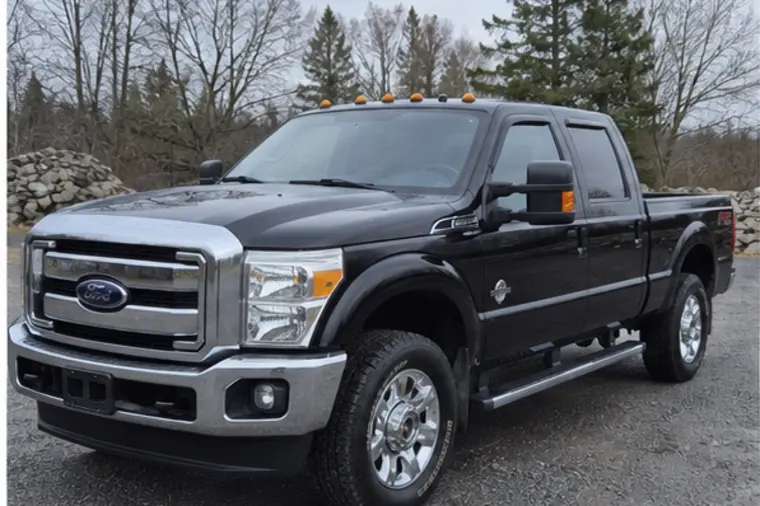
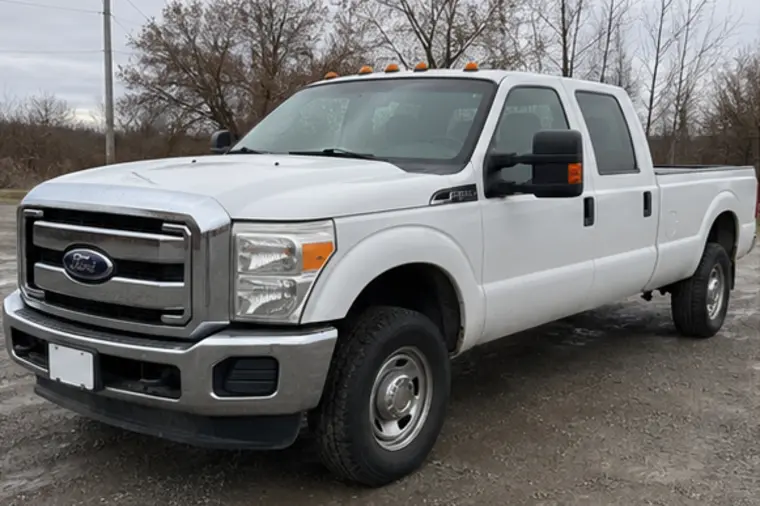
The 2011–2016 Super Duty introduced Ford's 6.7L Power Stroke era, but the six model years should not be treated as one fixed engine specification or one towing configuration.
Place the truck in the correct era
Verify the exact model year and build information before applying an early-6.7L assumption. Record F-250/F-350/F-450, pickup or chassis-cab, and factory configuration.
Engine and transmission context
The 6.7L Power Stroke evolved during this period. Confirm year-specific engine, transmission, emissions and towing documentation instead of importing later output figures.
Cab, bed, axle and rear-wheel choices
Payload and towing vary across cab, bed, drivetrain, axle and SRW/DRW choices; read the certification and payload labels on the exact truck.
Used-buying questions for this era
Ask how the truck was used and require the history to support the seller's description.
- Do records explain maintenance, warning lamps, recalls and software campaigns?
- Was the truck used for sustained towing, commercial work or extended idling?
- Are engine, emissions and suspension systems stock and documented?
- Does a qualified inspection support the seller's account?
Do not treat an early 6.7L era as one specification
Record the exact model year, application and installed engine and transmission before comparing two trucks in this era. Parts, calibration and service guidance may differ, and replacement-component claims need invoices. Keep a later truck's advertised output out of the earlier candidate's configuration file.
For 2011 trucks, Ford's diesel supplement provides a concrete starting point for fuel, cooling and aftertreatment records. For other years, obtain their own documentation. Ask whether the shop inspected the relevant cooling circuits, reviewed warning history and evaluated the actual work pattern. Choose from complete condition and service evidence rather than an unsupported rule that every early or late year is automatically preferable.
Use the 2011 supplement as a reference point
Ford's 2011 diesel supplement documents the 6.7L application, including its fuel and aftertreatment care and six-speed TorqShift maintenance. It is a reference for that year, not a replacement for every later manual in this group.
| Comparison field | Keep separate across candidates |
|---|---|
| Fuel and cooling repairs | Component identity and reason for replacement |
| Emissions history | Exact messages, diagnosis and follow-up |
| Transmission | Installed unit, service specification and road-test evidence |
Compare early purchase cost with supporting-system condition
A candidate with a lower price but several unresolved warnings may cost more to put into service than a better-documented truck. Ask the shop to identify which faults can be diagnosed during the inspection and which require additional time. Keep that uncertainty visible in the shortlist.
Evidence note: manufacturer documents establish the specific facts and applications cited. Buying workflows and cost scenarios are DieselTrucks.ca editorial guidance. These pages do not publish measured failure rates or confirm the condition, recall status or capacity of a particular truck.
General educational content for Canadian diesel-pickup research. Verify the exact truck, model year, certification labels, owner manual and manufacturer documentation, and obtain qualified mechanical or towing advice where appropriate.
Sources & Further Verification
Use the exact model year, VIN, truck labels and current manufacturer documentation when moving from general research to a purchase or towing decision.