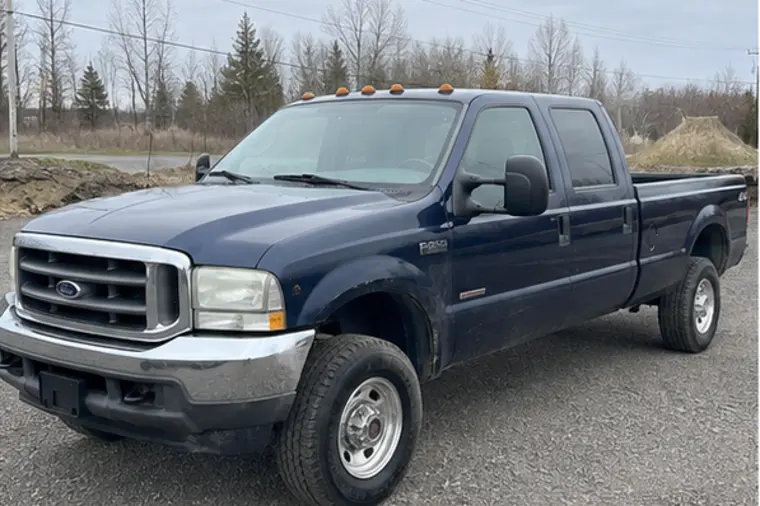
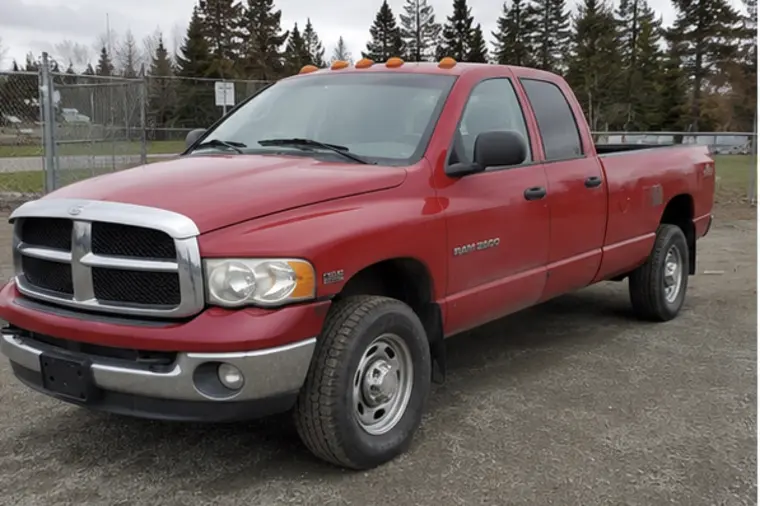
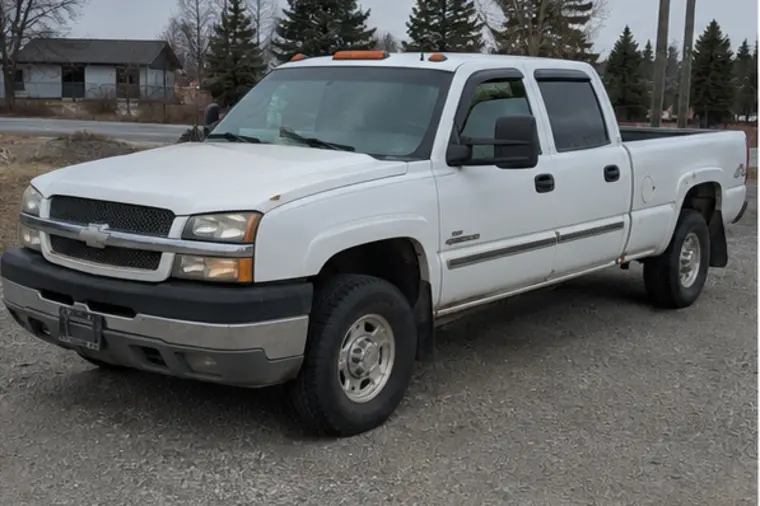
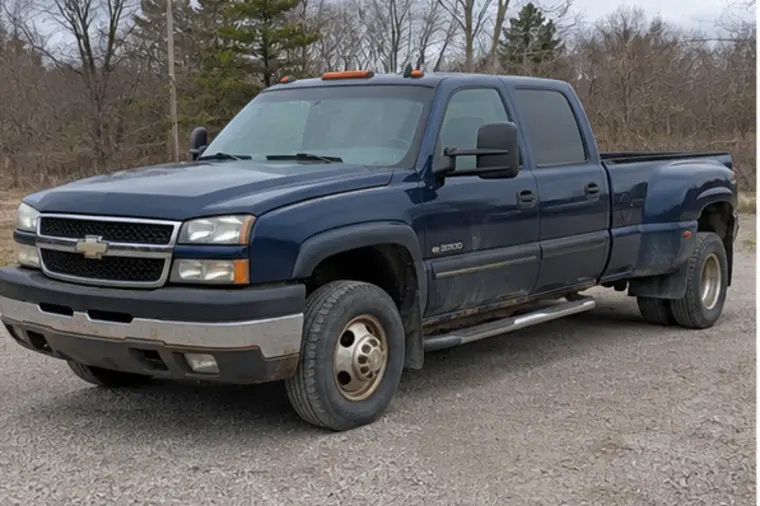
There is no universal best old diesel truck. A strong candidate is an exact Ford, Dodge/RAM, Chevrolet or GMC configuration that passes identity, structural, mechanical, service-history, capacity and support checks for the buyer's actual job. This guide shortlists six useful research groups: 1994–1998.5 12-valve Cummins trucks, 1998.5–2002 24-valve Cummins trucks, 2003–2007 5.9L common-rail trucks, 1999–early-2003 7.3L Power Stroke Super Duty trucks, 2001–2004 LB7 Duramax HD trucks and 2006–2007 Classic LBZ Duramax HD trucks. Those groups are starting points, not reliability rankings. Age, modifications, corrosion, transmission and chassis condition can outweigh the engine badge. Sources were checked on 9 September 2026.
Direct answer: choose the best documented candidate
Choose the truck whose exact identity, records, inspection and configuration best support the work you need it to do. Do not choose by a slogan such as “pre-emissions,” “million-mile engine” or “best year.” An old diesel pickup is a system: engine, fuel system, transmission, transfer case, axles, cooling, steering, brakes, electrical network, frame, cab, bed, hitch and previous repairs all matter.
For a simple restoration or occasional-use project, a well-preserved 12-valve Cummins Dodge can be a sensible research starting point. For a Ford-focused buyer who needs established Super Duty chassis context, a verified 7.3L application can qualify. For more modern driving feel within an older GM HD platform, an LB7 or LBZ candidate can make the shortlist. None wins without a true cold start, model-aware scan or mechanical tests where applicable, clean and dry lift inspection, service evidence and a job-fit calculation.
What “old” means here
“Old” is an ownership condition, not a universal year boundary. This guide focuses on diesel pickups whose age makes corrosion, discontinued parts, accumulated repairs, prior modifications and incomplete records central to the purchase. The shortlist ends with 2007 Classic GM and 2007 5.9L RAM applications so the comparison stays distinct from later-generation used-diesel and current-truck guides.
Exact boundaries matter. Cummins documents the 5.9L pickup engine's evolution from the 1989 launch through later 24-valve and high-pressure common-rail eras. Dodge's 2007 announcement states that the 5.9L remained available through December 2006 before the 6.7L transition. Ford's reviewed 2003 supplement is specifically for the 7.3L diesel application. GM owner manuals establish model-year vehicle, loading, towing and maintenance context but do not by themselves decode an unseen truck's engine RPO.
Treat a listing's model year as the start of identification. Verify VIN, build date, engine label or RPO evidence, pickup versus chassis-cab status, cab, bed, drivetrain, axle, transmission, wheel arrangement, factory packages and present emissions configuration. A body swap, engine swap, late registration or seller shorthand can break the assumed chain.
A reproducible 100-point old-truck score
This is a buyer-evidence score, not a reliability percentage, life forecast or ranking of engine families. Award points only for verified evidence, partial points for bounded uncertainty and zero for unknown or contradictory fields. Keep hard disqualifiers separate: a dangerous brake line, structural defect, identity problem or unlawful modification cannot be averaged away by clean paint or good invoices.
Use the same worksheet for every candidate. If one truck is scored on seller claims while another is scored on documents and tests, the numbers are not comparable. Save the source behind each point and record which specialist performed each inspection.
| Evidence domain | Points | Full-credit evidence |
|---|---|---|
| Identity and configuration | 15 | VIN/build documents, labels, engine, transmission, axle, body and current equipment agree |
| Structure, body and safety | 20 | Clean/dry lift inspection clears frame, mounts, lines, steering, brakes, tires, wheels and hitch |
| Powertrain condition | 20 | True cold start, road/hot-restart tests and application-specific diagnostics show no unresolved material fault |
| Maintenance and repair history | 15 | Dated invoices and parts/specifications form a continuous, plausible record |
| Parts, service and diagnostic support | 10 | Exact manuals, scan capability, qualified help and critical parts are confirmed for the buyer's location |
| Work and capacity fit | 10 | Labels, original documents, installed hardware and loaded-weight plan support the real assignment |
| Price, repair reserve and downtime | 10 | Local written estimates and a defined reserve make the total acquisition rational |
Shortlist by exact era and buyer objective
The table does not say every truck in a group is suitable. It identifies what each group can offer and where its evidence burden begins. Compare individual trucks only after confirming that they belong in the intended group.
| Research group | Useful buyer objective | Evidence that must lead | Common reason to pause |
|---|---|---|---|
| 1994–1998.5 Dodge/RAM 5.9L 12-valve | Mechanically straightforward restoration or occasional-use truck | Installed engine/fuel-system identity, transmission, modifications, cold operation, frame/body and parts plan | Reputation replaces records; aged chassis or unsafe modification is unresolved |
| 1998.5–2002 Dodge/RAM 5.9L 24-valve | Later second-generation truck with electronic fuel-system context | Exact application, fuel-supply and injection-system evidence, wiring/scan findings, transmission and chassis | Earlier and common-rail 24-valve evidence is mixed together |
| 2003–2007 Dodge/RAM 5.9L common rail | Newer-driving 5.9L-era HD candidate | Exact build date, high-pressure fuel-system condition, transmission, modifications, records and structure | “5.9” is treated as proof every system is healthy |
| 1999–early 2003 Ford Super Duty 7.3L | Super Duty platform and Ford service ecosystem | Exact 7.3L application, oil/injection service, cold start, scan evidence, transmission and chassis | Engine reputation hides age, corrosion, starting, oil-side or transmission concerns |
| 2001–2004 GM HD LB7 Duramax | Early Duramax/Allison-era pickup with modern road manners | Exact RPO/application, fuel/injector evidence, cooling, transmission, electrical and GMT800 structure | A repair claim lacks invoices, part detail or post-repair tests |
| 2006–2007 Classic GM HD LBZ Duramax | Later GMT800 candidate with verified identity and support | VIN/RPO/build, stock calibration, fuel/cooling/transmission condition, records, structure and job fit | Body style alone is used to call the truck an LBZ |
12-valve Cummins: simplest mechanical-project candidate
Cummins identifies the 1989–1998 pickup era as the original 12-valve period and documents milestones including turbocharging, direct injection and later intercooling. That manufacturer history supports an era boundary and system description; it does not prove that a surviving Dodge has its original engine, original fuel system or sound supporting truck.
A 1994–1998.5 candidate can suit a buyer who values mechanical access and is prepared to restore an old chassis. Verify casting and identification evidence, injection-pump configuration, starting behaviour, blow-by observations interpreted by a qualified technician, cooling, leaks, engine mounts, exhaust, wiring and every modification. Then inspect transmission, clutch or converter operation, transfer case, axles, steering, brakes, frame, cab mounts and bed structure independently.
The best example is usually the least ambiguous, not the most modified. Unknown fuel adjustment, improvised shutdown linkage, non-original turbo or injectors, undocumented transmission work and altered suspension all require diagnosis. Mechanical simplicity cannot reverse corrosion, restore unavailable trim, certify a swap or make an overloaded configuration safe.
24-valve and common-rail 5.9L: separate the fuel systems
The 5.9L 24-valve label spans materially different fuel-system eras. Cummins' history places the 24-valve transition in 1998 and high-pressure common-rail introduction in 2003. A 1998.5–2002 truck therefore needs a different inspection path from a 2003–2007 truck even though both may be advertised as a 24-valve 5.9.
For the earlier group, establish fuel-supply, injection, wiring and diagnostic evidence for the exact application. For common-rail trucks, use appropriate scan and fuel-system procedures, document filter/service history and treat high-pressure work as specialist work. In both groups, identify the actual transmission and evaluate its service and behaviour rather than assuming engine desirability transfers to the driveline.
Dodge's 2007 announcement says the 5.9L was offered through December 2006 and lists 610 lb-ft for that contemporary application. Use that statement only for the specified transition context; do not transfer it to every earlier 5.9L or use output as a reliability score. A 2007 registration, badge or ad still needs build and engine verification.
7.3L Power Stroke Super Duty: platform-first candidate
Ford's 2003 7.3L supplement documents the engine's oil, fuel, starting and direct-injection service context for the covered application. It is useful primary evidence for how that engine must be operated and maintained. It is not proof that every 1999–2003 Super Duty shares identical calibration, transmission, axle, capacity or condition.
Begin with a true cold start and confirm battery, cranking and glow-system performance before interpreting how the engine starts. Review oil specification and change records because the injection system depends on engine oil. Use a Ford-capable scan process and qualified diagnosis for stored codes, contribution concerns or oil/fuel-side symptoms. Inspect cooling, charge-air plumbing, leaks and evidence of tuning or non-original equipment.
Then judge the Super Duty around the engine: steering and suspension wear, brake and fuel lines, spring and axle condition, transmission behaviour, four-wheel drive, frame and hitch, cab/bed mounts and corrosion. A strong engine test cannot approve an unsafe or unsuitable truck. Choose this group for a verified platform and support fit, not because a mileage legend promises remaining life.
LB7 Duramax: early modern-HD candidate
The 2001 and 2004 Chevrolet Silverado manuals provide the original vehicle framework for identification, loading, towing, operation and maintenance. Use the exact manual and diesel supplement for the candidate, then confirm the engine RPO rather than inferring LB7 identity from the grille or model year alone.
Demand specific evidence for injector or fuel-system work: dated invoice, VIN, complaint, diagnosis, part numbers or scope, mileage, technician or facility and post-repair result. “Injectors done” is not a transferable warranty or a complete condition report. A clean idle after the seller has warmed the truck is not a substitute for a cold start, scan, road test and appropriate fuel-system evaluation.
Inspect cooling performance, fluids, wiring, batteries/charging, Allison operation where fitted, transfer case and driveline, steering/brakes, lines, frame, crossmembers and cab/bed mounts. Early Duramax appeal can coexist with two decades of towing, salt, collision repair or modification. Price the actual evidence gaps instead of assigning the generation a blanket reliability score.
LBZ Duramax: later GMT800 candidate when identity is proven
The 2006–2007 Classic LBZ group is often researched as a later old GM HD option. Verify VIN, RPO, build and body-generation evidence because exterior appearance and registration year do not prove the installed engine. Use the exact GM manual and supplement to establish service, fluid, loading and operating requirements for that truck.
GM bulletin 02-06-01-022O includes defined LBZ applications in its normal ticking-noise guidance. That narrowly scoped bulletin illustrates disciplined evidence use: a described operating noise under matching conditions may be normal, but the document does not clear every tick, knock or fuel complaint. Match symptom, temperature, operating condition and application before relying on it; diagnose anything outside scope.
Stock calibration evidence, fuel and cooling condition, transmission operation, wiring, charging, four-wheel drive and the complete chassis still govern. A modified truck can qualify only after the installed parts, software, legality, workmanship and consequences are understood. “LBZ” is an identity to verify, not an automatic approval.
Where 6.0L and 6.4L Power Stroke trucks fit
The 2003–2007 6.0L and 2008–2010 6.4L Super Duty groups are not universal rejects. They are specialist candidates whose purchase depends on exact application knowledge, repair documentation, present diagnostics and a repair/downtime budget. Keep their separate problems, reliability and year-selection intents on their dedicated pages.
Ford's 2007 supplement documents 6.0L-specific fuel, oil, coolant and operating requirements. Ford's 2009 supplement documents 6.4L operation including diesel particulate filter and regeneration context. That additional system context changes the inspection burden. Verify factory emissions hardware/software, warning and regeneration history, cooling and fuel-system evidence, modifications and post-repair results.
A seller's list of popular upgrades is not proof that root causes were diagnosed, work was correctly installed or the truck now fits the buyer. A qualified application specialist should review invoices, scan data and current operation. A documented, stock or transparently repaired example may suit a capable buyer; an unresolved high-consequence symptom, unknown calibration or inadequate support is a pause or decline.
Old body, frame and safety systems can decide the purchase
Inspect the truck clean, dry and safely lifted. Trace frame rails and crossmembers, suspension and steering mounts, cab/bed mounts, spring hangers, brake and fuel lines, tank straps, hitch structure, electrical grounds, cooling lines, wheel mounting faces and previous repairs. Fresh opaque coating does not establish sound metal and should trigger a request for preparation records and inspectable areas.
Record where the truck lived and worked, winter and coastal exposure, plowing, boat launching, farm or industrial use, wash/storage history and collision repair. Corrosion severity cannot be inferred from province, odometer or exterior shine. Scaling, perforation, distorted load paths, fluid leaks and uncertain welds need qualified assessment.
Safety and structure are hard gates. A desirable engine cannot offset unsafe brakes, steering, tires, wheels, mounts or hitch. If access is refused or a coating hides critical areas, score them unknown and pause rather than assuming good condition.
Transmission, driveline and modifications deserve equal weight
Identify the installed transmission from labels, build evidence and physical verification. Record fluid condition using the correct procedure, service history, shift quality cold and hot, converter or clutch behaviour, leaks, temperatures where available and any programming or internal work. Do the same for transfer case, driveshafts, universal joints, differentials, hubs and four-wheel drive.
Do not call an old truck reliable because the engine family has a durable reputation while the transmission has unknown history. Likewise, a transmission invoice does not clear the engine or chassis. Match part numbers, mileage and repair scope, then verify the current result.
Inventory every modification: tune, injectors, turbo, intake/exhaust, emissions change, lift, steering, wheels/tires, gearing, hitch, auxiliary fuel, wiring and body equipment. Confirm installer, calibration, legal status, supporting parts and inspection consequences. Unknown modification plus a high-consequence symptom is a disqualifier until resolved.
Towing and payload require the exact truck
Retrieve the original manual and applicable towing information for the candidate's exact market, year and configuration. Confirm GVWR, front and rear GAWR, tire/wheel limits, payload evidence, GCWR where documented, hitch type and trailer-rating row. Account for occupants, cargo, hitch, accessories, tongue or pin load and actual travel-condition axle weights.
The GM manuals reviewed here demonstrate why the original vehicle configuration and loading instructions matter; they do not supply a universal rating for every LB7 or LBZ truck. The same principle applies to Ford and Dodge/RAM. Engine output, dual rear wheels or an aftermarket suspension part cannot rewrite a controlling label or hardware limit.
Reject the candidate for the intended job if the required configuration evidence is missing or the realistic load has inadequate margin. A mechanically attractive truck that cannot safely and lawfully perform the assignment is not the best purchase.
Parts, manuals and local expertise are purchase evidence
Before buying, locate the exact owner manual, diesel supplement and service-information path. Ask local qualified shops whether they can scan and diagnose that generation, which procedures or tools they support, and which critical parts have acceptable sources and lead times. Get written estimates for known work.
Do not infer nationwide parts availability from one online listing. A part number may be superseded, remanufactured, counterfeit, application-limited or unavailable when needed. Confirm the actual VIN/application, supplier, warranty, core terms and delivery to your location. Cosmetic, cab, bed, wiring and module parts can matter as much as routine engine items on an old truck.
The best platform for a remote buyer may differ from the best for someone near an experienced specialist. Downtime tolerance belongs in the selection method, not as an afterthought.
Category winners without fabricated reliability ranks
These “winners” describe the evidence profile that best serves each buyer. They do not rank all 12-valve, 7.3L, LB7, LBZ, 6.0L or 6.4L trucks. The final choice is candidate-specific and can change when a new invoice, scan, lift inspection or capacity calculation appears.
| Buyer profile | Evidence-profile winner | Likely starting group | What can overturn it |
|---|---|---|---|
| Mechanical restoration project | Original, inspectable, minimally altered truck with sound structure and a complete parts plan | 12-valve 5.9L Dodge/RAM | Severe corrosion, undocumented swap/tuning, unsafe chassis or missing critical parts |
| Old truck for regular highway work | Stock, documented candidate with strong cold/hot operation, support and correct capacity | 7.3L Super Duty or common-rail 5.9L RAM | Transmission, steering/brake, cooling, configuration or downtime mismatch |
| More modern-feeling old HD | Verified GM HD with clean fuel, cooling, Allison/driveline and structural evidence | LB7 or LBZ Silverado/Sierra HD | Vague injector claim, altered calibration, identity uncertainty or corrosion |
| Capable owner with specialist access | Precisely diagnosed, documented repair candidate whose price covers known work | Any shortlist group, including 6.0L/6.4L specialist candidates | Unknown high-consequence fault or unsupported repair path |
| Lowest downtime tolerance | Best records, current inspection, local parts/help and least unresolved work | No engine family wins automatically | Reputation is substituted for candidate evidence |
Hard disqualifiers and repair-first conditions
A repair-first condition is not a permanent blacklist. Record the needed test or document, who can provide it, the acceptable result, written cost and time. Reconsider only after evidence closes the issue; do not let urgency or rarity lower a safety gate.
- VIN, certification label, engine identity, ownership or final-stage body documentation cannot be authoritatively reconciled.
- Structural frame, mount or hitch concern; active brake or fuel leak; unsafe steering, tires or wheels.
- Emissions tampering or unknown calibration without a verified lawful restoration path.
- Active overheating, contamination evidence, uncontrolled fuel-system fault, severe transmission behaviour or warning condition without completed diagnosis.
- Seller refuses a true cold start, independent scan/inspection, lift access or basic document verification.
- Towing or payload claim cannot be matched to exact labels, original documents and installed hardware.
- Price and available reserve cannot absorb diagnosed work, baseline maintenance and plausible downtime.
Reproducible candidate comparison worksheet
For each truck, record: VIN/build/RPO evidence; exact engine, transmission, axle, cab, bed, drive and wheel configuration; kilometres plus hours where available; ownership and use history; cold-start conditions; scan coverage and codes; mechanical test results; service and repair ledger; recall lookup date and completion proof; corrosion map; modifications; tire/wheel/hitch data; payload and towing calculation; parts/shop availability; due-now work; 24-month maintenance/repair horizon; price; reserve; and unresolved questions.
Compare candidates field by field. Unknown is not “good,” and a recent repair is not automatically “bad.” A documented repair with clear diagnosis, correct parts and verified outcome may reduce uncertainty. A seller's unitemized claim may increase it.
Run current recall searches through the Government of Canada and applicable manufacturer lookup. A model-level campaign does not prove an unseen VIN is included, excluded or complete. Save the dated VIN result and remedy evidence; this guide cannot verify a Canadian VIN.
Old-diesel buying sequence
1. Define the job, loads, annual use, climate, storage, downtime tolerance and repair reserve.
2. Choose a research group, then verify the candidate's exact identity and current configuration.
3. Retrieve exact manuals, supplements, service information and current VIN recall results.
4. Review dated invoices; separate verified repair, maintenance, seller claim and unknown history.
5. Arrange a true cold start, model-aware scan, road test, hot restart and clean/dry lift inspection.
6. Order application-specific tests when symptoms or known systems justify them; do not diagnose by folklore.
7. Verify structure, safety systems, transmission, driveline and modifications independently of the engine.
8. Calculate payload and towing fit from the exact truck, hardware and realistic loaded condition.
9. Confirm local parts, qualified service, written repair estimates and expected downtime.
10. Apply hard disqualifiers, score only verified evidence and compare candidates on identical fields.
Best-old-diesel questions
What is the best old diesel truck? There is no universal winner. The best candidate is the exact truck with verified identity, sound structure and safety systems, clean mechanical evidence, usable records, correct capacity and adequate parts/service support.
Is a 12-valve Cummins automatically the most reliable? No. It can be a mechanically straightforward project candidate, but the installed engine, modifications, transmission, chassis, corrosion, parts and repair evidence decide the truck.
Is a 7.3L Power Stroke better than an LB7 Duramax? That cannot be answered without the job and two actual candidates. Compare configuration, condition, records, diagnostics, transmission/chassis evidence, capacity, support and total acquisition cost.
Should every 6.0L or 6.4L Power Stroke be avoided? No universal blacklist is supported here. Treat them as specialist candidates and require exact repair, diagnostic, emissions, cooling/fuel-system and current-condition evidence.
Does “pre-emissions” prove low ownership cost? No. Older systems may be different, but age, corrosion, modifications, fuel/injection work, transmission, chassis repairs, parts and downtime still carry cost.
How many kilometres is too many? No universal cutoff predicts remaining life. Use kilometres with age, hours, duty, maintenance, diagnostics, structure and price; see the separate best-mileage guide.
Can a restored truck be better than an original one? It can, if the restoration has traceable scope, correct parts, qualified workmanship and verified results. Fresh paint or an unitemized rebuild claim is not sufficient evidence.
Can this page confirm a truck's Canadian VIN, capacity or recall status? No. Use current official VIN lookups, original labels/documents, exact configuration evidence and qualified inspection for the specific truck.
Evidence note: manufacturer documents establish the specific facts and applications cited. Buying workflows and cost scenarios are DieselTrucks.ca editorial guidance. These pages do not publish measured failure rates or confirm the condition, recall status or capacity of a particular truck.
General educational content for Canadian diesel-pickup research. Verify the exact truck, model year, certification labels, owner manual and manufacturer documentation, and obtain qualified mechanical or towing advice where appropriate.
Sources & Further Verification
Use the exact model year, VIN, truck labels and current manufacturer documentation when moving from general research to a purchase or towing decision.
- Cummins 5.9L-to-6.7L evolution, 12 April 2016 — 12-valve years, output range, injection and intercooler milestones
- Ford 2003 7.3L supplement — engine lubrication and injection
- GM 2001 Chevrolet Silverado owner manual — original vehicle, loading, towing and diesel-supplement context
- GM 2005 Chevrolet Silverado owner manual — original vehicle, loading and operating context
- Dodge 2007 RAM Heavy Duty announcement — 5.9L through December 2006 and 610 lb-ft
- GM 2004 Chevrolet Silverado owner manual — original vehicle identification, towing, service and maintenance context
- Ford Canada — current VIN recall lookup
- Chevrolet Canada recall centre — current vehicle recall lookup
- GM 02-06-01-022O, September 2014 — scoped Duramax normal ticking-noise information including LBZ
- Ford 2007 6.0L diesel supplement — F-Super Duty fuel and lubrication sections
- Ford 2009 diesel supplement — F-Super Duty 6.4L and DPF sections
- Government of Canada — current recalls, advisories and safety-alert search
- Mopar Canada — current VIN recall and customer-satisfaction notice lookup