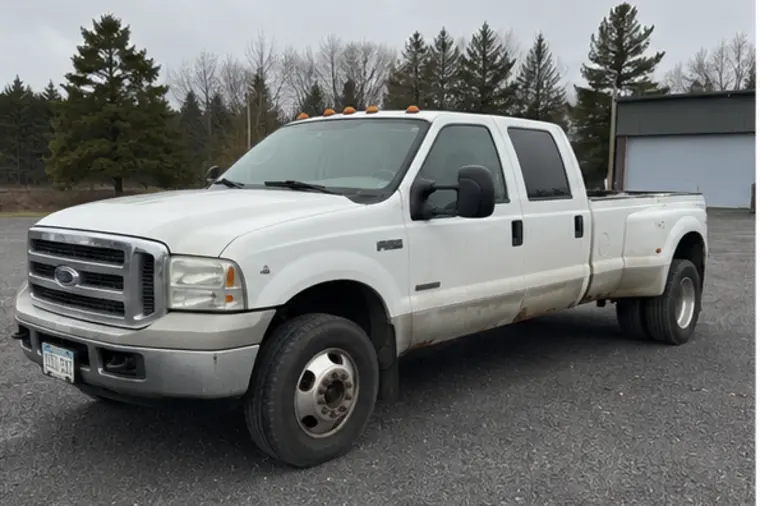
No reviewed primary source supports blacklisting every 6.0L Power Stroke from a particular model year. Ford's 2007 diesel supplement documents exact late-era operating and maintenance context, while the 2005 U.S. 05V270 campaign defines one narrow stalling population. Neither is a year-by-year failure study. Avoid an individual truck when material identity, safety, operating, repair, configuration or support questions remain unresolved beyond the buyer's requirements; reconsider it only when evidence closes and rechecks the same concern.
The answer: avoid conditions, not unsupported year labels
Do not reject an entire year from forum reputation, a repair nickname or one campaign record. Reject or pause a candidate when the exact truck cannot be identified, has an unresolved dangerous symptom, carries undocumented major work or tuning, cannot safely perform the assignment, or lacks a credible repair and downtime path.
A well-documented repair can return a truck to consideration when the original complaint, diagnosis, scope and relevant recheck align. A newer year, large invoice or clean warm start cannot independently close a material gap.
Write the buyer's non-negotiables first: load, route, winter duty, downtime, support, legality and budget. Apply the same thresholds to every candidate.
Confirm identity before assigning any year conclusion
Record VIN, model year, build labels, F-Super Duty or E-Series, body, drivetrain, transmission, installed engine identity and original market. Reconcile engine, cab or control-module replacements with invoices and current labels.
Ford's 2007 supplement distinguishes F-Super Duty and E-Series fuel-conditioning hardware and service context. A procedure or component location for one application cannot be assumed for the other.
Pause when seller description, VIN, engine label and work records conflict. Do not order parts or interpret symptoms until the actual combination is established.
Keep the 2005 campaign evidence bounded
The NHTSA model-level 2005 Ford F-250 SD result includes U.S. campaign 05V270 for certain 6.0L diesel vehicles that could stall. Its remedy concerns inspection of the FICM wire harness, the injection-control-pressure sensor connector or both.
This does not make every 2005 truck an avoid. It also does not establish Canadian applicability, current completion, the cause of a present stall or the reliability of another year.
Pause a matching candidate until current official VIN status and supporting repair records are available. Diagnose any continuing stall separately even when campaign work is documented.
Use explicit pause, decline and reconsideration rules
These conditions classify one truck. They do not establish a model-year blacklist.
| Finding | Initial decision | Evidence needed to reconsider |
|---|---|---|
| Identity or application conflict | Pause | VIN, labels, installed-engine identity and records reconcile |
| Active stall, overheat, fluid loss or unsafe warning | Pause operation | Qualified diagnosis, defined repair and relevant recheck |
| Seller-warmed engine with no cold evidence | Pause | Observed cold start or equivalent qualified evidence |
| “Bulletproofed” without itemized documentation | Treat as unverified | Complaint, parts, installer, scope and outcome |
| Unknown power or emissions calibration | Pause or decline | Legal configuration, disclosure and service acceptance |
| Unsafe brakes, frame, tires, steering or load mismatch | Decline as configured | Different truck or professionally verified correction |
| No support or substitute for essential work | Decline for that assignment | Credible service, recovery and continuity plan |
Pause for cold-start or hot-restart uncertainty
Arrange a genuine cold soak. Record ambient temperature, block-heater use, batteries, wait-to-start sequence, cranking, smoke, stabilization, warnings and scan evidence before codes are cleared.
After full warm operation, perform a safe hot restart. A seller-warmed demonstration cannot answer cold behaviour, while one successful cold start cannot close a temperature-dependent hot-restart concern.
If a material symptom appears, stop guessing. Require condition-matched measurements and diagnosis before deciding whether repair scope and downtime are acceptable.
Investigate oil and injection evidence together
Ford explains that engine-oil viscosity matters because oil pressure actuates the injectors, and it warns against extended change intervals. Request dated oil and filter records tied to kilometres or hours and exact-year requirements.
Pause when a starting concern is paired with unknown oil history, warning evidence or an unsupported parts recommendation. Fresh oil alone does not diagnose or repair a pump, injector, seal, sensor or electrical condition.
Missing history is not proof of damage, but the buyer should price the maintenance catch-up and testing needed to resolve it.
Pause for incomplete fuel-system evidence
The 2007 supplement documents primary water separation through an HFCM or FCM and a secondary engine-mounted filter. Ask for both filter histories, water-in-fuel events, fuel source, contamination findings and repaired components.
Do not accept an injector or filter invoice without the original complaint, supply and contamination checks, electrical evidence and post-repair result. Inspect leaks and improvised plumbing safely; never open a running high-pressure system as a buying test.
When contamination is alleged, preserve the shop's sample and findings. One contaminated truck cannot establish a year-wide failure pattern.
Treat electrical and FICM claims as a testable chain
Ford identifies the PCM and FICM as injection controls and emphasizes charged batteries and sound electrical components in cold weather. Review batteries, charging, grounds, connectors, harness routing, communication and cranking-state supply together.
Pause when a module was replaced without documented input testing or when campaign-related wiring work lacks an inspection result. A static voltage reading after charging may not represent the condition that produced the complaint.
Require the technician to connect measured evidence to the proposed repair and then repeat the relevant start or operating test.
Do not diagnose cooling problems from reputation
Ford identifies an engine oil cooler in the valley. That supports checking cooling and oil-temperature evidence, not declaring an oil cooler, EGR cooler or head gasket failed because of the engine name.
Pause for unexplained coolant loss, pressure, overheating, fluid cross-contamination, warning or unresolved towing-temperature history. Capture pressure and temperature tests, leakage evidence and the operating conditions.
For prior cooler or gasket work, require complaint, diagnosis, parts, machining or installation scope and a relevant recheck. A repair label is incomplete without its outcome.
Investigate low power and turbo work in sequence
Record load, smoke, noise, warnings, air restriction, fuel restriction, boost-related data and exhaust evidence. Ford notes that filter appearance alone does not establish restriction and that snow or ice can create temporary restriction.
Pause when a turbo replacement or cleaning is the only evidence for a recurring low-power condition. Request the original tests, related oil/air/exhaust findings, calibration and post-repair data.
Do not recreate a hazardous stall, overheat or low-power event during a test drive. Use qualified diagnosis under controlled conditions.
Translate “bulletproofed” before assigning value
There is no single verified scope behind the term. Ask for itemized coolers, gaskets, fasteners, machining, calibration, part manufacturers, installer, original complaint and outcome.
Classify each claimed item as documented and rechecked, documented without outcome, visually consistent, unresolved or not assessed. Do not award a purchase premium for the label alone.
Decline when undisclosed or poorly documented work creates unacceptable diagnosis, legality or support exposure. A defined and successful repair may support reconsideration without proving the entire truck reliable.
Audit tuning, emissions and non-stock combinations
Ford warns that power-increasing aftermarket products can damage the engine or transmission and that control systems may retain modification information. List tuners, calibrations, injectors, turbo, intake/exhaust, fuel supply and transmission changes.
Confirm emissions and inspection legality, insurance acceptance and shop willingness for the actual jurisdiction. Do not recommend defeating emissions or safety equipment.
Unknown tuning is a material uncertainty, not proof of damage. Pause or decline according to the buyer's support and restoration tolerance.
Read rebuilds and replacements as bounded repairs
An engine replacement or rebuild does not renew the fuel, cooling, electrical, transmission, chassis and body systems automatically. Verify installed assembly identity, reason, machining or parts, reused systems, installer and outcome.
Create a chronology for repeated work. A later repair may reflect recurrence, continuation, an ineffective repair or a different concern; the invoice count alone cannot decide which.
Pause when the major-work story conflicts with labels, dates, kilometres or current behaviour. Reconsider only after those records and inspection align.
Reject unsafe complete-truck conditions independently
Inspect brakes, steering, tires, wheels, frame, mounts, hitch, driveline, lighting and corrosion. Identify the installed transmission, converter or clutch work, cooling, axle ratio, tire size and differential changes.
A strong engine file cannot make an unsafe chassis acceptable. Likewise, a poor transmission or driveline fit cannot be excused by choosing a supposedly better engine year.
Connect power modifications and later driveline work by date, then obtain application-specific inspection for material findings.
Decline configuration and load mismatches
Calculate occupants, cargo, accessories, hitch equipment and loaded tongue or pin weight. Use door labels, axle and tire limits, hitch rating and exact Ford towing literature for the cab, wheelbase, drivetrain and equipment.
Do not infer truck capacity from engine output. Two 6.0L trucks of the same year can carry different legal and practical limits.
If the intended loaded condition exceeds a rating or lacks acceptable margin, choose a different configuration. No repair package changes the label by reputation.
Make Canadian winter and duty evidence relevant
Ford's 2007 guidance covers oil grade, winter fuel, charged batteries, block heater, fuel level and possible snow or ice restriction. Ask how the truck was started, parked and fuelled in conditions matching future use.
Record towing, idle, short cycles, plowing, dusty sites, storage and engine hours where available. Low odometer distance does not prove easy duty or complete time-based maintenance.
When season prevents reproducing a material winter concern, keep the limit open rather than marking it passed.
Verify Canadian campaign status without guessing
Use Ford Canada's current VIN recall lookup and retain the dated result and work order. Use the Government of Canada search for model-level research, then connect any finding to the exact vehicle and manufacturer instructions.
The Ford Canada manual portal helps locate exact-year literature but cannot prove maintenance. No VIN was submitted here, so no truck is represented as open, cleared, repaired or eligible.
An old invoice may support history, but current status and present condition remain separate questions.
Include repair access, support and downtime
Use Ford Canada's dealer locator to identify possible facilities, then confirm 6.0L capability, vehicle/body acceptance, modification policy, scheduling and parts path. A directory listing is not proof of any of those details.
For a working truck, include recovery, diagnosis, body access, parts delay, reassembly and substitute capacity. A repairable condition can still exceed the buyer's continuity limits.
Use written estimates for the actual truck. Generic repair-cost promises are not reliable across findings, access, labour and region.
Preserve a defensible rejection record
Save advertisement, VIN and labels, campaign result, exact literature, maintenance, scan, inspection, repair chronology, modifications, estimates and load evidence. Mark seller statements as reports until verified.
State the reason specifically: unresolved hot restart, identity conflict, unsafe frame, unknown calibration, load mismatch or inadequate support. Do not rewrite it as “all trucks from this year are bad.”
When new work directly resolves and rechecks the concern, the candidate can return to the shortlist. The decision process should be reversible when the evidence changes.
6.0L Power Stroke years-to-avoid questions
Which 6.0L year should everyone avoid? The reviewed primary sources do not support a universal year blacklist.
Does 05V270 condemn all 2005 trucks? No. It has a defined U.S. scope; verify the actual VIN and diagnose present symptoms.
Is undocumented “bulletproofing” enough? No. Treat it as unverified until scope, reason, installer and outcome are established.
What is the clearest reason to decline? A material unresolved safety, operating, identity, configuration or support condition outside the buyer's requirements.
Can a rejected truck be reconsidered? Yes, when evidence and a relevant recheck resolve the original reason for pause.
Evidence note: manufacturer documents establish the specific facts and applications cited. Buying workflows and cost scenarios are DieselTrucks.ca editorial guidance. These pages do not publish measured failure rates or confirm the condition, recall status or capacity of a particular truck.
General educational content for Canadian diesel-pickup research. Verify the exact truck, model year, certification labels, owner manual and manufacturer documentation, and obtain qualified mechanical or towing advice where appropriate.
Sources & Further Verification
Use the exact model year, VIN, truck labels and current manufacturer documentation when moving from general research to a purchase or towing decision.
- Ford 2007 6.0L diesel supplement — F-Super Duty fuel and lubrication sections
- Ford Canada — current owner-manual access by vehicle and model year
- NHTSA recall API — 2005 Ford F-250 SD model-level U.S. results including 05V270
- Ford Canada — current VIN recall lookup
- Government of Canada — current recalls, advisories and safety-alert search
- Ford Canada — dealer and service-location search
- Ford owner manuals