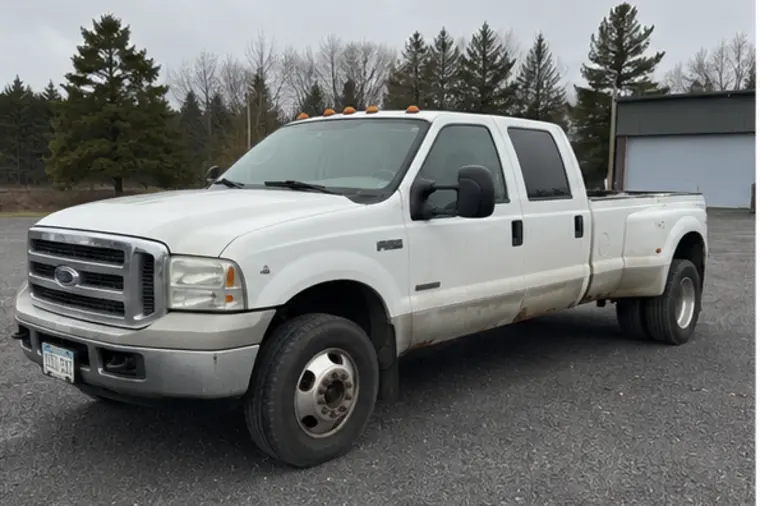
The reviewed primary sources do not provide an exposure-adjusted 6.0L Power Stroke failure rate or a defensible reliability score by year. Ford's 2007 diesel supplement documents how a known late-era F-Super Duty or E-Series application should be operated and maintained; a 2005 U.S. campaign documents one defined stalling concern. Use those bounded facts to test an individual truck. Reliability here means verified identity, coherent maintenance and repairs, repeatable operation, safe complete-vehicle condition and support that fits the buyer's duty—not a reputation converted into a number.
Reliability verdict
A 6.0L candidate can be supportable when its exact application is established, maintenance and major repairs form a coherent chronology, cold and hot operation are satisfactory, modifications are understood, the transmission and chassis are sound, and capable service is available.
Pause when identity, symptom, repair or campaign evidence conflicts. Decline when a material safety, load, structural or unresolved operating condition falls outside the buyer's risk and downtime tolerance.
This is a candidate-level verdict. It does not claim that every truck from one year is reliable or unreliable, and it does not estimate remaining life.
Define what reliability must mean for the assignment
Write the truck's intended job before reviewing its engine: passengers, payload, trailer, route, winter exposure, annual distance, idle time, criticality, recovery options and substitute capacity. Reliability for an occasional secondary pickup is not the same operational question as reliability for a sole commercial truck on remote routes.
Separate four dimensions: engine operation, attached powertrain, complete-vehicle safety and business continuity. A good start and clean scan cannot certify brakes, frame, hitch, transmission or access to parts.
Set decision thresholds in advance. A buyer who cannot tolerate open-ended diagnosis should require stronger records and rechecks than a buyer with workshop capacity and a backup vehicle.
Verify the exact application before using any evidence
Record VIN, model year, build labels, F-Super Duty or E-Series, body, drivetrain, transmission, engine label, market and relevant replacement history. Treat chassis and installed-engine identity separately when major assemblies or control modules were changed.
Ford's 2007 supplement distinguishes the F-Super Duty frame-mounted HFCM from the E-Series FCM near the transmission and provides separate ambulance context. Those application differences matter to filtration, service access and inspection.
Match the candidate to exact-year Ford literature. Do not transfer a pickup procedure, component location, fluid rule or conclusion to a van or another year without confirmation.
Understand the evidence ceiling
Reliability conclusions should stay inside these boundaries. No denominator in the reviewed set supports a percentage or rank.
| Evidence | What it can establish | What it cannot establish |
|---|---|---|
| Ford 2007 diesel supplement | Exact late-era operating, maintenance and system context | Comparative year failure frequency or completed maintenance |
| NHTSA 2005 F-250 SD campaign result | Defined U.S. model-level 05V270 scope and remedy question | Canadian VIN status or cause of every stall |
| Current Ford Canada VIN lookup | Candidate-specific manufacturer campaign status when a VIN is entered | Mechanical condition or future reliability |
| Government of Canada recall search | Current Canadian model-level recall research | Completion for a candidate without VIN evidence |
| Invoice and work order | Claimed complaint, scope, installer and date when complete | Successful outcome without a relevant recheck |
| Cold/hot inspection | Present behaviour under observed conditions | Remaining life or behaviour under every future load |
Treat 05V270 as one defined concern
The NHTSA model-level result for a 2005 Ford F-250 SD includes campaign 05V270 for certain 6.0L diesel vehicles that could stall. The remedy description addresses the FICM wire harness, injection-control-pressure sensor connector or both depending on inspection.
That record is relevant when market, year, vehicle and engine match. It does not prove every 2005 truck was affected, every campaign remains open or every present stall has the same cause.
Check the actual Canadian VIN through current official channels and keep the repair order. Even with completion evidence, diagnose a current stall on its own facts.
Make cold and hot starting repeatable tests
Arrange a genuine cold soak when practical. Record ambient temperature, heater use, battery state, wait-to-start sequence, cranking, smoke, stabilization, warnings and scan information before codes are cleared.
After full warm operation, stop and restart safely. A seller-warmed truck cannot answer cold-start questions, while a single good cold start cannot resolve a hot-restart complaint.
Ask which voltage, current, temperature, pressure-related and control observations were captured under the condition that produced the symptom. Do not diagnose injectors, pump, sensor or module from a video alone.
Connect oil service to injection operation carefully
Ford explains that oil viscosity is important because engine oil pressure actuates the fuel injectors. It warns that extended oil-change intervals can affect performance, economy and engine life.
Request dated oil and filter records tied to kilometres or hours and operating conditions. Verify the correct requirement in exact-year literature instead of assuming the 2007 statement applies unchanged to every truck.
Oil history is one reliability input, not a verdict. Fresh oil cannot cure an untested starting concern, and missing records create uncertainty rather than proof of damage.
Review fuel filtration and water handling as a system
The 2007 supplement describes primary water separation through an HFCM or FCM plus an engine-mounted secondary filter. It directs service at the applicable interval and action when the water-in-fuel indicator appears.
Request evidence for both filters, fuel sources, water events, contamination diagnosis and any replaced components. Inspect for leaks, unsafe improvised plumbing, damaged connectors and mismatched parts.
When fuel-system work is claimed, preserve the original complaint, measured findings, complete scope and recheck. A new filter or injector invoice alone cannot show that supply, contamination and electrical causes were addressed.
Evaluate electrical supply, wiring and FICM evidence together
Ford identifies the PCM and FICM as injection controls and tells cold-weather operators to keep batteries charged and electrical components in optimum condition. That supports testing batteries, charging, grounds, harnesses, connectors, communication and cranking-state supply.
A static voltage reading after charging may not represent a true cold start. Ask the technician to preserve the operating state that reveals the concern and explain how measurements support the proposed repair.
If FICM or campaign-related wiring work is claimed, request the reason, inspection result, part or harness scope, calibration if applicable and post-repair outcome. Do not award reliability credit for the component name alone.
Assess cooling evidence without using reputation as diagnosis
Ford identifies an engine oil cooler in the engine valley whose role is to regulate oil temperature. This makes oil/coolant temperature and cooling-system evidence relevant, but it does not by itself diagnose an oil cooler, EGR cooler or head gasket.
For coolant loss, pressure or overheating, document fluid condition, visible leakage, pressure and temperature tests, warnings and the operating condition. Note whether the event occurred unloaded, towing, plowing, climbing or idling.
For previous cooler, gasket or related work, connect complaint, diagnosis, parts, machining or installation details and a relevant loaded recheck. A large repair can strengthen the file only when it closes the original condition.
Diagnose low power and turbo concerns in sequence
Record when low power occurs, smoke, noise, warnings, air restriction, fuel restriction, boost-related information, exhaust evidence and load. Ford says air-filter appearance alone does not establish restriction and notes possible snow or ice restriction.
For turbocharger work, request the initial tests, complete oil/air/exhaust findings, parts, calibration and post-repair data. A replaced turbo does not certify the rest of the system or guarantee future performance.
Do not reproduce dangerous low-power, stall or overheat events during a buying test. Use a qualified shop and safe conditions for application-specific diagnosis.
Translate “bulletproofed” into an itemized file
“Bulletproofed” has no single verified scope. Ask for part manufacturers, coolers, gaskets, fasteners, machining, calibration, installer, complaint and relevant outcome for each claimed change.
Classify work as documented and rechecked, documented without outcome, visually consistent, unresolved or not assessed. Do not treat a seller label, decal or parts list as a reliability warranty.
A repair that addresses one concern cannot certify injectors, turbocharger, fuel supply, wiring, transmission or chassis. Keep those systems separate in the decision.
Audit all modifications and retained original systems
Ford warns that power-increasing aftermarket products can damage the engine or transmission and that control systems may retain modification information. Record tuners, calibrations, injectors, turbo, intake/exhaust, fuel supply, gauges and transmission changes.
Ask who designed and supports the combination, why it was changed, what original hardware remains and whether emissions, inspection and insurance requirements are satisfied. Do not recommend deleting emissions or safety equipment.
A dyno result records one configuration and test condition; it does not measure durability. Unknown modifications increase diagnostic and support uncertainty even when the truck currently runs well.
Build a repair chronology rather than counting invoices
For every major event, record complaint, operating condition, codes and measurements, diagnosis, parts, installer, date/kilometres and post-repair result. Separate maintenance, preventive work, failure repair and optional modification.
Repeated component names may represent recurrence, continuation, incomplete repair or a different cause. Compare symptoms and evidence instead of assuming a model-wide pattern.
An engine replacement or rebuild is not a reset for the truck. Verify assembly identity and scope, reused fuel/cooling/electrical systems, transmission condition and the reason for the work.
Inspect transmission, driveline and chassis independently
Identify transmission, calibration, converter or clutch work, cooling, transfer case, axle ratio, tires and differential changes. Evaluate engagement, shifts, leaks, noise and temperature behaviour using safe application-specific procedures.
Inspect brakes, steering, wheels, tires, frame, body mounts, hitch, lighting and corrosion. A reliable engine cannot make an overloaded truck, damaged frame or weak braking system acceptable.
Connect power modifications to later transmission or driveline events by date. More engine output can change load on attached systems, but a chronology is needed before drawing a candidate conclusion.
Verify configuration and load instead of inferring capacity
Calculate occupants, cargo, accessories, hitch equipment and loaded tongue or pin weight. Use door labels, axle and tire limits, hitch rating and exact configuration-specific Ford towing literature.
Engine displacement or torque does not determine payload and trailer capacity on its own. Cab, wheelbase, drivetrain, axle, tire, hitch and factory equipment can change ratings within the same year.
Use representative scale weights when the truck will work near a limit. Decline a mismatch regardless of how the engine operates.
Include winter duty, storage and operating history
The 2007 supplement addresses correct oil grade, winterized fuel, battery condition, block-heater use, fuel level and snow or ice restriction. Ask how the candidate was started, parked and fuelled in the buyer's climate.
Record towing, idle, short cycles, plow work, dusty sites, storage and engine hours when available. Low kilometres do not prove light duty or complete time-based care.
A summer inspection cannot fully test a winter-only concern. Preserve that limitation and require stronger records, a season-appropriate test or a purchase reserve when it matters.
Verify recalls and literature through current Canadian paths
Use Ford Canada's VIN lookup and retain the dated result and any campaign work orders. Use the Government of Canada search for model-level records, then connect the exact vehicle to the applicable manufacturer instruction.
Retrieve exact-year literature through Ford Canada's manual portal. Access proves that a reference can be located, not that maintenance was completed or that the installed configuration remains stock.
No VIN was provided for this guide, so no candidate is represented as open, cleared, repaired or eligible for a campaign.
Plan support and downtime before purchase
Use Ford Canada's dealer locator to identify possible support, then confirm the facility accepts the vehicle line, 6.0L application, body and modifications. A directory listing does not establish technician experience, parts access or appointment timing.
For commercial use, include recovery, diagnosis, parts delay, body access, reassembly and substitute capacity. A repairable truck may still be operationally unsuitable when interruption consequences are high.
Obtain current written estimates for the actual candidate. This guide does not publish generic repair costs because findings, access, parts, labour and geography materially change scope.
Use explicit reliability classifications
Reclassify only when new evidence addresses the same reason for pause. A discount or unrelated service does not close an unresolved condition.
| Classification | Evidence standard |
|---|---|
| Suitable | Identity verified; records coherent; cold/hot inspection satisfactory; no material unresolved safety, powertrain or load issue; support credible |
| Suitable after defined work | Scope, price, responsibility and recheck are written and fit the buyer's downtime tolerance |
| Pending diagnosis | Material symptom, identity conflict, campaign question or undocumented major repair remains open |
| Unsuitable | Unsafe condition, load mismatch, unsupported configuration or unresolved consequence exceeds requirements |
Preserve a reliability file after the decision
Save VIN and labels, official campaign result, exact literature, maintenance, scan and inspection findings, repair chronology, modifications, scale evidence, estimates and known limitations.
Mark seller statements as reports unless verified. Date each source so a later recall, repair or inspection can be reconciled rather than replacing the prior record silently.
The result is an explainable decision about one truck. It should never be converted into an invented engine-family percentage or promise of remaining kilometres.
6.0L Power Stroke reliability questions
Is there an official 6.0L reliability percentage? No reviewed primary source provides an exposure-adjusted fleet failure rate.
Does a completed 05V270 campaign prove the engine reliable? No. It addresses a defined concern and does not certify present mechanical condition.
Does “bulletproofed” settle the question? No. Verify itemized scope, reason, installer and outcome.
Can one successful test drive predict remaining life? No. Combine cold/hot evidence with records, repair chronology, complete-truck inspection and support.
What supports a purchase? Verified identity, coherent evidence, satisfactory operation, safe configuration, credible service and acceptable downtime exposure.
Evidence note: manufacturer documents establish the specific facts and applications cited. Buying workflows and cost scenarios are DieselTrucks.ca editorial guidance. These pages do not publish measured failure rates or confirm the condition, recall status or capacity of a particular truck.
General educational content for Canadian diesel-pickup research. Verify the exact truck, model year, certification labels, owner manual and manufacturer documentation, and obtain qualified mechanical or towing advice where appropriate.
Sources & Further Verification
Use the exact model year, VIN, truck labels and current manufacturer documentation when moving from general research to a purchase or towing decision.
- Ford 2007 6.0L diesel supplement — F-Super Duty fuel and lubrication sections
- Ford Canada — current owner-manual access by vehicle and model year
- NHTSA recall API — 2005 Ford F-250 SD model-level U.S. results including 05V270
- Ford Canada — current VIN recall lookup
- Government of Canada — current recalls, advisories and safety-alert search
- Ford Canada — dealer and service-location search
- Ford owner manuals