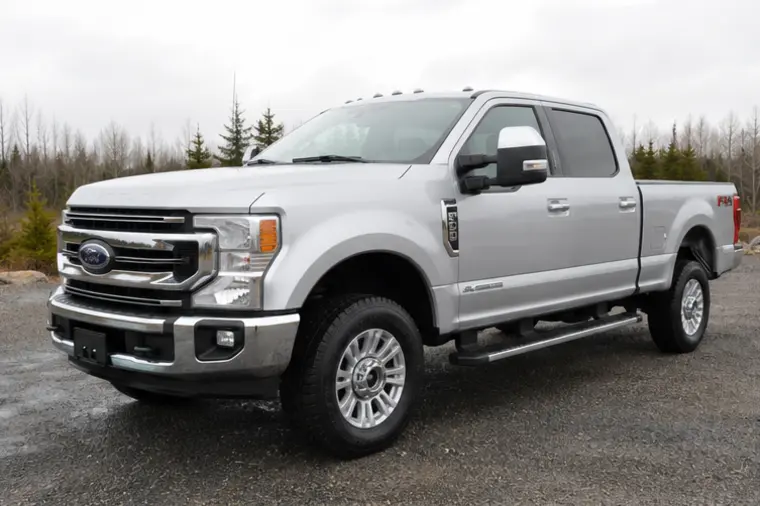
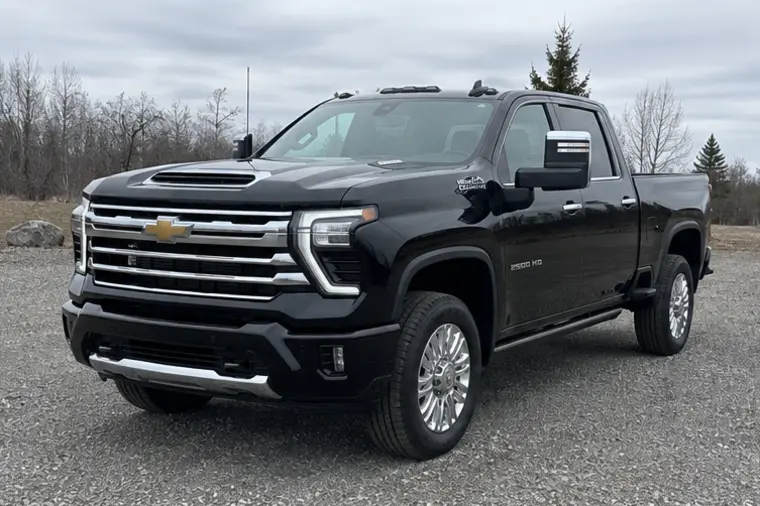
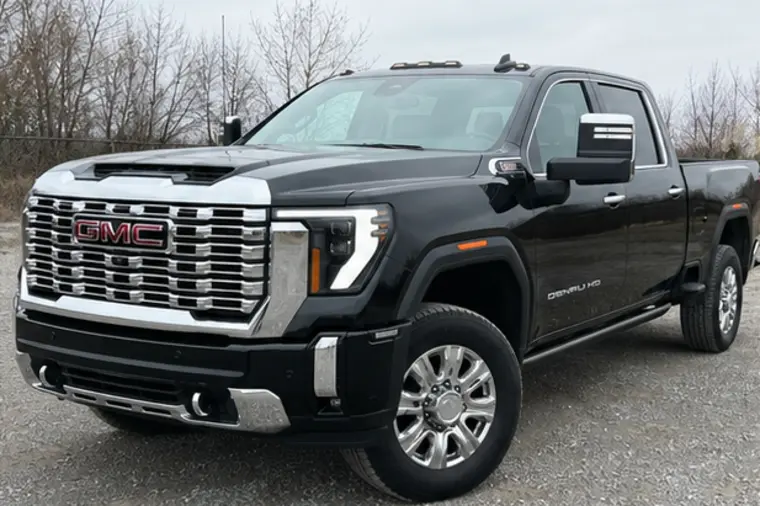
Compare Power Stroke and Duramax at the same truck class and model-year level. For HD pickups, the useful starting point is Ford's 6.7L Super Duty against the 6.6L Duramax Silverado or Sierra HD. GM's 3.0L half-ton diesel is a separate application and should not be used as a substitute for an HD comparison.
The current HD powertrain snapshot
These are manufacturer specification references, not a head-to-head acceleration, fuel-economy or durability test. The individual truck's model year and equipment determine which facts apply.
| Factor | Ford Power Stroke HD pickup | GM Duramax HD pickup |
|---|---|---|
| Displacement in this comparison | 6.7L | 6.6L |
| Current cited output choices | 475 hp/1,050 lb-ft standard; 500 hp/1,200 lb-ft high output | 470 hp/975 lb-ft later L5P specification |
| Transmission context | Ten-speed in cited Super Duty pickup guide | Ten-speed in current Silverado/Sierra HD material |
| Truck identities | F-250, F-350 and F-450 pickup configurations | Chevrolet Silverado and GMC Sierra 2500HD/3500HD configurations |
| Important exclusions | Other Power Stroke generations and chassis-cab ratings | 3.0L half-ton and medium-duty Duramax applications |
Output is easy to compare; suitability takes more work
Ford's current high-output figure is larger than the later L5P figure cited here, but that fact alone does not decide a purchase. The intended trailer, carried load, actual configuration and cost remain separate questions. A truck that exceeds a payload or axle limit is unsuitable regardless of the output advantage.
For towing, write down a complete configuration on both sides. Match cab, bed, drivetrain, axle information and hitch type, then use the relevant guide and vehicle labels. Avoid putting a family-level maximum beside an individual truck's rating and presenting the result as a fair contest.
If neither truck needs to operate near its limits, the driver's seating position, visibility, controls, parking access and service proposition may reasonably decide the purchase. Those are aspects of the actual vehicles you can assess rather than qualities to infer from an engine badge.
Used Power Stroke and Duramax generations need narrower research
Power Stroke includes several earlier engines before the 6.7L. Duramax HD research requires engine-code and truck-generation identification rather than treating every 6.6L as the latest L5P. A used buyer should establish those facts before asking which brand is better.
GM's later L5P description distinguishes newer output from 2023-and-older versions. Ford's standard- and high-output choices likewise need exact identification. A shared displacement does not prove a shared calibration, transmission, service requirement or repair history.
Gather the VIN, build information and invoices before comparing two candidates. If a seller describes a replacement engine or transmission, determine what was installed and which documents support the claim. Value the documented condition rather than assuming a major replacement resets the age of the whole truck.
Chassis and equipment belong in the comparison
Chevrolet's 2024 HD introduction describes independent front suspension with torsion bars. This is a specific chassis fact to understand in that model-year context; it does not establish a universal ride or handling winner against Ford. Tire choice, load, trim, condition and road surface can change what the driver experiences.
Inspect the actual truck's steering and suspension and assess its daily use. On a modified used truck, ask how a lift, tire change or accessory installation affects the inspection and documentation. The modification does not replace the original towing and payload verification.
Compare Chevrolet and GMC separately where their cab equipment, controls, visibility or purchase terms matter to you. A shared Duramax family does not make the individual Silverado and Sierra candidates identical.
Reliability and known issues: ask for measured findings
Ford's 24S78 filing identifies a particular fuel-pump concern in a defined diesel population. It is a reason to check current applicability and repair history, not a basis for ranking every Power Stroke below every Duramax. Check the GM candidate's VIN too; the absence of a campaign discussion in an advertisement is not evidence of a clear record.
Ask for cold-start and diagnostic findings, maintenance continuity, transmission history and an underbody inspection. Corrosion, brake condition, tires and hitch mounting can materially affect ownership even when the engine appears healthy. Request an itemized estimate for diagnosed work and further investigation for unresolved symptoms.
Neither peak output nor the number of gears establishes long-term reliability. A convincing buying case connects the exact vehicle's history with its present condition and intended next use.
Compare fuel, repairs and availability consistently
Use the same annual distance, towing share and local fuel price assumptions. Then separate fuel from purchase price, financing, routine service, known repairs and downtime. A quoted fuel figure from a different cab, tire or load condition should not be treated as a prediction for your candidate.
Ask local shops about the actual engine and transmission combination. Include availability of diagnosis and parts in a commercial buying decision, and check whether a replacement truck can carry the same crew or trailer. Service access is local and application-specific rather than a universal brand advantage.
For an older truck, leave room in the budget for age-related work supported by the inspection. A low purchase price is useful only when the immediate work and remaining uncertainty are understood.
Choosing the Ford or the GM truck
Choose the Ford when its verified configuration, driver fit, history and complete ownership proposition are stronger for your use. Choose the Silverado or Sierra HD when that individual GM truck better satisfies the same requirements. If output is a deciding preference, verify the actual version rather than assuming a trim badge proves it.
Does the 3.0L Duramax belong in this contest? Only if you deliberately change the brief to a half-ton versus HD comparison. Does ten-speed versus ten-speed mean the transmissions are the same? No; identify and service the actual unit for the truck. Which lasts longer? The cited manufacturer specification material cannot establish a universal lifespan ranking.
Evidence note: manufacturer documents establish the specific facts and applications cited. Buying workflows and cost scenarios are DieselTrucks.ca editorial guidance. These pages do not publish measured failure rates or confirm the condition, recall status or capacity of a particular truck.
General educational content for Canadian diesel-pickup research. Verify the exact truck, model year, certification labels, owner manual and manufacturer documentation, and obtain qualified mechanical or towing advice where appropriate.
Sources & Further Verification
Use the exact model year, VIN, truck labels and current manufacturer documentation when moving from general research to a purchase or towing decision.
- Ford Canada 2026 Super Duty — standard and high-output diesel specifications
- Ford 2024 Super Duty pickup towing guide — original configuration tables and footnotes
- GM L5P technical description — later specification versus 2023-and-older engines
- Chevrolet Canada 2026 Silverado HD — powertrains and configuration choices
- GMC Canada 2026 Sierra HD Pro/SLE/SLT — diesel powertrain
- Chevrolet Canada 2024 Silverado HD introduction — powertrain and chassis specifications
- Ford 24S78 / U.S. 24V-957 filing — defined 2020–2022 Super Duty population
- Ford owner manuals
- Chevrolet Canada manuals and guides