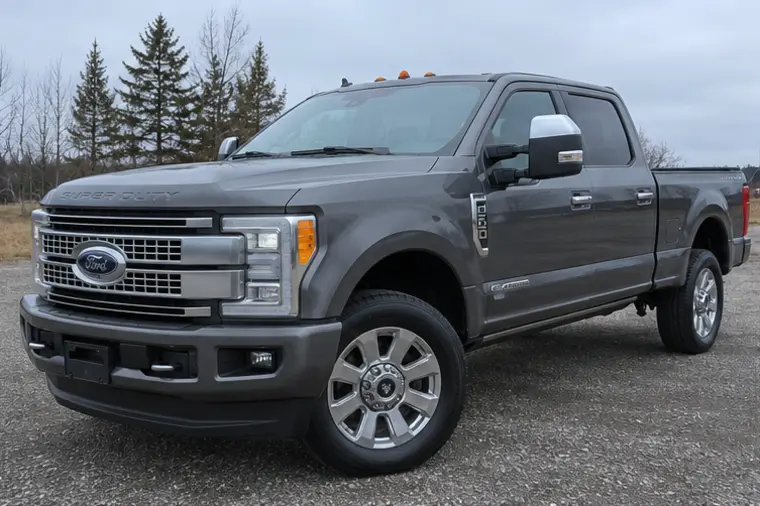
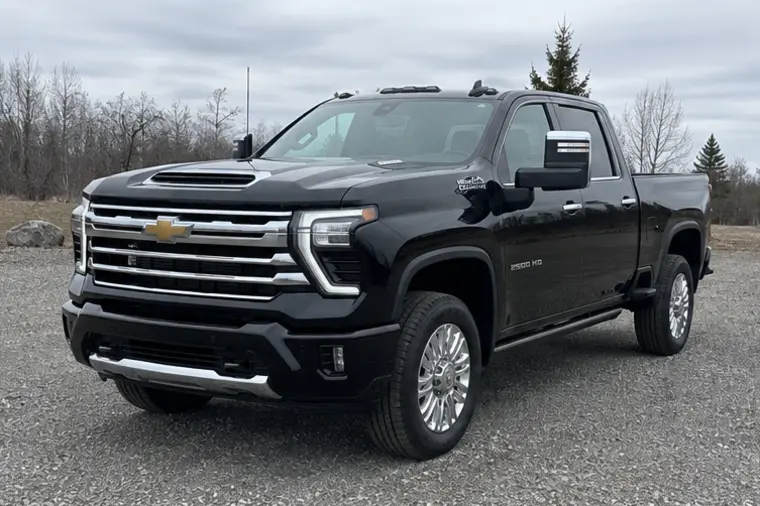
Compare the Ford F-250 and Chevrolet Silverado 2500HD as complete three-quarter-ton trucks. Ford's current standard- and high-output 6.7L options and Chevrolet's later 6.6L Duramax specification give different powertrain choices, but the buying decision still depends on the actual cab, bed, payload, trailer and condition.
Compare these facts before the asking prices
The table is a specification starting point, not a measured road test. Output and equipment must be confirmed for the actual model year and vehicle being purchased.
| Item | Ford F-250 | Chevrolet Silverado 2500HD |
|---|---|---|
| Current diesel context | 6.7L Power Stroke, standard/high output | Later 6.6L Duramax HD specification |
| Current cited output | 475 hp/1,050 lb-ft; 500 hp/1,200 lb-ft high output | 470 hp/975 lb-ft |
| Transmission context | Ten-speed in cited pickup guide | Ten-speed in current HD material |
| Cab and bed work | Identify exact Ford cab, wheelbase and bed | Crew or Double Cab with Standard/Long Bed; Regular Cab with Long Bed in cited Canadian lineup |
| Capacity document | Correct F-250 configuration row and labels | Correct 2500HD configuration row and labels |
| Higher carried-load alternative | F-350 | Silverado 3500HD |
Standard-output Ford versus high-output Ford changes the contest
Ford's standard-output figure is a different proposition from its high-output option. Confirm which one is in the candidate truck and quote. Chevrolet's current later Duramax output should likewise not be assigned to every earlier L5P used truck; GM explicitly distinguishes the revised specification from 2023-and-older engines.
If one truck has more output than you require, decide whether the option is worth its actual purchase and ownership cost. A torque advantage does not establish greater available payload on a particular trim, and it cannot raise the installed hitch's rating.
The useful engine comparison sits inside the truck comparison. A driver whose trailer and load fit both candidates can reasonably choose based on cab usability, visibility, service history or price. Those factors should be evaluated directly rather than described as automatic strengths of either brand.
Silverado cab choices create several different comparisons
Chevrolet Canada's 2026 page lists Crew Cab and Double Cab 2500HD models with Standard or Long Bed, and Regular Cab with Long Bed. Match the relevant Chevrolet configuration to the Ford cab and bed you actually need. A shorter cab and longer bed work brief is different from carrying a family with a recreational trailer.
Measure the parking and storage constraints that matter. Check rear-seat access, the position of normal cargo, bed reach and visibility around the mirrors. Do not assume a cab label from one manufacturer is an exact space equivalent to a similarly positioned label from the other.
For hitch use, verify the complete truck and trailer setup with appropriate manufacturer information. Bed length is one input; a general cab comparison cannot establish clearance for an unidentified fifth-wheel installation.
Chassis context: a specification is not a ride verdict
Chevrolet's 2024 HD introduction identifies independent front suspension with torsion bars. That is useful technical context for the cited generation. It does not prove that every Silverado rides better than every F-250, especially when tires, load, modifications and wear differ.
Drive suitable candidates on representative roads and have used steering and suspension components inspected. If one truck has a lift or nonstandard tires, record that difference rather than attributing the entire driving impression to the brand. Keep any modification's effects separate from the original certified load limits.
Towing: compare a 2500HD row with an F-250 row
Do not use a Chevrolet HD family maximum that belongs to a 3500HD against an F-250 configuration. Likewise, Ford Super Duty advertising may highlight a different model or package from the truck you are pricing. The fair comparison uses one fully identified candidate on each side.
Calculate payload demand from occupants, truck cargo, hitch equipment and loaded tongue or pin weight. Confirm axle, tire, hitch, GVWR and GCWR limits as well as the trailer rating. If a fifth-wheel makes the carried-load requirement too large for the candidates, compare F-350 and Silverado 3500HD trucks instead.
The purpose of a towing calculator is to organize the inputs you provide. It cannot discover a missing package, certify an unknown axle limit or transform a brochure maximum into an individual rating.
Used-truck differences deserve a separate inspection plan
On the Ford, identify the Power Stroke generation and investigate relevant campaigns for the year and equipment. The F-250 problems page separates steering, tailgate and diesel fuel-system documents so they are not applied indiscriminately. Check the Chevrolet's VIN and service history independently; this comparison does not certify either candidate's recall status.
On the Silverado, establish the Duramax engine code, actual transmission and truck generation. Compare cold-start and diagnostic findings, repair records, underbody corrosion and hitch condition with the Ford's evidence. A clean exterior or a recent fluid change does not answer all of those questions.
Major repaired components should come with an itemized record. Ask what was replaced, why and what follow-up work was completed. Price known work separately from unresolved symptoms, and let a qualified inspection determine whether further diagnosis is warranted.
Making the purchase decision
Choose the F-250 if its actual powertrain option, cabin, load fit and condition create the stronger package for your use. Choose the Silverado 2500HD if its cab/bed configuration, driver fit, evidence and total cost are stronger. Neither choice requires pretending that one brand wins every category.
Use actual written purchase, insurance and service quotes. Compare fuel assumptions under the same duty and include immediate repairs on used trucks. For work use, assess service scheduling and whether a replacement truck can handle the job during downtime.
Is the Silverado's advertised HD maximum my 2500HD rating? Only the correct configuration documents can establish its rating. Does Ford high output make it the better tow truck? Not if another candidate better satisfies the complete load and ownership requirements. Are all L5P outputs identical? No; verify the model-year specification.
Evidence note: manufacturer documents establish the specific facts and applications cited. Buying workflows and cost scenarios are DieselTrucks.ca editorial guidance. These pages do not publish measured failure rates or confirm the condition, recall status or capacity of a particular truck.
General educational content for Canadian diesel-pickup research. Verify the exact truck, model year, certification labels, owner manual and manufacturer documentation, and obtain qualified mechanical or towing advice where appropriate.
Sources & Further Verification
Use the exact model year, VIN, truck labels and current manufacturer documentation when moving from general research to a purchase or towing decision.
- Ford Canada 2026 Super Duty — standard and high-output diesel specifications
- Ford 2024 Super Duty pickup towing guide — original configuration tables and footnotes
- Chevrolet Canada 2026 Silverado HD — powertrains and configuration choices
- GM L5P technical description — later specification versus 2023-and-older engines
- Chevrolet Canada 2024 Silverado HD introduction — powertrain and chassis specifications
- Ford owner manuals
- Chevrolet Canada manuals and guides