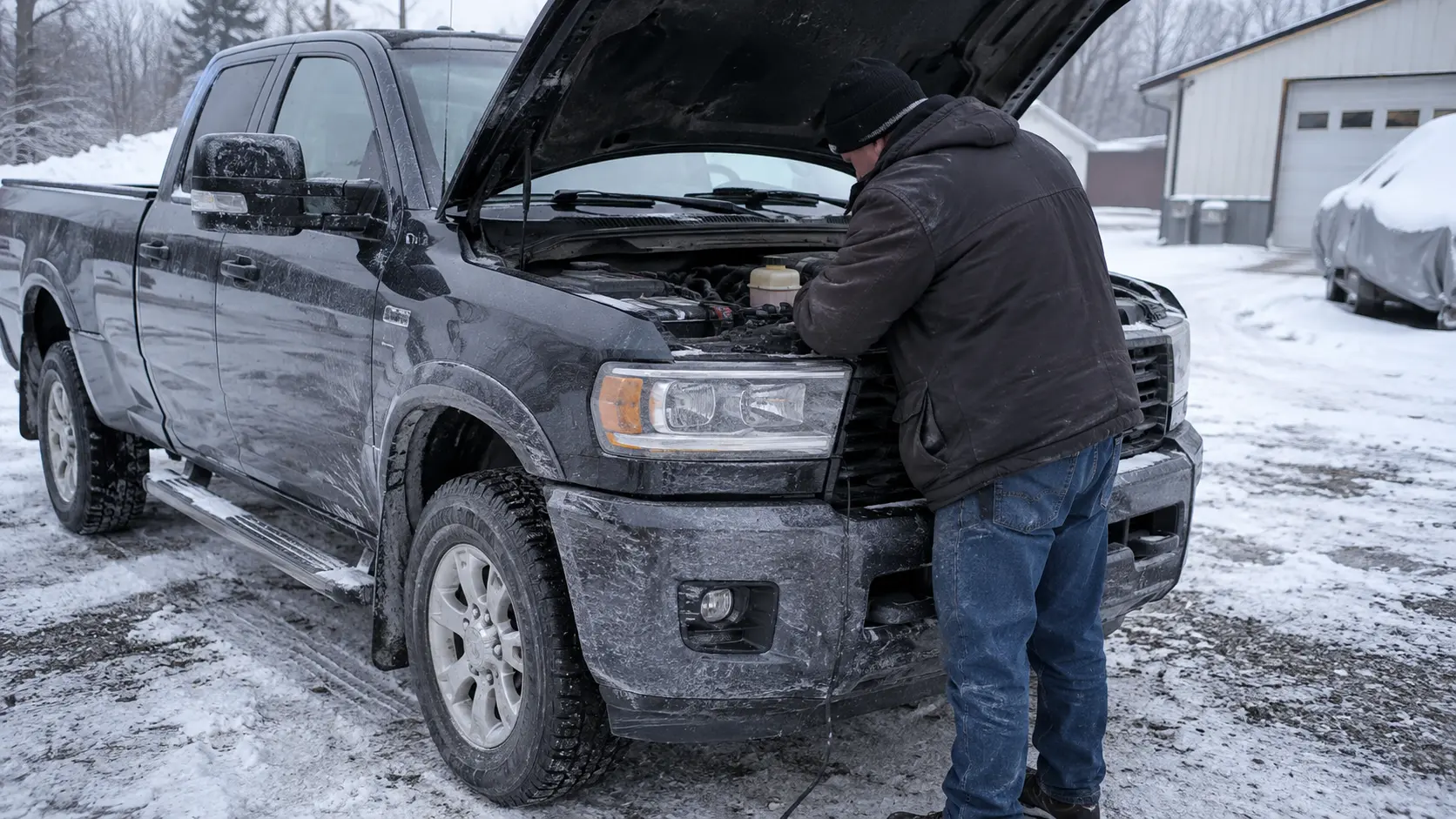
Cold weather can make a used-diesel inspection more informative, provided the truck is genuinely cold and the buyer separates normal winter behaviour from symptoms that require further testing.
Confirm a genuine cold start
Arrange the visit before the seller starts or plugs in the truck unless the purpose is specifically to test the block heater. Record ambient conditions and avoid diagnosing an engine from one start.
- Observe cranking speed and warning lamps.
- Listen for abnormal operation without leaning over moving components.
- Note smoke or odour as an inspection clue, not a diagnosis.
Batteries, charging and block heater
Diesel starting depends on battery, cable and charging condition. Have both batteries and the charging system tested where applicable, and inspect block-heater cord condition and operation using safe procedures.
Tires, fluids and winter equipment
Confirm tire type, load rating, age and tread condition for the intended use. Inspect coolant protection, washer operation, wipers, defrost, lights and cold-weather accessories against the exact model-year manual.
Corrosion and emissions context
Snow and road residue can conceal underbody details. Arrange a clean, dry lift inspection and review emissions-system warning history, especially when the truck's use consists mainly of short winter trips.
- Inspect lines, mounts, frame, hitch and fasteners.
- Scan all relevant modules.
- Verify that emissions equipment has not been altered.
Schedule the viewing around an overnight cold soak
Ask that the truck remain unstarted and record the outside temperature on arrival. Check whether it was plugged in, then observe the starting sequence and warning messages from inside the cab. A warm engine on arrival means the cold-start portion of the inspection remains incomplete.
| Stage | Record |
|---|---|
| Before starting | Ambient temperature, heater use and battery observations |
| Start and initial running | Cranking behaviour, warnings and persistent abnormal symptoms |
| After warm-up | Heater operation, leaks and whether the original symptom remains |
Allow time for a real underbody check
Snow and ice can hide corrosion, fluid leaks, tire damage and hitch condition. Arrange a thawed, accessible inspection if needed. Do not accept an inaccessible underbody as inspected merely because the engine starts well. Separate weather-limited checks from confirmed results in the written report.
Evidence note: manufacturer documents establish the specific facts and applications cited. Buying workflows and cost scenarios are DieselTrucks.ca editorial guidance. These pages do not publish measured failure rates or confirm the condition, recall status or capacity of a particular truck.
General educational content for Canadian diesel-pickup research. Verify the exact truck, model year, certification labels, owner manual and manufacturer documentation, and obtain qualified mechanical or towing advice where appropriate.
Sources & Further Verification
Use the exact model year, VIN, truck labels and current manufacturer documentation when moving from general research to a purchase or towing decision.