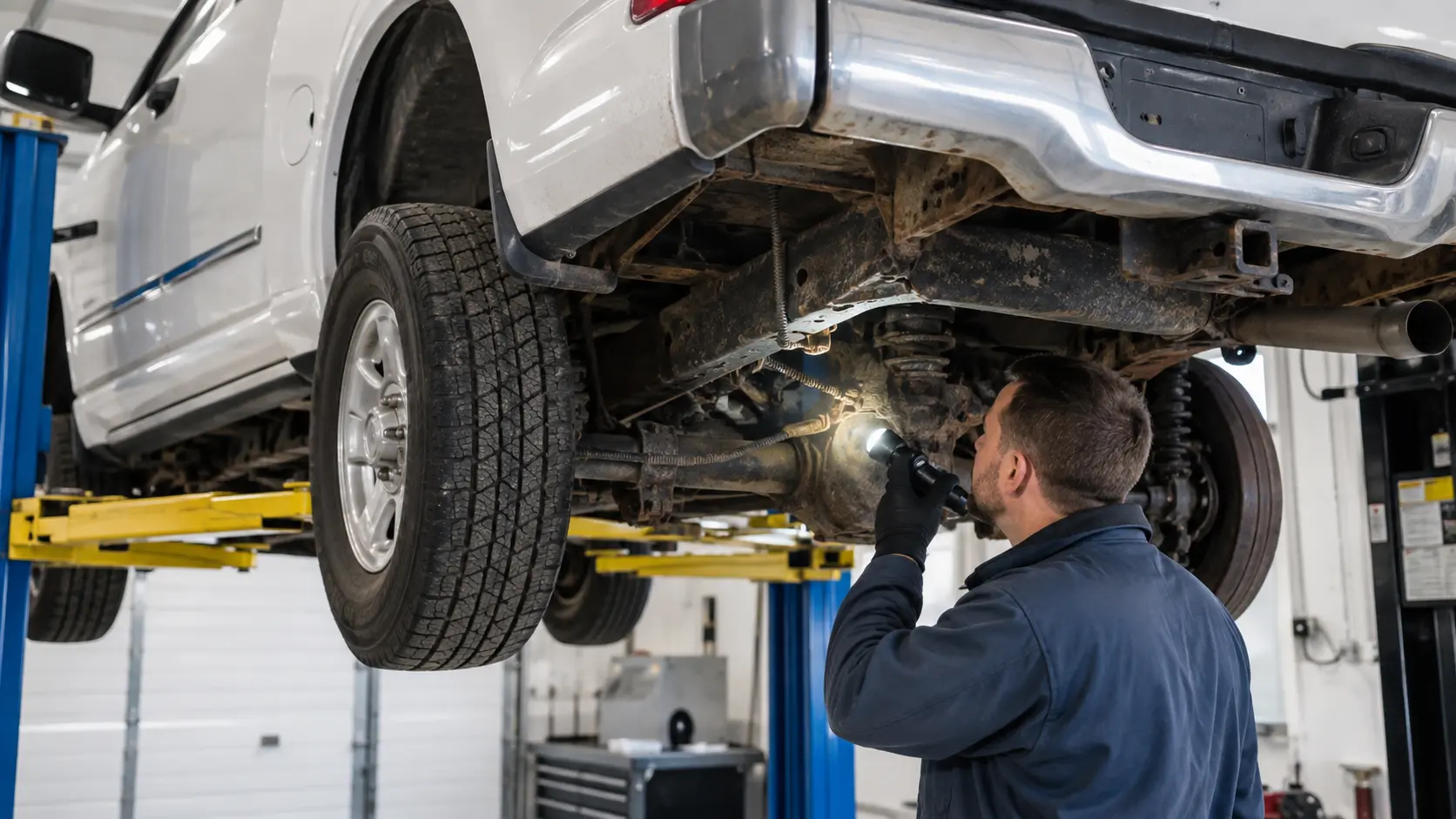
A truck from a region that uses road salt is not automatically unsuitable. It needs a careful corrosion inspection that distinguishes surface oxidation, serviceable wear and structural or safety-related deterioration.
Ask where and how the truck was used
Previous province or state is only a clue. Winter mileage, storage, wash routine, work sites, coastal exposure and how long the truck remained in each jurisdiction can matter more than the plate currently attached.
Inspect structural and safety-critical areas
Use a lift and qualified inspector to examine frame rails, crossmembers, cab and box mounts, suspension attachments, brake/fuel lines, steering components, hitch mounts and fasteners.
- Look beyond freshly sprayed visible areas.
- Check trapped debris and overlapping metal seams.
- Treat perforation, swelling seams or weakened mounts as professional-inspection issues.
Evaluate coatings and repairs
Undercoating can be protective, cosmetic or used to hide deterioration. Ask when it was applied, what preparation occurred and whether photographs or invoices document the condition beforehand.
Price the truck after inspection
Corrosion affects future service access as well as appearance. Include seized fasteners, damaged lines, body repairs and likely downtime in the comparison with a cleaner but more expensive truck.
- Do not rely on exterior panels alone.
- Compare repair estimates before negotiating.
- Reject unsupported regional reliability rankings.
Use location to plan inspection, not pronounce condition
A province name cannot reveal how often a truck encountered road salt, how it was washed or where it was stored. Ask about winter use, indoor parking, underbody treatment and repair history. Inspect hidden seams and structural attachments even when exterior panels look clean.
| Area | Why to inspect it |
|---|---|
| Brake/fuel line routing | Corrosion may be hidden above shields or beside brackets |
| Crossmembers and body mounts | Structural condition differs from surface appearance |
| Electrical grounds and connectors | Moisture and corrosion can create intermittent complaints |
Compare total acquisition cost
Add travel, independent inspection, transport and diagnosed corrosion work when comparing a distant truck with a local one. Obtain repair estimates before treating a lower advertised price as a saving. If coating prevents a useful inspection, record the inaccessible areas and decide whether the remaining uncertainty fits the purchase budget.
Evidence note: manufacturer documents establish the specific facts and applications cited. Buying workflows and cost scenarios are DieselTrucks.ca editorial guidance. These pages do not publish measured failure rates or confirm the condition, recall status or capacity of a particular truck.
General educational content for Canadian diesel-pickup research. Verify the exact truck, model year, certification labels, owner manual and manufacturer documentation, and obtain qualified mechanical or towing advice where appropriate.
Sources & Further Verification
Use the exact model year, VIN, truck labels and current manufacturer documentation when moving from general research to a purchase or towing decision.