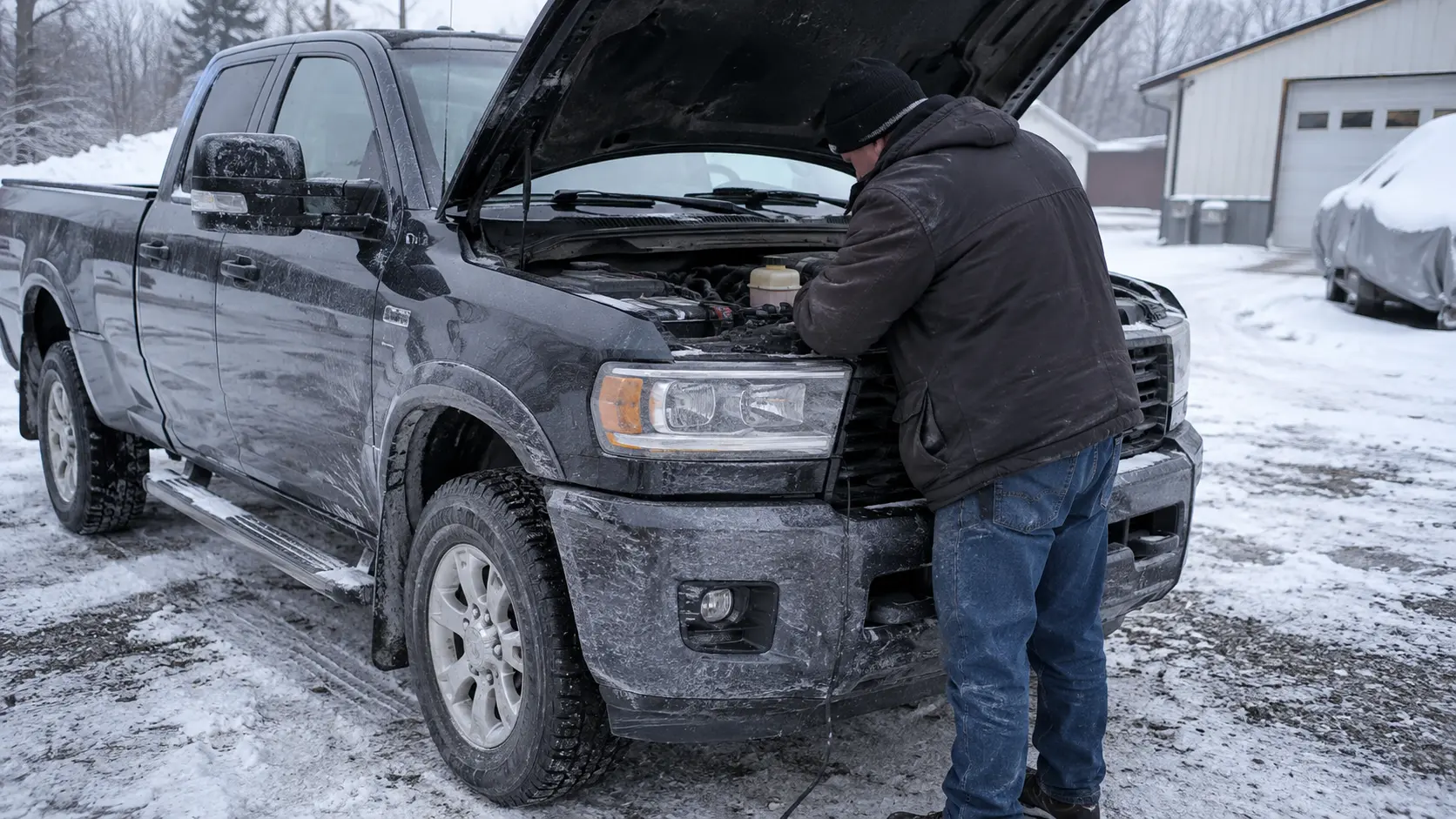
A plow truck must fit the manufacturer's approved installation and remain supportable when the weather makes downtime expensive. Diesel power alone does not establish plow suitability.
Build the buying decision
Confirm application
Exact truck + approved plow + mount
Account for loads
Front axle + ballast + spreader
Prepare for storms
Corrosion repairs + parts + substitute
Verify the exact plow application
Collect the truck's model year, cab, drivetrain, engine, axle ratings and installed factory equipment. Ask the plow manufacturer and installer to verify the specific plow and mount combination. A similar truck in a photograph is not a compatibility approval.
Confirm any ballast requirements, placement and securement using the applicable instructions. Include plow, mounting hardware, occupants, spreader and material when checking axle and vehicle loads. Moving weight around can change axle distribution; it does not increase a rating.
Inspect winter wear as a whole system
Have a qualified shop assess the front structure, mounts, steering, suspension, brakes, electrical installation and corrosion. Ask about repeated impacts, bent components and mount repairs. A tidy replacement blade tells little about the truck that carried the previous one.
Operate the plow and spreader with a qualified operator. Check the equipment's own service history, connections and controls. Inspect lighting and wiring repairs, especially where connectors are exposed to salt. Plan rust repair from structural condition and access, not surface appearance alone.
Plan for the storm window
Identify a repair shop, equipment supplier and substitute truck before the season. Keep quoted support availability separate from an assumption that parts will be on a shelf during a widespread storm.
Review engine hours and the previous operating pattern: short repositioning trips, idle time and repeated shifts can be poorly represented by kilometres alone. Build maintenance from the exact truck and plow documentation. The buying objective is a compatible, inspected combination with a workable service plan, not the largest engine available.
Evidence note: manufacturer documents establish the specific facts and applications cited. Buying workflows and cost scenarios are DieselTrucks.ca editorial guidance. These pages do not publish measured failure rates or confirm the condition, recall status or capacity of a particular truck.
General educational content for Canadian diesel-pickup research. Verify the exact truck, model year, certification labels, owner manual and manufacturer documentation, and obtain qualified mechanical or towing advice where appropriate.
Sources & Further Verification
Use the exact model year, VIN, truck labels and current manufacturer documentation when moving from general research to a purchase or towing decision.