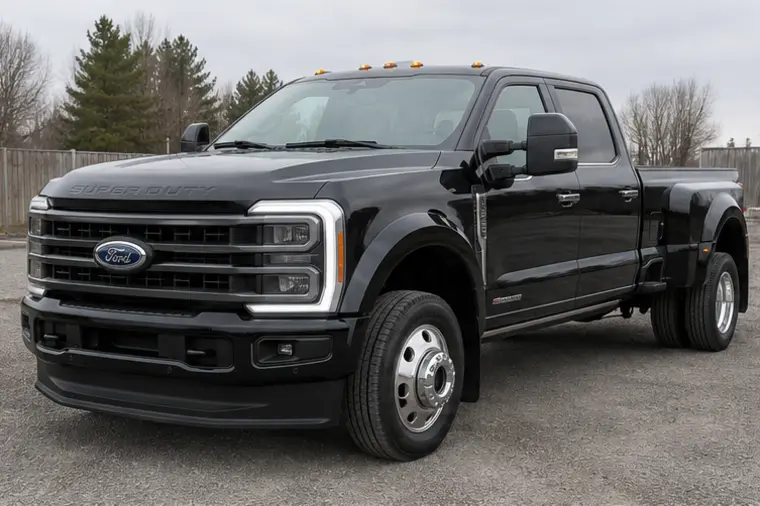
A hotshot truck is a working combination of truck, hitch and trailer. Build the shortlist around the jobs you can actually accept after loading, rather than an advertised maximum towing figure.
Build the buying decision
Define dispatch
Trailer + recurring cargo + route
Weigh combination
Truck axles + hitch load + ratings
Plan interruptions
Repair access + recovery + spare capacity
Start with the dispatch you expect to repeat
Write down trailer empty weight, the heaviest recurring cargo, deck space, loading equipment and typical route. Include the driver, passenger, hitch, auxiliary equipment and tools in the truck's loaded weight. A trailer's available deck space can exceed the weight the combination can carry.
Obtain separate truck axle weights in a representative loaded configuration. Compare them with the truck's certification labels and the applicable manufacturer combined and trailer ratings. A satisfactory gross combination calculation does not resolve an overloaded rear axle.
Choose a repairable working configuration
Ask nearby shops whether they support the exact engine, transmission and emissions system. Find out how a disabled loaded combination would be recovered and where the trailer could remain secure. These are buying questions because a lower purchase price can be erased by a single difficult interruption.
For a used candidate, connect the hitch installation and frame condition with service invoices, hours, cooling-system inspection and a road test. Heavy towing is a reason to investigate the load history; it is not proof that the truck has been abused.
Price availability, not projected revenue
Create separate budgets for scheduled maintenance, initial repairs, replacement transport and unpaid time. Use your own operating records or written quotes. Do not assume online revenue claims apply to your lanes, insurance, financing or operating arrangement.
Manufacturer ratings do not determine commercial registration, licence, insurance or cross-border operating requirements. Resolve those with the relevant authorities and insurer for the exact business and combination before purchase. This guide makes no claim that a particular truck class removes those obligations.
Evidence note: manufacturer documents establish the specific facts and applications cited. Buying workflows and cost scenarios are DieselTrucks.ca editorial guidance. These pages do not publish measured failure rates or confirm the condition, recall status or capacity of a particular truck.
General educational content for Canadian diesel-pickup research. Verify the exact truck, model year, certification labels, owner manual and manufacturer documentation, and obtain qualified mechanical or towing advice where appropriate.
Sources & Further Verification
Use the exact model year, VIN, truck labels and current manufacturer documentation when moving from general research to a purchase or towing decision.